
If no one ever taught you how to sort laundry, it can seem more complicated than it really is.
Whites, darks, colors, towels, delicates–what goes with what? Can you wash jeans with T-shirts? And do you really need six different piles of laundry on the floor?
You don’t. I will make this as easy as possible. I’ve been doing laundry for over 30 years here’s what I’ve learned.
Sorting laundry is pretty simple. Once you understand a few basic rules, you’ll be able to look at a basket of dirty clothes, sort it in a couple of minutes, and get on with your laundry.
Here’s the system I use in my home.
_____________________________
From the Homemaker’s Skill Book: This article is part of my Homemaker’s Skill Book, a growing collection of simple, practical guides for the basic skills that keep a home running. Whether you’re learning these skills for the first time or just need a refresher, the goal is to explain them simply enough that you can put them to use right away.
_____________________________
Why Do You Need to Sort Laundry?
The main reason we sort our laundry is to protect our clothes. Trust me, I’ve ruined clothing items when I first started doing laundry because I didn’t do this. You’ll thank me later.
Dark or brightly colored fabrics can sometimes release dye in the wash. Heavy fabrics can be rough on lighter, more delicate clothing. Towels can leave lint behind. And some clothes simply need gentler care than others.
Sorting helps prevent:
- Colors bleeding onto other clothes
- White clothes becoming gray or dingy
- Delicate clothes getting damaged
- Lint getting all over clothing
- Clothes wearing out faster than they should
You don’t need a complicated sorting system to prevent most of these problems.
_________________________
The Easiest Way to Sort Laundry
For most everyday laundry, start with three basic piles:
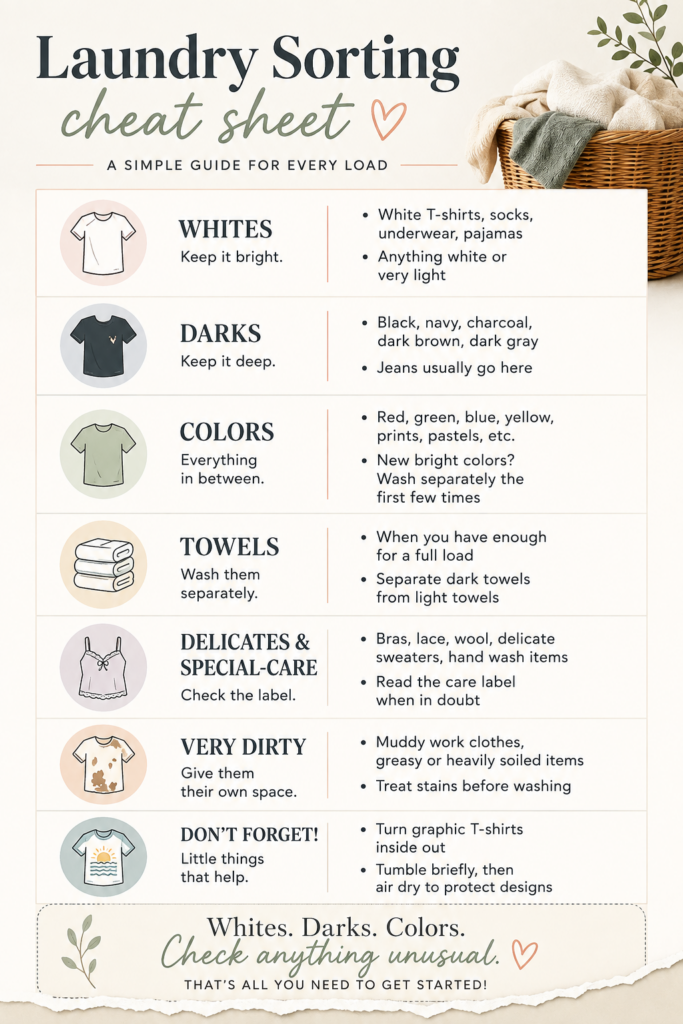
Whites. Darks. Colors.
That’s it. (see, told ya it was easy!)
1. Whites
Put your white everyday clothing together.
This might include:
- White T-shirts
- White socks
- White undergarments
- White pajamas
- Other washable white clothing
Keeping whites away from darker colors helps them stay white instead of gradually becoming dull or dingy.
2. Darks
Your dark load can include such colors as:
- Black
- Navy
- Charcoal
- Dark brown
- Dark grey
- Other very dark clothing
Jeans can usually go into this load too, as long as the care label doesn’t tell you otherwise.
One thing to watch for is brand-new dark clothing, especially dark jeans. New clothing can sometimes release extra dye during it’s first few washes. If you’re worried about a new item bleeding, wash it separately or with similar dark colors the first few times.
3. Colors
Everything else generally goes into my colored load.
That might include:
- Red
- Green
- Blue
- Yellow
- Pink
- Purple
- Orange
- Pasteels
- Prints
- Most everyday colored clothing
I don’t make a separate load for every shade of clothing. For ordinary family laundry, that simply isn’t necessary.
If something is new and brightly colored, though, be a little more careful the first few times you wash it. A brand-new bright red t-shirt, for example , isn’t something I would toss in with a very pale shirt until I know the color isn’t going to bleed.
For most everyday laundry, remember:
Whites. Darks. Colors.
You can start doing laundry with those three piles.
What About Towels?
If I have enough towels for a load, I wash them, most times, separately from our clothing.
Towels are heavier than most clothes, and they can also produce lint. I also like to separate my darker towels from my lighter towels when I have enough for separate loads.
I’ve found that washing dark towels repeatedly with lighter towels can eventually make the lighter ones look dull and dingy.
But don’t start running tiny loads just to follow this rule.
If you only have a couple of dark towels and you’re already washing a sturdy load of dark jeans and similar items, it’s not a big deal to put them together.
Think of these as practical guidelines, not rigid rules.
______________________
Separate Delicate and Special-Care Clothing
Before you put everything into one of your three main piles, look for anything that needs special care.
This might include:
- Bras
- Lace
- Wool
- Delicate sweaters
- Hand-wash items
- Clothing marked dry-clean only
- Anything with special washing instructions
When you’re unsure about something, Check the care label inside the garment.
Those little tags aren’t there to annoy you, they tell you how the manufacturer recommends washing and drying the item.
We’ll cover laundry care labels more thoroughly in another Homemaker’s Skill Book lesson. For now, remember one simple rule:
When in doubt, read the tag.
___________________________
Separate Really Dirty Clothes
Most everyday clothing can go into your normal loads.
But if something is exceptionally dirty–muddy work clothes, greasy clothing, heavily soiled gardening clothes or similar items–pull those items out.
You don’t necessarily want heavily soiled clothes washing alongside lightly worn t-shirts, pajamas, or underwear.
Treat stains before washing when necessary and wash especially dirty items separately or with other similarly soiled clothing.
_________________________
Turn Graphic T-Shirts Inside Out
Here’s one little habit that can help some of your favorite shirts last longer.
Before washing graphic T-shirts, turn them inside out.
That includes things like:
- Sports team shirts
- Concert T-shirts
- Shirts with printed sayings
- Graphic tees
- Clothing with printed designs
Turning them inside out reduces some of the rubbing directly against the design while they’re being washed.
I also don’t like to bake these shirts in the dryer. I’ll often tumble dry them for a little while and then let them finish air-drying.
You don’t have to do this with every piece of clothing you own. It’s simply an easy way to give favorite printed shirts a little extra care so they stay looking nice longer.
Before You Put the Clothes in the Washer
Once you’ve sorted your laundry, take another minute before starting the machine.
1. Check the pockets. Remove loose change, tissues, receipts, pens. lip balm, or anything else you don’t want washed in the washing machine.
2. Look for stains. If you see one, treat it before washing. It’s much easier to deal with a stain before it has gone through the dryer.
3. Check unfamiliar care labels. If you’ve never washed the item before, take a quick peek at the label.
4. Turn graphic T-shirts inside out. Do the same with anything else you want to protect from unnecessary rubbing.
5. Don’t cram the washer completely full. Clothes need room to move so water and detergent can reach them.
Now you’re ready to wash.
Do I Really Have to Sort Everything Perfectly?
No.
Laundry doesn’t need to become a complicated household project.
Sorting is meant to help protect clothes–not make you afraid to put anything into the washer.
Start by separating whites, darks, and colors. Pull out anything delicate, unusually dirty or likely to bleed. Wash towels separately when you have enough to make a reasonable load.
As you get more comfortable doing laundry, you’ll naturally learn which things in your own household can be washed together.
You don’t need to run five tiny loads because everything isn’t exactly the same.
________________________
The Most Important Thing to Remember
If you’ve never done laundry before, remember this:
Whites. Darks. Colors. Check anything unusual.
That’s enough to get started.
You don’t need to memorize every fabric, laundry symbol or washing n=machine setting before you wash your first load. Those things can be learned one at a time.
For now, sort your clothes into those three basic groups, pull out anything that needs special care, check the pockets, and you’re ready for the next step.
Laundry is one of those homemaking skills that feels much harder before you’ve learned it than it does afterward.
After you’ve sorted a few baskets, you probably won’t think twice about it anymore. You’ll look at the clothes, make your piles and know exactly how to take care of it.
Hope this helped you!
from my hearth to yours,
Becky
Want to Learn more simple homemaking skills?
Join me for practical homemaking help, simple recipes and everyday ideas for making home life easier–sent straight to your inbox.
___________________________
Next in the Homemaker’s Skill Book: How to Use a Washing Machine, and How Much Laundry Detergent to Use.
Leave a Reply