
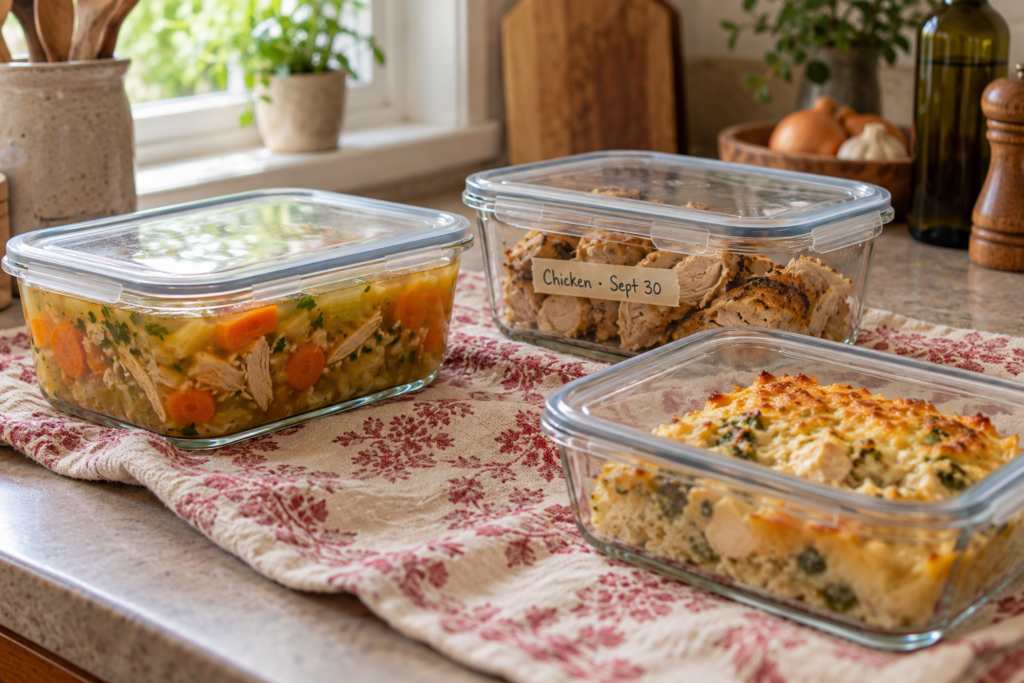
There is something so satisfying about using up the food you have already cooked. Dinner becomes tomorrow’s lunch, a little leftover chicken becomes part of another meal, and the soup in the refrigerator gets eaten instead of forgotten.
I always feel happy and accomplished when we finish our leftovers. That food took money, time, and work to put on the table, and I like knowing we made good use of it.
Most cooked leftovers should be eaten within three to four days when promptly refrigerated and kept at 40°F or below. If you will not eat them within that window, freeze them while they are still safe.
At our house, leftover soup often becomes lunch for my husband to take to work. Sometimes I serve it again for dinner with a good grilled cheese sandwich alongside it. My family loves soup and sandwich night, and that small addition makes dinner feel new.
But using leftovers well also means knowing when to let them go. Should you wait for hot food to cool before putting it away? How do you keep track of what needs eating? And how do you reheat dinner so it is safe and still tastes good?
Here are the practical basics for making the most of yesterday’s meal.
How Long Do Leftovers Last in the Refrigerator?
The three-to-four-day window is the USDA’s general recommendation for cooked leftovers. FoodSafety.gov also lists that storage time for soups, cooked meat and poultry, pizza, baked egg casseroles, and homemade chicken, tuna, egg, or macaroni salads.
A weekly refrigerator cleanout is useful, but it does not mean every leftover can safely wait until the end of the week. A meal cooked on Monday needs to be eaten or frozen within three to four days, even if your grocery day is Saturday.
A Quick Refrigerator Storage Guide
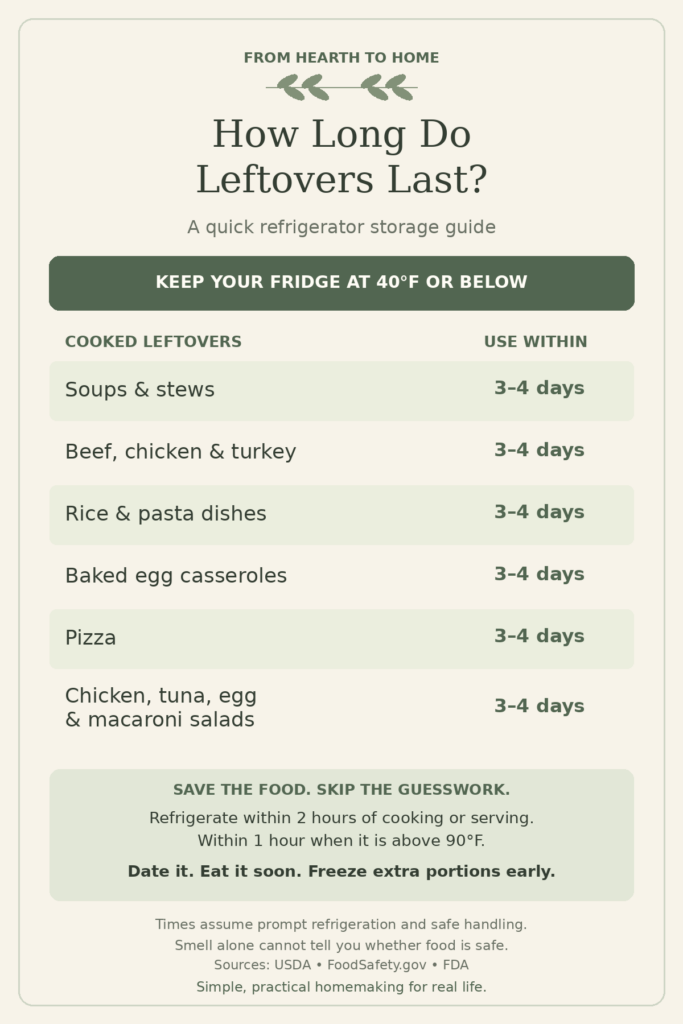
Save this chart to your phone for a quick reminder when you’re putting dinner away.
These storage times assume the food was handled safely from the beginning. Putting food in the refrigerator does not make it safe again if it has already been left out too long.
You can also check the FoodSafety.gov Cold Food Storage Chart for individual foods.
Put Leftovers Away Promptly
After dinner, it is easy to leave a pot on the stove while you clean up or move on to something else. Make putting the food away part of finishing the meal.
Perishable leftovers should be refrigerated within two hours, or within one hour if the surrounding temperature is above 90°F. Keep your refrigerator at 40°F or below; an appliance thermometer helps you check it.
The FDA’s food storage guidance explains these limits.
For more about time limits at cookouts, family dinners, and other gatherings, see How Long Can Food Safely Sit Out? A Homemaker’s Guide to the Two-Hour Rule.
Does Hot Food Need to Cool Before Going Into the Refrigerator?
You do not need to leave food on the counter until it reaches room temperature. Hot food can go directly into the refrigerator in suitable containers.
For a large pot of soup or stew, divide it into smaller portions in shallow containers so it cools more quickly. Do the same with large amounts of other cooked food rather than storing one deep, densely packed container.
Choose Containers That Make Leftovers Easy to Use
I prefer to store my leftovers in glass rather than plastic. That is my own kitchen preference. Whatever you use, choose clean, food-safe containers and keep refrigerated food covered.
Choose containers sized for the food you are saving. A lunch portion is easier to grab when it is already packed, and several shallow portions are more useful than one big container everyone keeps opening.
If you use glass, follow the manufacturer’s instructions for hot food, freezing, and reheating. Check whether both the container and its lid are suitable for the appliance you plan to use, and avoid sudden temperature changes that can break the glass.
A Simple Date Saves the Guessing
I have not been in the habit of dating my containers. I generally remember what we made and try to use it up before the next grocery trip. Still, the three-to-four-day guideline is a good reason to add one small habit: write the cooking date on the container.
A piece of tape marked “Soup — September 30” is enough. You do not need an elaborate system, just a way to answer, “When did we make this?”
Keep the leftovers where you can see them, and look at them before deciding what to make for lunch.
For help understanding the dates on food packaging, see The Homemaker’s Guide to Food Dates and Safe Storage. A package date and the date you cooked a meal tell you different things.
How to Reheat Leftovers Safely—and Keep Them Tasting Good
Reheat leftovers to 165°F throughout, checked with a food thermometer.
In the microwave, cover the food with a microwave-safe cover, stir or rotate it during heating, and check several places for cold spots.
Only take out and reheat the portion you plan to eat. It is easier to heat a lunch serving evenly than an entire pot, and you avoid repeatedly warming food you are saving for later.
Soup and Stew
Stir as the soup heats so the bottom does not scorch and the ingredients warm evenly. The USDA recommends bringing reheated soups, sauces, and gravies to a rolling boil. Check that solid pieces are also heated through to 165°F.
Creamy Pasta
Rice and pasta are the leftovers I find less appealing the second time around. They can dry out, and creamy sauces do not always reheat beautifully.
With Alfredo or another creamy pasta dish, I find that adding a little milk or cream and heating gently while stirring helps bring it back to life. Add a small splash first; you can always add more.
The little splash of cream helps the texture, but the pasta still needs to reach 165°F throughout when reheated.
Cooked Meat and Rice
For meat that seems dry, try adding a little broth and covering the dish while it reheats. For rice, a small splash of water and a suitable cover can help restore moisture. Stir or turn the food as needed and check the temperature.
Rice needs the same attention to prompt cooling and cold storage as other perishable leftovers. Reheating cannot reliably fix rice that was left out too long: some bacteria can produce heat-stable toxins that survive reheating.
Give Leftovers a Place in Your Next Meal
I try to cook about what our family will eat, but a big pot of soup naturally leaves more than one dinner’s worth. Having a plan for the extra food makes it much more likely to get used.
These are a few ways I work leftovers into our meals:
- Make dinner into lunch. Soup and other leftovers often go to work with my husband or become lunch at home.
- Add something fresh alongside them. A good grilled cheese sandwich makes leftover soup feel like a complete new dinner.
- Use lightly seasoned meat in another dish. If chicken or beef has not been heavily seasoned for a particular recipe, it is easier to use in a different meal.
- Freeze the extra portions early. If there is more food than you can realistically use soon, give it a place in the freezer.
For planning purposes, keep track of when leftover ingredients were originally cooked. Plan to use them within their original storage window rather than treating an older ingredient as newly fresh simply because you added it to another dinner.
Keep Leftover Lunches Cold on the Way to Work
Packing last night’s dinner saves both cooking time and the cost of another lunch. Just make sure it stays cold until it is time to eat.
The USDA recommends an insulated lunch bag with at least two cold sources, such as frozen gel packs, for perishable lunches. Refrigerate the food on arrival when a refrigerator is available.
For more details, see USDA: Keeping “Bag” Lunches Safe.
Freeze What You Cannot Use Soon
Freeze safe leftovers before their refrigerator storage window runs out. Portion them into amounts you will actually use, choose freezer-safe containers, and label them with the food name and date.
When freezing soup in glass, use containers approved for freezing and leave the expansion space recommended by the manufacturer.
Freezer storage times are about quality when properly handled food stays continuously frozen at 0°F or below. FoodSafety.gov lists two to three months for soups and stews and two to six months for cooked meat or poultry.
Texture may change, especially with creamy dishes, but a frozen portion can still be a welcome meal on a busy day.
Thaw leftovers in the refrigerator rather than on the counter. Many leftovers can also be reheated directly from frozen; allow extra time and check that they reach 165°F throughout.
For more help organizing and using frozen food, visit my freezer guide.
Can You Tell Whether Leftovers Are Safe by Smelling Them?
Smell alone cannot tell you whether food is safe. Harmful bacteria can be present even when food looks, smells, and tastes normal.
Throw away food with mold, an unusual odor, or other signs of spoilage. Also discard leftovers that have been stored too long or left out beyond the safe time limit—even if they seem fine. Do not taste questionable food to test it.
If you cannot work out when something was cooked or how it was stored, it is better to let it go.
Make the Next Meal a Little Easier
Leftovers are useful when they have somewhere to go: tomorrow’s lunch, a soup and sandwich dinner, or a portion in the freezer for another day.
Before putting dinner away, take a moment to decide which of those jobs the extra food will do. Pack it, date it, and put it where it belongs.
I still love the feeling of using everything we cooked. A little planning helps us do that while the food is good—and gives us one less meal to start from scratch.
I hope this leftover guide will help you and your family with the leftover dilemma as to should we eat this or not?
from my hearth to yours,
Bccky
A Little Help for the Everyday Work of Home
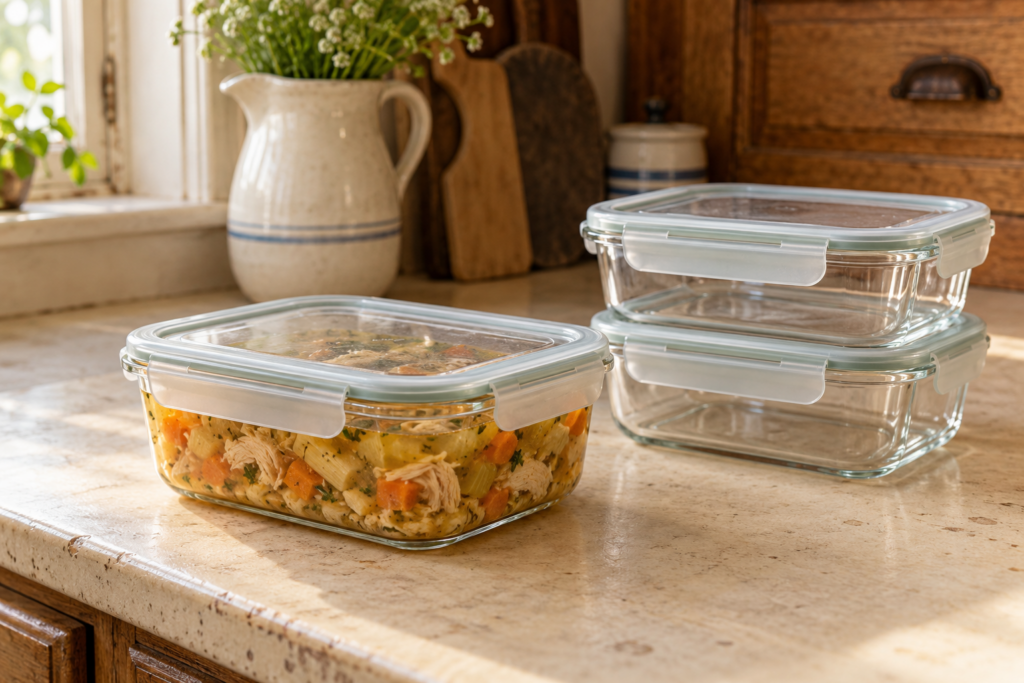
Some days, dinner is a fresh pot of soup. Other days, it’s yesterday’s soup with a good grilled cheese alongside it. Both count as taking care of your family.
If you enjoy practical ideas for making home life a little easier, I’d love to have you join my Friday Home Journal. Each week, I share recipes, homemaking shortcuts, and a little encouragement from my home to yours.
There’s always another meal to make and something that needs tending. It’s nice to have a little company along the way.
Leave a Reply