

When money feels tight—or we’re working toward a financial goal—I start by looking at what we have coming in, what has to go out, and what we can do without for a while. But meals still need making, laundry still needs washing, and I still want our home to feel good to live in.
Over the years, I’ve found that planning around what we already have and keeping things simple helps us take care of those everyday needs.
For me, homemaking when money is tight means making thoughtful choices about meals, household supplies, shopping trips, and saving when we can. These are the habits that have helped our family.
Decide What Needs to Be Covered First
When we need to tighten our spending, I start by looking at what’s coming in and what has to go out. What are our absolute necessities? What can we cancel, do without for a month, or postpone?
Then I focus on what is most important. I also try to make choices that keep us from adding new debt.
For the everyday work of home, it helps to look at the coming week. What will we eat? Do we have what we need to wash clothes and dishes? Are we running low on a personal care item or another household necessity?
Before shopping, make a short list of what truly needs covering. Separate things you need now from things that can wait. That makes it easier to put the available money where it will help most.
If you need help looking at the bigger picture, I’ve also shared how to turn money worries into a practical plan.
Plan Meals Around Your Pantry and the Sales
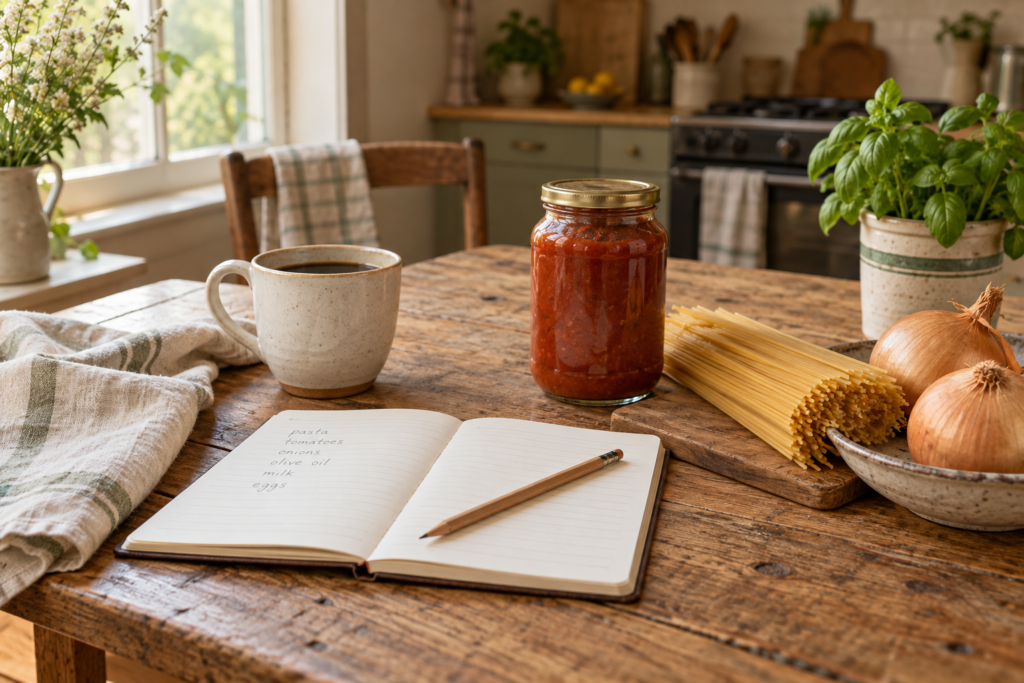
I’ve always tried to keep a pantry. During tighter financial times, I kept a strict grocery budget, checked the sales, and bought what we needed to fill in the gaps.
What was in my pantry and what was on sale helped determine our meals. I wasn’t choosing a recipe first and then buying every ingredient to make it.
Before making your meal plan, look through the refrigerator, freezer, and pantry. See which meals you can already make and which ones need only an ingredient or two.
You might have pasta and sauce but need meat, or chicken in the freezer and rice in the cupboard that could become soup. Use food that needs attention first, and give leftovers a place in the plan.
For more ideas, read How to Make Groceries Stretch Without Feeling Deprived. If you’re planning meals around leftovers, my guide to safe leftover storage and reheating can help you make good use of food you’ve already cooked.
Familiar Meals Can Still Feel Special
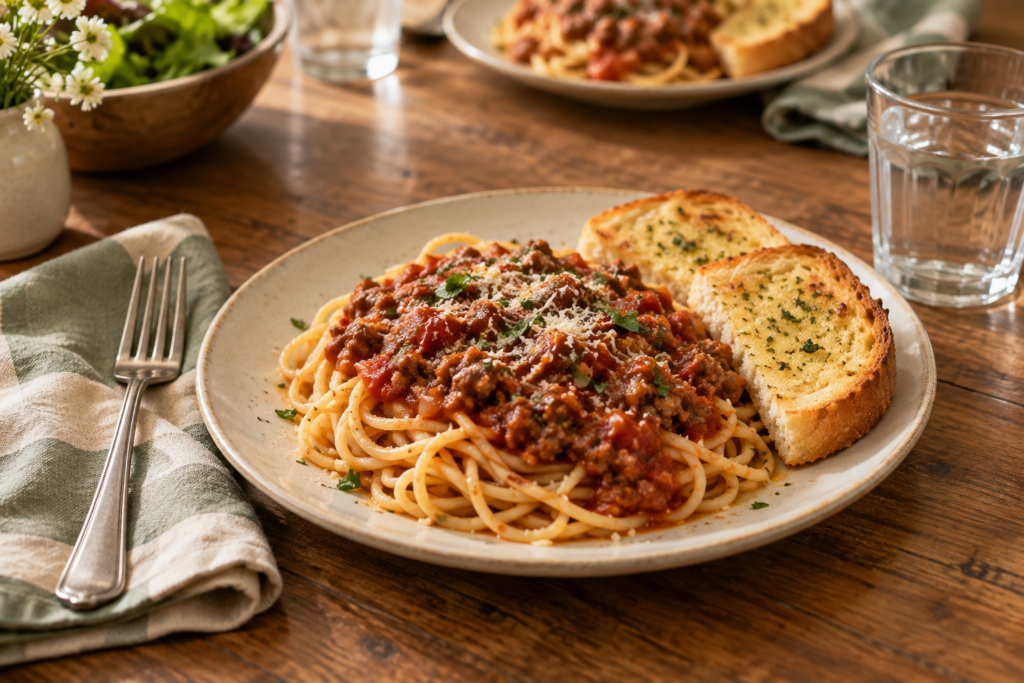
Spaghetti is one of my dependable meals because I usually have ground beef, spaghetti sauce, and pasta. I can make homemade garlic bread to go with it, and that makes the meal feel a little more special.
Soup is another meal I turn to. I look at what protein is in the freezer and what I have in the pantry. That might mean chicken soup or a soup using rice or lentils, depending on what’s available.
My Creamy Chicken and Wild Rice Soup is one option when those ingredients fit what you have on hand.
The meals that work best for your household may be different. Start with a few your family enjoys and that you can make from ingredients you regularly keep.
If you don’t have much of a pantry right now, start with what you do have. There’s no need to buy a whole pantry’s worth of food at once. As money allows, you can add an extra useful item that fits the way your family eats.
Keep a Running List and Avoid Extra Shopping Trips
When I take something off the pantry shelf and notice we have only one left, or no backup, I add it to my running list in the store’s app.
That gives me a place to keep track of what we need without trying to remember everything. When I make our weekly meal plan, I check that I have the ingredients or can get them during my next planned shopping trip.
I try to avoid extra little trips because I know what happens when I make them. If I go in for onions, I rarely come out with only onions. I see something on sale, remember something else, and pick up a few more things. For me, those trips can really blow the budget.
If a meal needs something you don’t have, consider whether you can leave it out, make a suitable substitution, or move that meal to after your next shopping trip.
A sale can be useful, but it still has to fit the money available. The same goes for buying in bulk. Consider whether you’ll use it and whether buying it now leaves enough for everything else you need this week.
Keep Cleaning and Laundry Supplies Simple
I try to keep my cleaning supplies fairly simple. I have products for the jobs that need them, including the shower, toilet, glass, and floors, and I use a multipurpose approach wherever it makes sense.
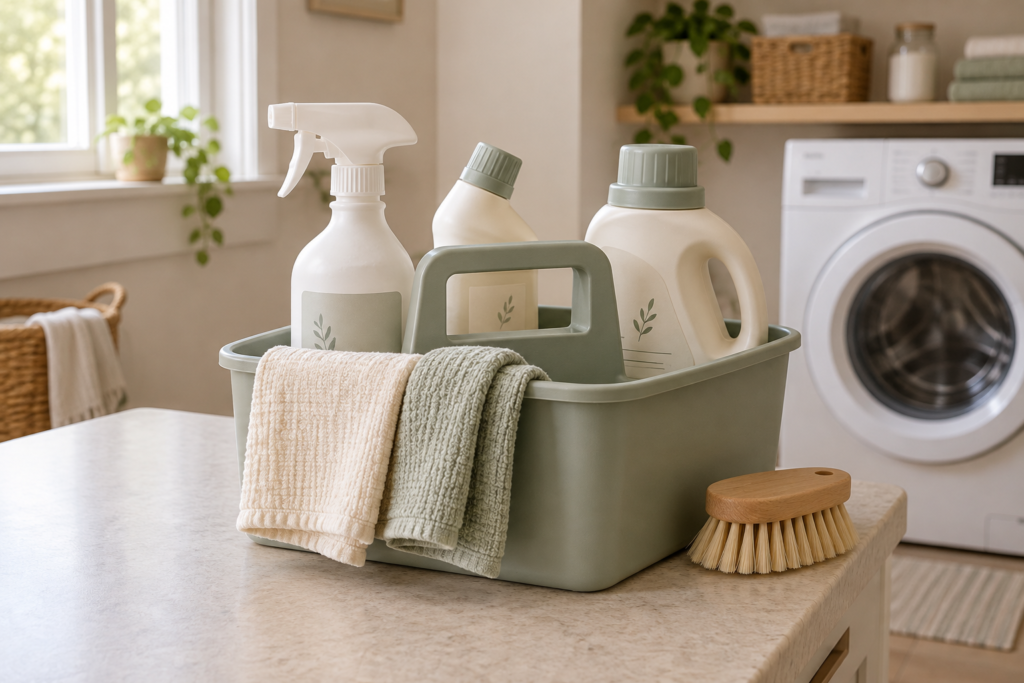
I don’t want a cupboard full of different cleaners when a smaller selection will do the work.
Before buying another product, check what you already have and what it is intended to clean. Use products according to their labels and choose ones suitable for your surfaces.
For laundry, take the same practical approach. Keep the detergent you need, follow the product and machine directions, and consider whether extras such as scent products or dryer sheets are something you want to keep buying right now.
Check the amount of detergent or cleaner you’re using, too. Follow the directions for the product and the job rather than pouring by habit. Using up the supplies you already own—and avoiding unnecessary extras—is a practical place to start.
Your household may have particular needs, and those matter. The goal is to spend on supplies that serve a purpose and avoid buying more simply because there is another product on the shelf.
Join Me for the Home Journal
If you enjoy practical homemaking ideas and encouragement for everyday life, I’d love to have you join my Home Journal email. I share new posts, recipes, and notes from our home, with simple ideas you can use in your own.
Sign up below to receive the Home Journal from From Hearth to Home.
Preserve a Few Small Pleasures
When I’m watching our spending, I still want our meals to taste good and our home to feel cared for. I try to keep everyday life enjoyable, even when I change how I provide some things.
Coffee creamer is one example. I wanted to cut down on buying flavored creamer, so I started making my own. We ended up liking it so much that we don’t enjoy the store-bought kind anymore.
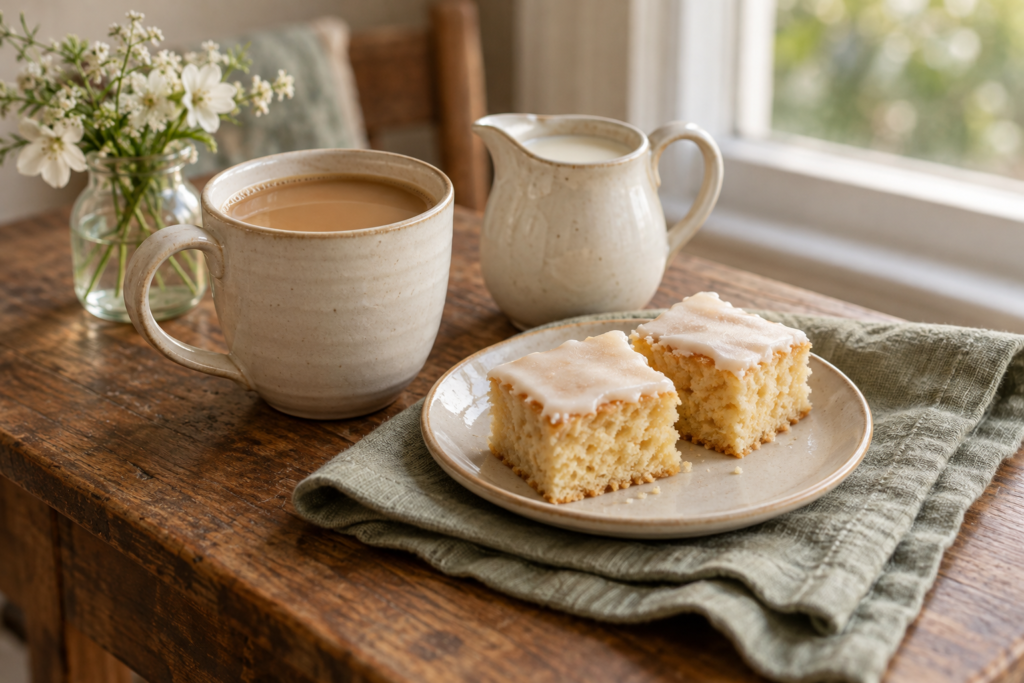
If packaged cookies don’t fit the grocery budget, I might bake a cake, bars, or another treat for my family using ingredients I have. We still have something to enjoy together.
I often bake with ingredients already in my pantry. Before deciding what to make, I check what I have so a homemade treat doesn’t turn into another shopping trip.
I also try to keep things clean, tidy, and beautiful in the ways I can. Flowers from the yard, a cleared table, or serving a familiar dinner with a little care can bring pleasure to an ordinary day.
Think about the small comforts your family enjoys most. You may be able to keep some just as they are and find a less expensive way to provide others.
Make Room for Savings When You Can
Sometimes we tighten our spending because we need to get through a difficult month. Other times, we’re working toward something important.
My husband and I are saving toward his retirement. It’s a long-term goal, and we do our best each week to make choices that help us get there.
If there’s room after necessities are covered, consider putting something aside. That might be money toward a larger goal or a small cushion for an expense you know is coming.
Some weeks or months, you may not be able to save as much as you hoped. An unexpected expense can come up through no failure of your own and change what you’re able to do.
Covering that expense doesn’t erase your effort. Take another look at what’s possible the following week or month and begin again when you can.
If the available money simply won’t cover basic needs, there is a limit to what household adjustments can accomplish. Asking for help with food or other essentials is a reasonable step while you work through that gap.
Do a Simple Weekly Household Check
Before your next shopping trip, take a few minutes to answer these questions:
- Meals: What can I make with food we already have?
- Supplies: What are we actually running low on?
- Shopping: What needs buying this week, and what can wait?
- Enjoyment: What small comfort can we keep or provide with what’s on hand?
- Savings: Is there anything we can put aside after necessities are covered?
Keep the answers short. A few notes on your phone or a piece of paper can help you make the next set of decisions.
Keep Going When the Month Doesn’t Go as Planned
It can take time to reach a point where things start coming together financially. There will be months when your plans work well and you feel good about the progress you’ve made. There will also be months when an emergency or unexpected expense changes everything.
Do the best you can with what you have. Make the meals, care for the things you own, and decide what matters most for your household right now.
When circumstances change, adjust the plan. You haven’t failed because life happened. You can take what you learned and try again the following week.
I hope these ideas help you find a little more direction for the everyday work of home, while keeping room for the meals, comforts, and time together that your family enjoys.
from my hearth to yours,
Becky
Leave a Reply