
A Homemaker’s Skill Book
Groceries are expensive right now, and many families feel like they are constantly trying to cut back while still putting satisfying meals on the table.
But stretching groceries doesn’t have to mean smaller portions, bland meals, or feeling like you’re doing without.
In fact, when you learn a few practical homemaking skills, groceries often stretch naturally – and meals become more satisfying at the same time.
This isn’t about extreme budgeting or complicated systems.
It’s about building simple, practical habits that help you make the most of what you bring into your home.
And once you learn these skills, they make life easier week after week.
__________
A Practical Homemaking Skill That Builds Over Time
Learning how to make groceries stretch is a practical homemaking skill.
Like many homemaking skills, it becomes easier with practice. Over time, you begin to see opportunities to stretch meals, reduce waste, and make thoughtful use of what you already have.
You don’t need to do everything perfectly.
You simply begin where you are – and build from there.
__________
Buy Ingredients Instead of Convenience Foods
One of the biggest ways to make groceries stretch is to buy ingredients instead of finished products.
Convenience foods are often:
- More expensive
- Smaller portions
- Less filling
- Less satisfying
Real ingredients, on the other hand, can stretch into multiple meals.
For example:
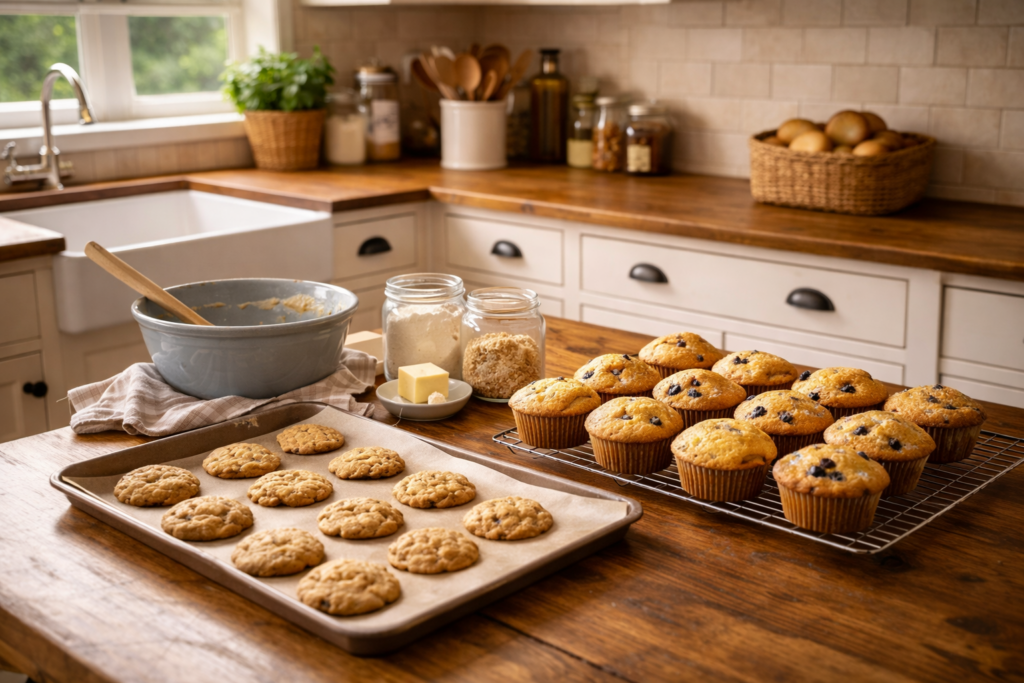
- Instead of buying cookies, bake a batch and freeze them
- Instead of snack packs, bake muffins or quick breads
- Instead of prepared soup, make a large pot and enjoy it for multiple meals
- Instead of instant rice, cook a pot and use it throughout the week
You don’t have to do everything at once. Start with one change and build from there.
When I began doing this more consistently, I noticed something surprising – my family actually preferred the homemade versions. Over time, the processed foods we used to rely on didn’t seem as appealing anymore, and meals felt more satisfying without spending more money.
___________
Build a Real Ingredient Pantry
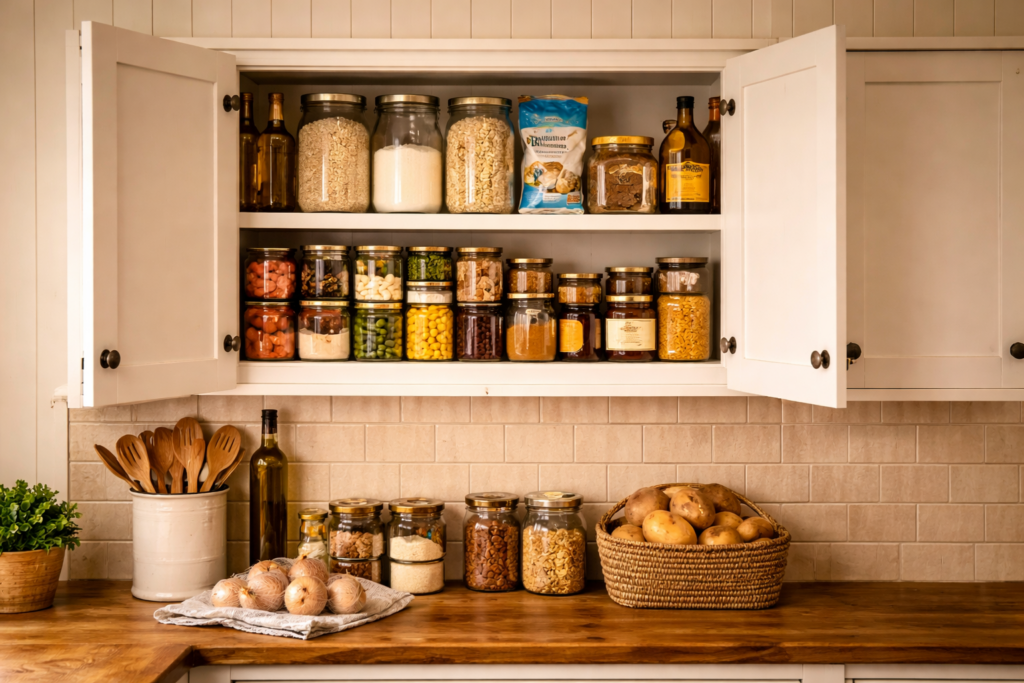
Groceries stretch much easier when you have a simple ingredient pantry.
This doesn’t need to be elaborate. Start with basic, versatile foods:
- Flour
- Rice
- Pasta
- Potatoes
- Eggs
- Butter
- Oats
- Beans
- Canned tomatoes
- Broth
With these basics on hand, you can:
- Fill out meals
- Stretch meat further
- Make quick homemade options
- Avoid extra grocery trips
An ingredient pantry gives you flexibility, and flexibility is what helps groceries stretch without feeling restrictive.
__________
Stretch Meat Instead of Centering Meals Around It
Meat is often the most expensive part of a grocery bill. Learning to stretch it is one of the most practical homemaking skills you can develop.
Ways to stretch meat:
- Add rice or potatoes
- Add beans to soup and chilis
- Use smaller portions
- Mix meat into casseroles
- Add vegetables to bulk meals
For example, a roast chicken can become:
- Chicken dinner
- Chicken soup
- Chicken sandwiches
- Chicken and rice bowls
One purchase can stretch across several meals.
This is traditional homemaking wisdom – and it still works beautifully today.
_____________
Cook Once, Eat Twice
Cooking larger meals is one of the simplest ways to stretch groceries.
Try:
- Doubling soups
- Making extra casseroles
- Cooking extra rice
- Baking extra muffins
Then refrigerate or freeze for later.
This helps:
- Save time
- Save money
- Reduce stress
- Prevent takeout on busy nights
This is one of those quiet skills that makes a home run more smoothly without much extra effort.
__________
Plan Leftover Nights for Busy Evenings
One of the simplest and most helpful habits is to plan leftover nights intentionally.
Leftover nights:
- Reduce food waste
- Save money
- Help on busy evenings
- Prevent last-minute spending
- Make the week easier
Instead of scrambling on busy nights, dinner is already waiting.
Simple examples:
Monday – Roast Chicken
Tuesday – Chicken and Rice Bowls
Wednesday – Leftover night
Or:
Sunday – Soup & Bread
Monday – Leftover Soup
Tuesday – Fresh Meal
Leftovers can also become new meals:
- Roast chicken – Chicken soup
- Taco meat – Taco salad
- Roast beef – Sandwiches
- Vegetables – Omelets or fried rice
Planning for leftovers turns them into a strength instead of an afterthought.
__________
Use Simple “Stretch Foods” to Fill Out Meals
Certain foods naturally help meals stretch further:
- Potatoes
- Rice
- Pasta
- Bread
- Eggs
- Beans
- Oats
These foods are:
- Filling
- Affordable
- Versatile
- Easy to prepare
Adding simple sides like these can make meals feel complete without increasing your grocery bill.
__________
Stop Buying “Just in Case” Convenience Foods
Convenience foods often quietly increase grocery spending:
- Frozen meals
- Snack packs
- Pre-made desserts
- Single-serve items
Instead, keep simple ingredients ready so you can:
- Bake something quickly
- Make simple maeals
- Fill gaps
Over time, this reduces both spending and waste.
__________
Start Small and Build Gradually
You don’t have to change everything at once.
Start with one simple step:
- Bake instead of buying
- Cook one extra meal
- Build one pantry shelf
- Plan one leftover night
Small steps build confidence. And over time, these habits begin to stretch groceries naturally.
___________
More Than Saving Money
When you begin cooking from scratch and making thoughtful use of your groceries, something else begins to happen.
Meals become more satisfying.
The kitchen becomes more active.
The home feels more grounded.
That was my experience.
As I began focusing on real ingredients and simple meals, I noticed a quiet sense of accomplishment growing. I felt more capable, and my family genuinely enjoyed the meals we were sharing together.
This wasn’t about perfection or doing everything at once. It was about building practical skills and using them consistently – and over time, that brought a sense of peace and satisfaction into our home.
Stretching groceries isn’t just about spending less.
It’s about caring for your household in a thoughtful and capable way – and that’s a skill worth learning.
___________
What You Can Start Today
If you’re ready to begin, start with one simple step:
- Cook one extra meal this week
- Plan one leftover night
- Buy one real pantry ingredient
- Bake one batch instead of buying
You don’t need to do everything at once.
Start small, and build from there.
These small changes often make the biggest difference over time.
_____________
A Homemaker’s Skill That Makes a Big Difference
Making groceries stretch comes down to a few simple habits:
- Cook from scratch when possible
- Build a simple ingredient pantry
- Stretch meat
- Cook once and eat twice
- Plan leftover nights
- Use simple stretch foods
- Start small and build gradually
These aren’t complicated ideas – but together, they make a powerful difference.
And over time, they don’t just stretch groceries.
They help create a home that feels more peaceful, capable, and cared for.
___________
Join the Home Journal
If you’re learning to build a well-run home, you’re not alone.
Join the Home Journal for practical homemaking skills, simple systems. and thoughtful ways to care for your home – one step at a time.
Leave a Reply