
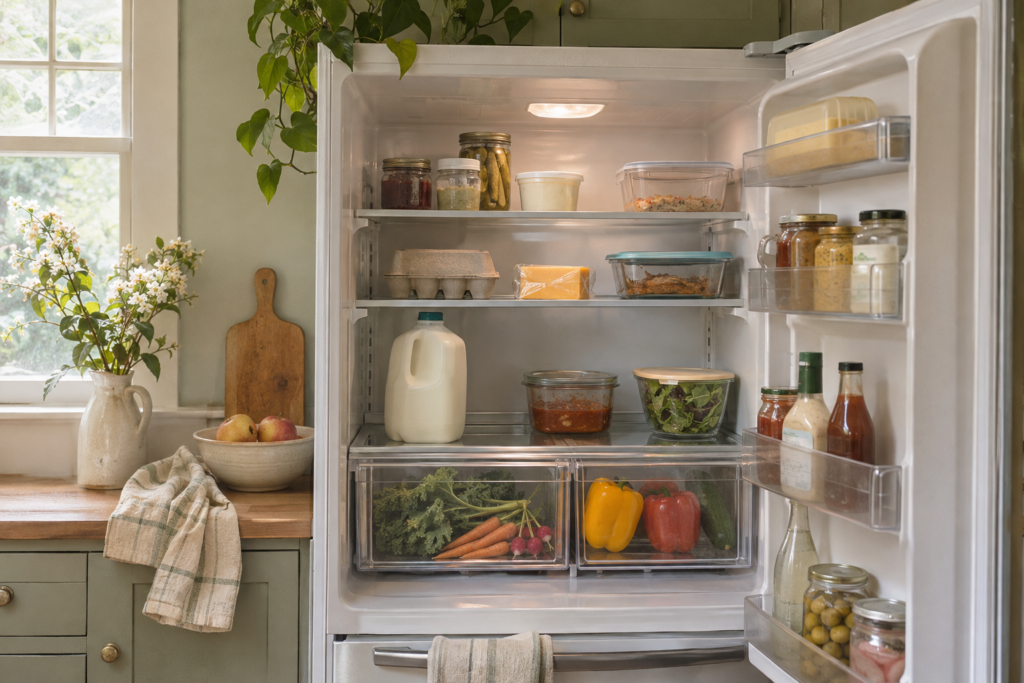
It’s nice to open the refrigerator and be able to find what you need. You can see what’s available for lunch, what needs using for supper, and whether there’s enough milk for tomorrow morning.
Of course, with everyday cooking and groceries coming and going, things get tucked behind other things and spills happen. I try to clean out my kitchen refrigerator weekly, or whenever it starts feeling crowded. A little regular attention helps me use the food we have and makes putting groceries away easier.
Here’s how I clean out and organize my refrigerator with the shelves and drawers I already have.
Start with one shelf
For my regular cleanout, I don’t empty the whole refrigerator at once. I work through one shelf at a time. That lets me see what’s there and clean underneath it without turning the entire kitchen into a project.
Take the food off one shelf and check what you have. Look for forgotten leftovers, nearly empty containers, spoiled produce, and ingredients that got pushed behind everything else. Leave that shelf clear while you sort the food and wipe it down.
Work promptly and keep perishable food cold. If you’re doing a longer cleaning, put it in a cooler with ice packs while you work.
Decide what to keep, use, or throw away
Some things are easy decisions. A spoiled vegetable or an old container of leftovers needs to go. Other things need a little more thought: an opened sauce, half a carton of broth, or something you bought for a recipe and haven’t touched since.
Check package storage instructions, how long the food has been open, and whether it was kept properly refrigerated. Most “best if used by” dates describe quality rather than a firm safety deadline. My guide to food dates and safe storage explains what the different labels mean.
Food can be unsafe even when it looks and smells fine. Don’t taste questionable food to decide whether to keep it.
Most cooked leftovers should be used within three to four days or frozen within that time for later. For more help deciding what to keep, freeze, or discard, see How Long Do Leftovers Last?
If you don’t know how old something is or whether it was stored safely, throw it away.
For food that is still safe and usable, decide how you’ll use it. A few vegetables might go into soup, leftover meat could become sandwiches, and an opened ingredient might help you choose dinner. Put those things where you’ll notice them.
Wipe away spills and sticky spots
My everyday cleaning is basic. I use a warm, soapy cloth to wipe the shelves and clean up spills or sticky messes, then wipe away any soap residue with a clean, damp cloth and dry the surface.
Wipe the bottoms of sticky jars and bottles before putting them back, too. Otherwise, the clean shelf will be sticky again as soon as you return everything.
If a drawer or shelf needs a more thorough washing, follow your refrigerator manufacturer’s cleaning instructions. Let cold glass shelves warm up before washing them in warm water, and use only products suitable for the refrigerator interior according to their labels and the appliance instructions.
Remember the door shelves and produce drawers, too. Lift out the small bottles, check for forgotten vegetables, and clean any sticky spots or debris underneath them.
A regular wipe-down helps keep the bigger cleaning jobs manageable. Clean spills when they happen rather than waiting for the next weekly check.
Keep your grocery list open while you work
I keep my store app ready when I clean out the refrigerator. If we’re out of something, I can add it to my grocery list right then.
It also helps me see what we already have before I buy more. It’s easy to think you need another bottle or carton when the one you have is hiding in the back.
As you go, notice the things you regularly replace and the things your family isn’t using. If the same item keeps getting thrown away, you may need to buy less of it or leave it off the list for a while.
You’ll find more ideas for making good use of what you buy in How to Make Groceries Stretch Without Feeling Deprived.
Put food back in a usual place
Everything in my refrigerator has a general place. Things we reach for regularly stay easy to get to. Less-used items may sit farther back, but I still need to be able to see and find them.
You can organize around the way your household eats:
- Keep leftovers together where they’re easy to notice, and label them with the date.
- Use the produce drawers according to your refrigerator’s instructions.
- Keep milk and eggs on an interior shelf rather than in the warmer door area.
- Store raw meat, poultry, and seafood in a leakproof container on a low shelf, away from ready-to-eat food.
- Use door shelves for suitable condiments, following their storage instructions.
Keep the refrigerator at 40°F or below, check it with an appliance thermometer, and leave enough room for cold air to circulate.
The arrangement should make putting groceries away and finding food easier. If something keeps getting forgotten, try moving it to a more visible spot.
Use the shelves and drawers you already have
I’ve tried extra refrigerator bins. They can look neat, but they didn’t make things easier for me. There was always an odd-sized item that didn’t fit, another bin to stack or clean, or an empty container that needed somewhere to go.
For my kitchen, the refrigerator’s own shelves and drawers work best. I have one Lazy Susan for condiments and smaller bottles that are easier to reach there or don’t fit well in the door.
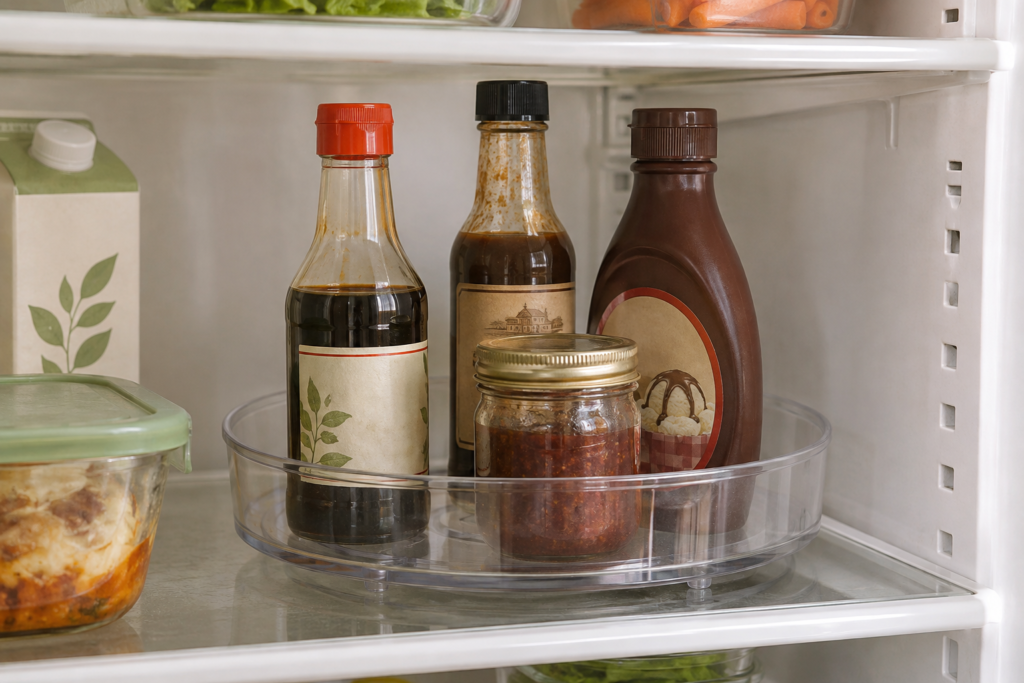
Even that needs checking. I recently looked through it and found things I had used for a while and no longer reached for much. Having a designated place doesn’t mean something needs to stay there forever.
If a bin solves a problem for you, use it. But before buying organizers, try clearing out the food you no longer need and rearranging the space you already have. You may find that’s enough.
Make room before holiday hosting
Before we host, I think about what will need to fit in the refrigerator. A casserole dish, a dessert, and several ingredients for a big meal can take up a surprising amount of space.
During the week before a gathering, I use up what we have and avoid buying a lot of bulky extras. I also clear out anything that doesn’t need to be there. It’s easier to make room gradually than to come home with holiday groceries and discover there’s nowhere to put them.
Look at your menu before shopping. Think about the dishes you’ll prepare ahead, the ingredients that need refrigeration, and the containers you’ll need afterward. Adjust a shelf if necessary, and plan space for leftovers as well as the meal itself.
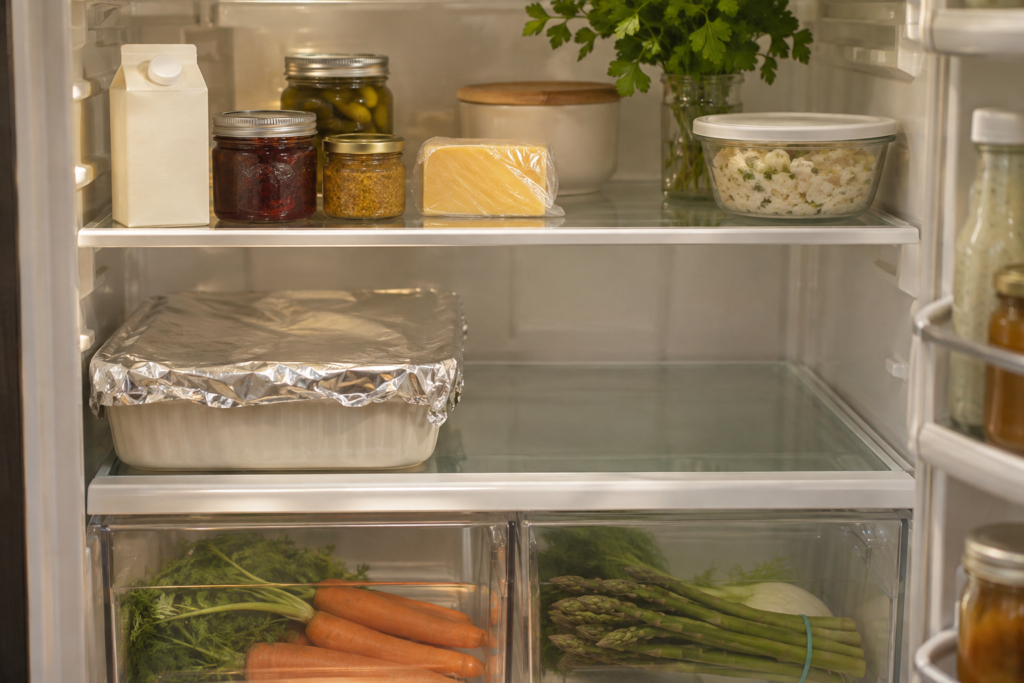
I have an older garage refrigerator that gives us room for extras. If you use a second refrigerator, check that it maintains a safe temperature; garage conditions can affect some appliances. If you have one refrigerator, planning your purchases and using up food ahead of time becomes especially helpful.
After the meal, refrigerate perishable leftovers within two hours, or within one hour if the temperature is above 90°F. Divide large amounts into shallow containers so they cool quickly. My guide to the two-hour rule covers serving and putting away food at family meals and gatherings.
A little attention makes everyday meals easier
Being able to see what you have makes it easier to put together lunch, plan supper, and bring home what you actually need. Start with one shelf and work your way through as you can. These small, ordinary jobs help us care for our homes and make good use of what we have.
Join me for The Home Journal
If you’d like more dependable family recipes, practical household skills, and a little encouragement for everyday homemaking, I’d love to have you join me for my weekly Home Journal. Sign up below to receive it in your inbox.
I hope this gives you a manageable place to start the next time your refrigerator feels a little too full. There’s something satisfying about opening the door, finding what you need, and knowing the food you brought home is being put to good use.
From My Hearth to Yours,
Becky
Leave a Reply