
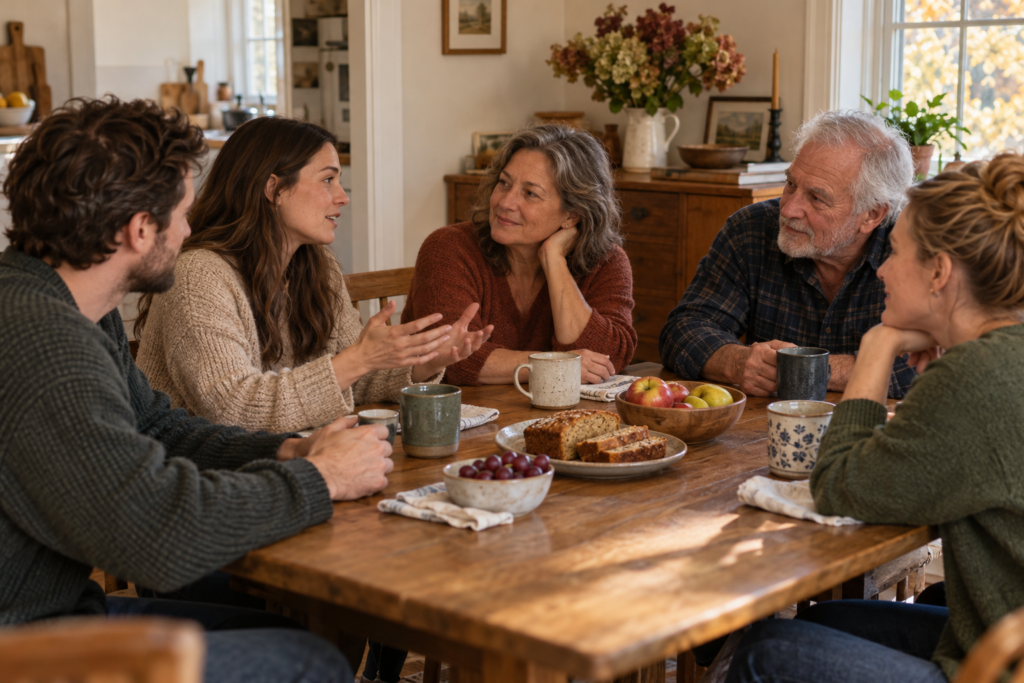
Most evenings, by the time we finish dinner, everyone in our house is tired.
We eat together and talk a little. Then we’re ready to plunk ourselves down on the couch and wind down before bed. We want to be together, but we don’t necessarily have the energy for a long conversation or something else to do.
Sometimes it’s enough to be in the same room with the people you love, without much being asked of you.
But I also know how easily an evening can disappear into separate screens and distractions. We can spend hours near each other without really finding out how anyone is doing.
I enjoy the internet. I find ideas there, keep up with people, and use it for my work. Still, I want some of our attention to belong to the people who are right here with us.
What can we do to make home a place where we have a chance to come back together?
A beautiful house can be enjoyable, but the people in it—and the way we care for one another—give it the feeling of home. We need somewhere to recover from the day, enjoy ordinary company, and feel that we belong.
Togetherness That Fits Real Life
Our best time together usually happens on the weekends.
In the summer and fall, we like being outside. My husband has turned the garage into what I call his “man cave garage palace.” The boys hang out, work on their projects, and watch sports. We might grill dinner, then gather around a campfire after dark and let the conversation wander as the evening settles in.
Sometimes friends or family come over, too.
There isn’t necessarily a schedule. Everybody can settle in, do what they enjoy, and relax. We try to protect one day on the weekend when we can be together without rushing through it.
Because our son has a disability, getting up and going somewhere takes more planning. Other people’s homes aren’t always easy for us to get into. Our own home has become the center of much of our life together.
That makes me think carefully about what we can make possible here.
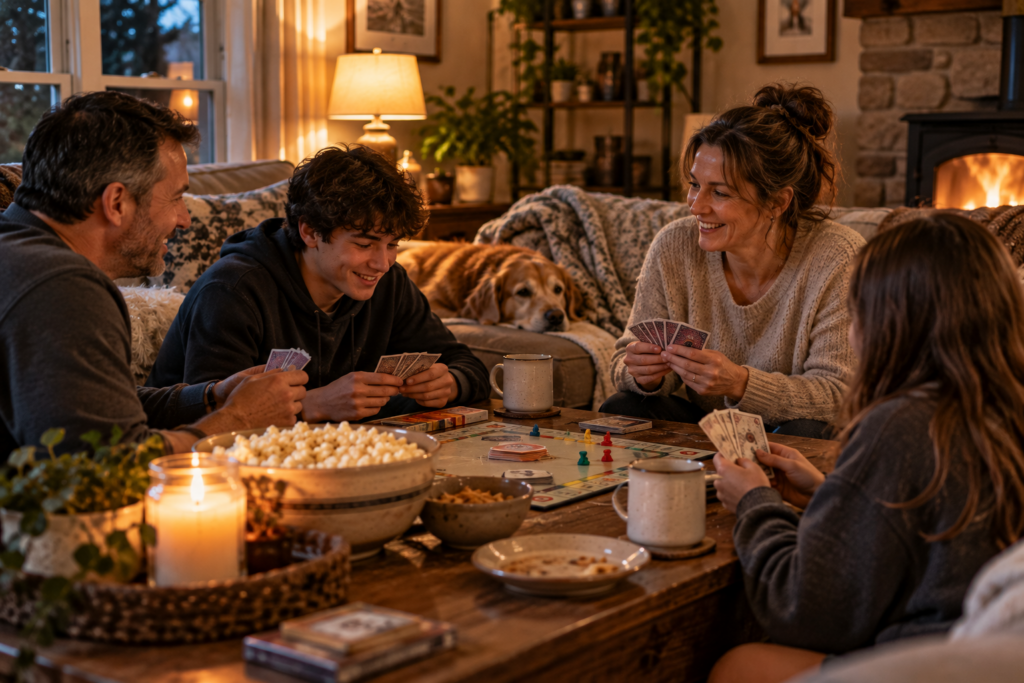
A meal outside. A game at the table. An evening by the fire. Familiar places where everyone can be comfortable and included.
Those things give us time together that fits our family. Another household’s version might look different. What matters is finding something people can enjoy without making togetherness feel like another exhausting obligation.
A Place Where Someone Notices
The outside world can ask a lot of us. By the time we get home, we may have spent the day working, caregiving, solving problems, or trying to keep up.
I want home to be somewhere we can admit we’re tired, have a disappointing day, or need a little quiet. We still have responsibilities here, but we can meet them with some patience for each other.
And I want us to notice how the other people in our home are doing.
That can be as simple as putting something down when someone starts talking. Asking how a difficult appointment went. Remembering something they were worried about and checking back. Being interested in a project that matters to them, even if it isn’t something we would choose ourselves.
Sometimes a person needs encouragement. Sometimes they need help. Sometimes they just want to tell their story without having it hurried along or immediately turned into advice.
We won’t get this right every day. Tired people can be distracted and short with one another. But we can return to it: listening, asking, apologizing when we need to, and letting people know their lives matter to us.
That care belongs to everyone in the household. The person who does most of the homemaking needs to be noticed and encouraged, too.
Give Ordinary Time a Chance
Being home together gives us an opportunity to connect. What we do with that time matters.
When we settle in to visit—around the table, outside by the fire, or in the living room—I like having the phones put away for a while. I want us to look up, hear each other’s stories, and enjoy the laughter that comes when everyone is paying attention. Those are the moments I want to leave some room for.
Shared entertainment has a place in our home. The boys enjoy watching sports together in the garage. What I want to protect is our chance to notice and respond to one another.
There are other easy ways to spend time together, too. Preparing dinner, shuffling cards, working on a project, or tending the fire gives our hands something to do while the conversation comes and goes.
And we don’t have to talk constantly.
One person can read while another works on something nearby. We can sit outside and enjoy a little silence. On an exhausted evening, quiet company may be exactly what everyone needs.
The point is to be available to each other—to have some ordinary time when a conversation can begin, someone can ask for help, or we can simply enjoy being together.
When the Family Circle Changes
That feeling of belonging can reach beyond the people who live in our house.
I miss the gatherings we had when my grandparents and parents were still around. There were holidays, weddings, christenings, family reunions, and all the occasions that brought people into the same place.
When I look back, I remember the feeling of being among people who knew me. There was a place for me there. Those memories carry a feeling of acceptance, love, and belonging—the feeling I associate with home, even when we gathered somewhere else.
Looking back, I also realize that certain people helped keep us connected. They set the pace. They made the plans. They gave everyone a reason to show up.
When those people are gone, something changes.
Sometimes a family gets smaller. Sometimes it spreads out. People develop their own routines, and the occasions that once brought everyone together become fewer.
You start thinking that everyone must be busy. Maybe they have other people to see. Maybe they wouldn’t want to come anyway.
And sometimes you don’t ask.
It can be lonely to remember belonging to a larger circle and realize how seldom you see those people now. I also wonder how often we’re waiting for an invitation from someone who is waiting for one from us.
Someone has to choose a day and ask. As the older generation passes away, sometimes that someone becomes us.
Our homes can help those relationships continue, even if the gatherings look different from the ones we remember.
Open the Door Without Wearing Yourself Out
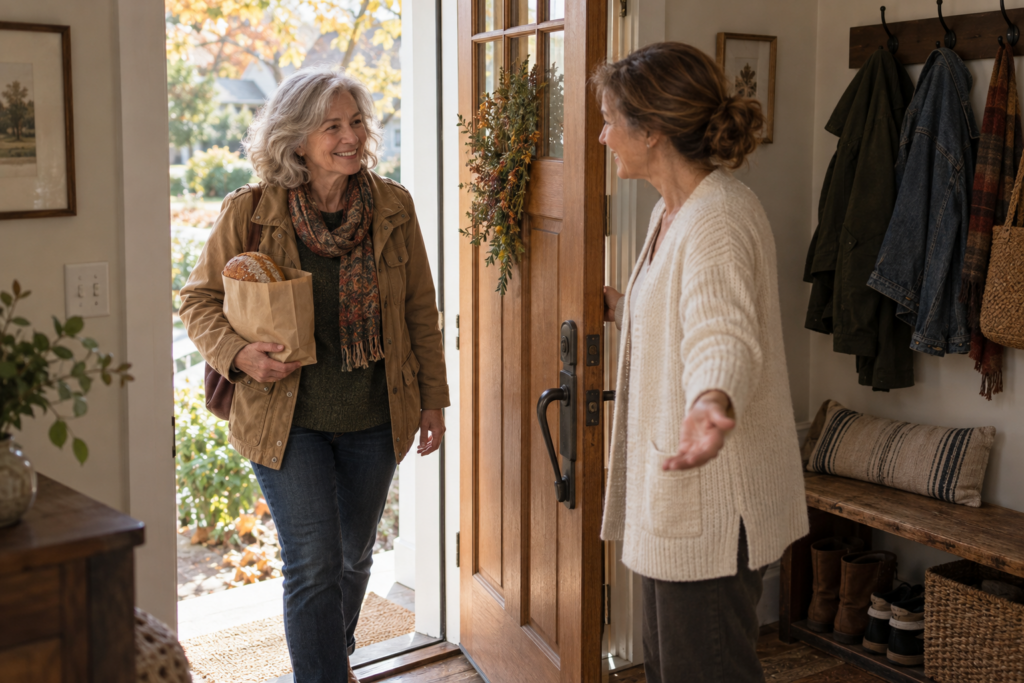
Maybe there is room to bring back Sunday dinner.
It could be once a month, with everyone bringing part of the meal. It could be friends around the table instead of relatives. The people you feel close to don’t all have to share your family name.
Or it could be coffee on a Saturday morning or an invitation to come sit outside for an hour.
I enjoy having people here. What wears me out is the work involved, so I’ve learned to keep it smaller.
I clean the kitchen, tidy the space we’ll use, and make sure the bathroom guests will use is clean. I don’t need to dust every object in the house. If we’re having dinner, I can make the main part and ask everyone to bring a dish.
Guests can contribute by answering the invitation, bringing what they agreed to bring, and helping clear things away afterward. Those small courtesies make gathering easier to repeat.
For our family, having people come here is often easier because of accessibility. For someone else, meeting at a restaurant or park may work better. The arrangement should fit the people, their abilities, their energy, and their budgets.
The invitation gives us an opportunity to keep knowing each other—to hear what has changed, share something funny, and spend time with people we might otherwise keep meaning to see.
Help People Feel Comfortable Together
Whether it’s an ordinary evening with our household or an afternoon with guests, the way we treat each other shapes how home feels.
People we love will sometimes see things differently from us. We can still expect respect: no name-calling, shouting, or pushing someone into an argument they don’t want to have.
Some subjects may need to wait for another occasion. It’s reasonable to say so and change the conversation.
We can decide that this afternoon is for enjoying each other’s company. Ask how someone has been. Listen to their news. Remember something funny together. A relationship deserves attention beyond the subjects we disagree about.
Some hurts run deeper, and each person has to decide which relationships they can safely welcome. But where there is goodwill, we can help it along through the way we speak and listen.
Everyone contributes to that welcome. The person who opens the door shouldn’t also have to carry all the work of keeping the afternoon pleasant.
Make Time While We Can
When I think about what I want our home to offer, I think about the people who made me feel welcome in theirs.
My grandparents were part of that. Their gatherings gave us time together that I didn’t fully understand the value of until later.
When my grandmother was in a nursing home farther away, I wrote to her quite often and sent pictures.
At one point, I kept thinking I should send something again. I did, but it arrived the day after she died.
That still makes me sad.
Those earlier letters were part of how I loved her, too. Still, I remember wishing that last one had reached her while she could enjoy it.
I think about that when I catch myself putting off contact with someone I care about.
We can’t predict how much time we have together. We can make a little time now—for a letter, a phone call, a meal, or an afternoon that doesn’t have to be anything special.
That brings me back to the question of what families need from home.
We need places where we can settle down and be ourselves. We need some attention, a little patience, and opportunities to enjoy one another. We need to know that someone is interested in how we’re doing.
Our ordinary routines can help make that possible: dinner together, a quieter evening, an extra chair by the fire, or an invitation with an actual day attached.
That’s the kind of home I want to keep building.
As you think about your own home and the people you care about, ask yourself:
“Who do I keep meaning to see—and what small invitation could I actually make?”
My hope is that this brings to mind the friends and family who have made your life richer, the ordinary moments you still remember fondly, and the people you’d like to make more memories with. Maybe it starts with a phone call, coffee at the kitchen table, or a simple invitation to dinner. We don’t need a perfect home or a special occasion to make room for one another.
From my hearth to yours,
Becky
A Little Encouragement for Your Own Home
If you enjoy these conversations about ordinary home life, I’d love to have you join me for my Friday Home Journal.
Each week, I share practical homemaking ideas, something from the kitchen, and a little encouragement for caring for your home and the people in it.
Sign up below to receive the Friday Home Journal in your inbox.
Leave a Reply