

One of the most useful homemaking skills you can learn is how to make dinner without a special trip to the store. Not because you’re being frugal for frugality’s sake, but because knowing how to work with what you already have builds confidence, reduces stress, and keeps daily life from feeling harder than it needs to be.
This skill isn’t about recipes or meal plans. It’s about learning how to look at what’s already in your kitchen and turn it into a complete, satisfying meal – calmly and without overthinking.
Why this Skill Matters
Knowing how to make dinner from what you already have:
- Saves money without feeling restrictive
- Reduces last-minute stress at the end of the day
- Keeps you from defaulting to takeout
- Builds confidence and flexibility in the kitchen
Most of all, it removes the pressure to “start from scratch” every night. Dinner becomes something you assemble with intention, not something you perform.
The Basic Framework
You don’t need a plan – you need a starting point. This simple framework works with almost anything you already have on hand.
- Start with protein.
Dinner begins here, Look first for:
- leftover meat
- raw meat or poultry
- eggs
- beans or lentils
Once you identify the protein, the rest becomes easier.
2. Add a starch or filler
This is what makes the meal feel substantial:
- potatoes
- rice
- pasta
- bread
- tortillas
3. Add one vegetable
Fresh, frozen, or canned – it all counts.
- broccoli
- green beans
- carrots
- peas
- salad
One vegetable is enough.
4. Use familiar flavors
This is where confidence comes from. Stick with what you know:
- butter and salt
- garlic
- herbs
- cream or cheese
- tomato or soy-based sauces
Familiar flavors reduce resistance and make simple food satisfying.
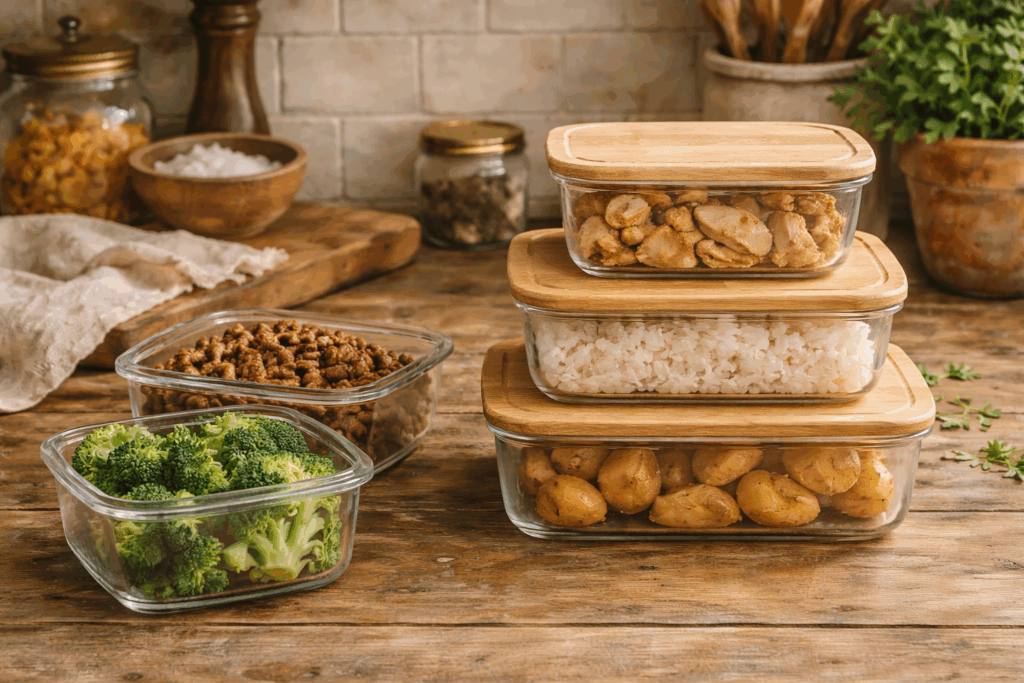
Using leftovers on Purpose
I feel most accomplished when we actually eat all our leftovers. Instead of starting over every night, I usually take what we already have and add one new element – a fresh side, a different vegetable, or a simple starch.
That small addition makes the meal feel intentional again, without wasting food or energy or energy. Leftovers don’t have to feel like settling. They can be the base of dinner, not the compromise.
This approach keeps meals moving forward instead of constantly resetting.
What this looks like in real life
Here are a few everyday examples:
- Leftover roast chicken served with fresh rice and frozen green beans
- Ground beef from the night before turned into tacos with tortillas and shredded lettuce
- Leftover potatoes paired with eggs and a simple vegetable
- Cooked sausage sliced into a skillet with frozen vegetables and served over pasta
- A container of leftovers turned into a soup with broth and whatever vegetables are on hand
Nothing elaborate. Just complete meals built from what’s already there.
Common mistakes to avoid
- Thinking dinner has to be a recipe
- Waiting until late afternoon to decide what to make
- Believing “nothing sounds good” means “nothing will work”
- Ignoring frozen or canned food
- Starting over every night instead of building on what’s left
These habits create unnecessary stress. The skill is learning how to continue, not restart.

How to start tonight
Tonight, don’t plan a meal.
Just Identify:
- one protein
- one starch
- one vegetable
Use simple, familiar flavors and serve it with confidence, That’s dinner.
This is a skill you build through repetition, not perfection. The more often you practice it, the calmer and more capable your evenings will feel.
Leave a Reply