

Running a home can feel overwhelming when every task depends on memory, motivation, or sheer willpower.
When I was younger, I assumed some women simply had a natural gift for homemaking. Their homes seemed organized, dinner appeared on the table each night, appointments were remembered, and life looked far less chaotic than mine.
What I eventually realized was that most well-run homes aren’t built on motivation. They’re built on systems.
The women who seems to have it all together usually aren’t working harder than everyone else. They’ve simply created routines that reduce the number of decisions they have to make each day.
The funny thing is, I didn’t even think of these as systems. They were simply things I did without much thought.
I planned meals before grocery shopping. I kept a calendar. I reset my kitchen before bed. I wrote things down instead of trying to remember them.
Over time, these small routines became the framework that helped our home run more smoothly.
The good news is that you don’t need expensive planners, fancy organizing products, or a perfectly organized house to create systems of your own. A few simple routines can save time, reduce stress, and make daily life feel much more manageable.
Here are ten home systems that have helped me over the years.
Why Home Systems Matter More Than Motivation
Many women believe they need more discipline, better time management, or greater motivation.
In reality, motivation comes and goes.
Systems continue working even when you’re tired, busy stressed, or having a difficult week.
A meal plan still exists when you don’t feel like cooking. A family calendar still reminds you of appointments when life feels hectic. A laundry routine still keeps clothes moving through the house when you’re overwhelmed.
Good systems reduce the mental load of running a home because they allow you to rely less on memory and decision-making.
That’s why experienced homemakers often seem calm. They’ve built systems that support them.
1. Create a Weekly Meal Planning System
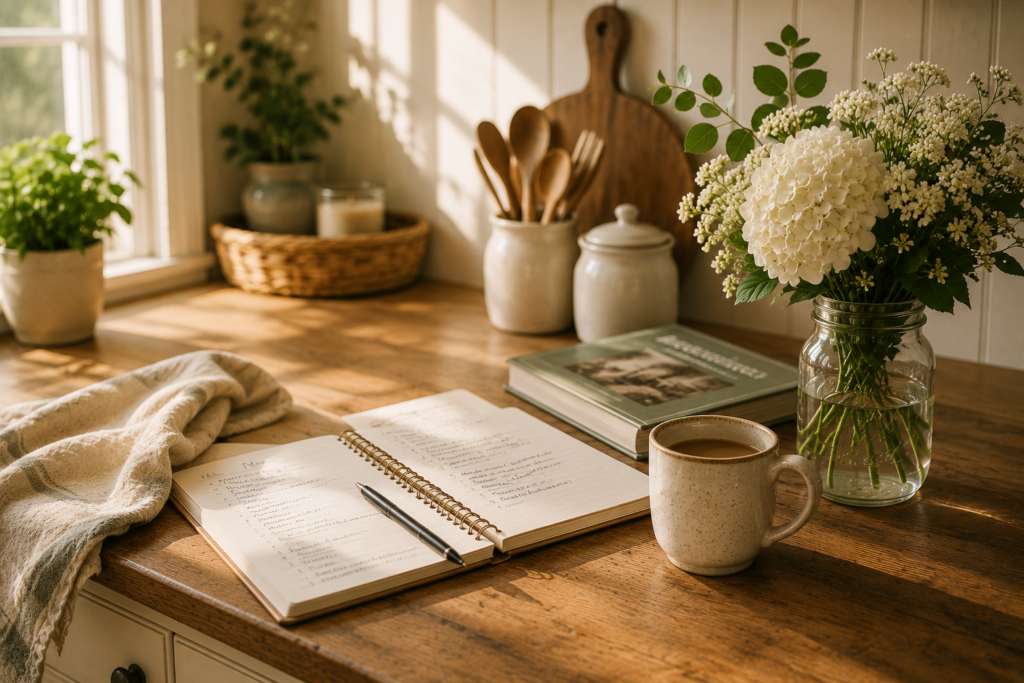
One of the biggest time-savers in our home is deciding what we’re eating before the week begins.
Instead of standing in front of the refrigerator every afternoon wondering what to make for dinner, I already have a plan.
Meal planning doesn’t need to be complicated. Choose meals your family enjoys, check what you already have on hand, and build a simple plan from there.
The goal isn’t perfection. The goal is eliminating daily decision fatigue.
When dinner is already planned, the evening feels much calmer.
A Simple Weekly Meal Planning System for Everyday Homemaking
2. Keep a Running Grocery List
Nothing wastes time quite like making multiple trips to the grocery store because you forgot an item.
Whether you use a notebook, a magnetic list on the refrigerator, or an app on your phone, the principle is simple: write things down the moment you notice you’re running low.
This small habit saves both time and money.
3. Do an Evening Kitchen Reset
Few things improve the next day more than waking up to a reasonably tidy kitchen.
An evening reset doesn’t have to take long.
Load the dishwasher, wipe the counters, put away stray items, and prepare for the morning if possible.
I like to make sure the coffee is ready because future me appreciates the help.
Ten minutes in the evening often creates a calmer start to the next day.
4. Establish a Laundry Routine
Laundry feels overwhelming when it becomes an emergency.
A simple routine removes much of that stress.
Some homemakers prefer a load a day. Others assign specific laundry tasks to certain days of the week.
The exact schedule matters less than having a plan.
Instead of constantly wondering when you’ll get caught up, laundry becomes part of your normal household rhythm.
5. Use One Family Calendar
Appointments, school activities, bill due dates, and family commitments all need a home.
Trying to keep everything in your head is exhausting.
Whether you prefer paper or digital, keeping important dates in one location helps you plan ahead instead of constantly reacting.
6. Create a Home for Important Papers
Mail has a way of multiplying when we don’t have a designated place for it.
Important documents, receipts, insurance paperwork, medical records, and school papers should all have a home.
It doesn’t need to be fancy.
A simple file box, drawer, or folder system can save countless hours of searching later.
__________________________

Join The Home Journal
If you’re working to create a peaceful, well-run, home without perfection or overwhelm, I’d love to encourage you along the way.
Join The Home Journal and receive practical homemaking tips, simple living inspiration, seasonal encouragement, and old-fashioned skills for modern homemakers.
7. Follow a Weekly Cleaning Rhythm
Many homemakers become overwhelmed because they view cleaning as one enormous task.
A weekly cleaning rhythm breaks that task into smaller pieces.
Bathrooms one day, Floors another. Dusting when it fits your schedule.
A home doesn’t need to be spotless to feel welcoming.
Small efforts done consistently often accomplish more than occasional marathon cleaning sessions.
8. Keep a Simple Pantry Inventory
A pantry inventory can be as simple as a notebook or checklist.
Knowing what you already have helps prevent duplicate purchases and reduces food waste.
It also makes meal planning easier because you can quickly see what’s available.
You don’t need a perfectly organized pantry to benefit from this system.
You simply need a way to keep track of what you have.
9. Build a Simple Morning Routine

A simple morning routine doesn’t have to begin at 5a.m. or include an long to do list.
It might be as simple as making the bed, opening the curtains, unloading the dishwasher, and taking a quick look at the day’s plans.
The goal is simply to start the day intentionally rather than feeling behind before breakfast.
Small actions create momentum and help the home feel cared for before the day becomes busy.
10. Schedule a Weekly Planning Session
Of all the systems on this list, this one may have the greatest impact.
Spend fifteen minutes to twenty minutes once a week reviewing upcoming appointments, meal plans, grocery needs, family commitments, and household priorities.
Think of it as a meeting with yourself.
A little planning today often saves hours of scrambling later.
Don’t Try to Build All 10 Systems at Once
If your home feels overwhelming right now, don’t try to implement every system on this list this week.
Choose the area that causes you the most stress.
If dinner feels crazy, start with meal planning.
If appointments are constantly forgotten, create a family calendar.
If laundry seems out of control, establish a simple laundry routine.
Small systems have a way of building on one another.
As one area becomes easier to manage, you’ll gain confidence and energy to improve to the next.
Remember, the goal isn’t to run your home perfectly.
The goal is to make life a little easier for yourself and the people you care for.
Final Thoughts
The truth is that every home has dirty dishes, laundry piles, paperwork, meals to prepare, and appointments to remember.
The difference isn’t whether this responsibilities exist.
The difference is whether we have a plan for handling them.
Simple home systems won’t solve every problem, but they can reduce stress, save time, and help your home feel more peaceful.
Start with one system.
Practice until it feels natural.
Then add another.
Before long, you’ll discover something surprising:
A well-run home isn’t built in a day.
It’s built one simple system at a time.
from my hearth to yours,
Becky
You May Also Enjoy Reading
Remind yourself that you HAVE survived 100% of your worst days so far.
Hello!
I am still standing!