

Meal planning doesn’t need to be complicated to work.
If you’ve ever tried detailed meal planning systems, you may have found they’re hard to maintain. Spreadsheets, batch cooking, and complicated prep plans sound helpful – but in real life, they often become overwhelming.
Over time, I’ve found that a simple weekly meal planning system works best for everyday homemaking.
Each Sunday, I take a few minutes to plan dinners for the week. I check what I already have, rotate simple meals, and make a short grocery list to keep my pantry stocked.
That’s it.
This simple weekly meal planning system helps keep our home running smoothly, reduces stress, and makes everyday life feel more manageable.
And best of all – anyone can start this today.
__________
Weekly Meal Planning Is a Foundational Homemaking Skill
One of the simplest ways to keep a home running smoothly is to plan meals ahead of time.
Without a simple plan, it’s easy to:
- Feel stressed at dinnertime
- Overspend on groceries
- Rely on takeout
- Waste food
A simple weekly meal planning system helps create structure without rigid – and over time, it becomes one of the easiest ways to maintain a well-run home.
Like many homemaking skills, it doesn’t need to be complicated to be effective. Small, consistent habits often make the biggest difference.
___________
This Simple Weekly Meal Planning System Is Perfect If You:
- Feel overwhelmed by meal planning
- Want simpler dinners
- Are trying to save money on groceries
- Want a calmer week at home
- Prefer flexible, realistic homemaking
- Don’t want complicated systems
If that sounds like you, a simple weekly meal planning system may be exactly what you need.
__________
My Simple Weekly Meal Planning System
Each Sunday, I follow the same simple steps. This keeps meal planning quick, practical, and easy maintain.
__________
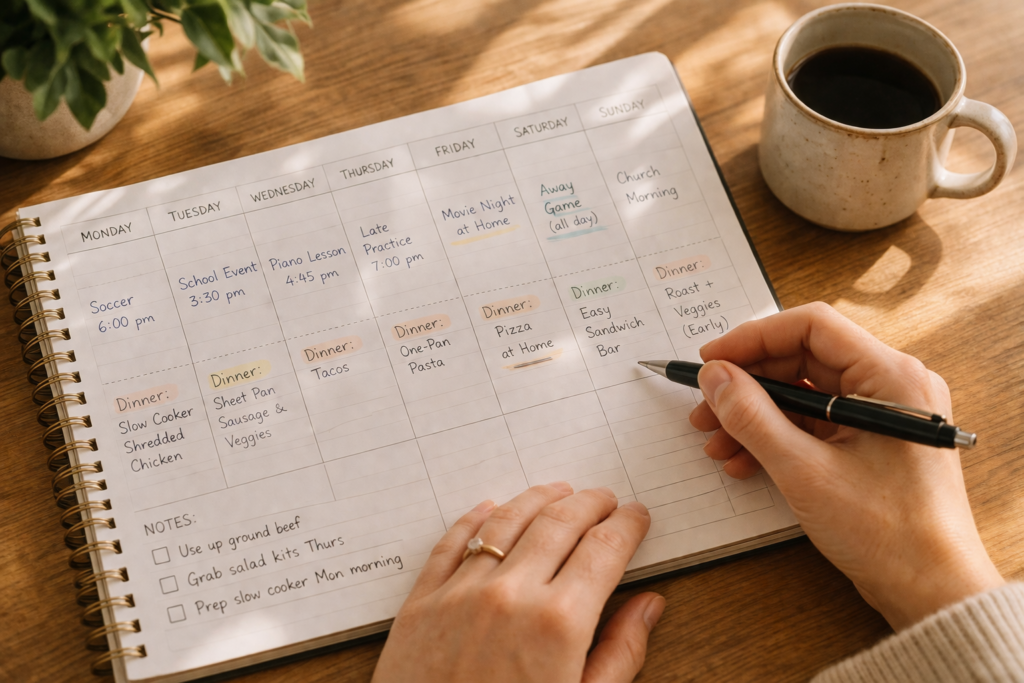
1. Look at the Week Ahead
First, I quickly look at our schedule.
I think about:
- Busy days
- Appointments
- Low-energy days
- Weekend plans
If I know a day will be busy, I plan a simpler meal. If the week looks more relaxed, I may try something new.
This helps the week feel more manageable before it even begins.
__________
2. Check the Fridge, Pantry, and Freezer
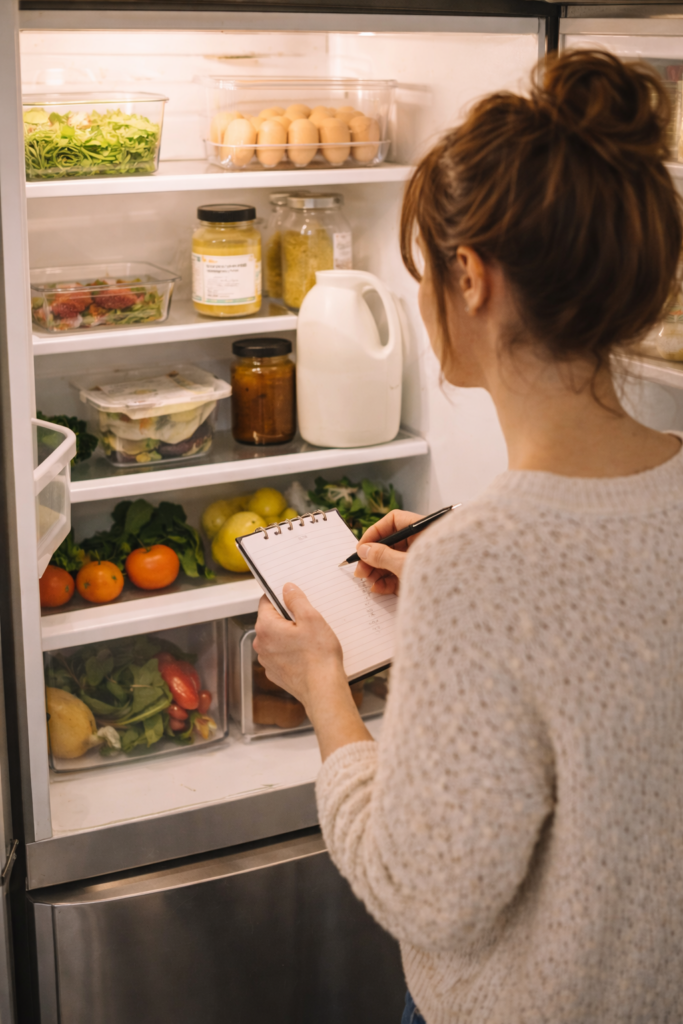
Next, I take a quick look at what I already have.
I check:
- What needs to be used up
- What I already have plenty of
- What I’m running low on
- What’s in the freezer
Then I plan meals around those ingredients.
For example:
- Vegetables that need to be used – soup or stirfry
- Leftover meat – sandwiches or casserol
- Ground beef in freezer – tacos or spaghetti
- Potatoes that need to be used – roast dinner
This simple habit helps reduce food waste, save money, and simplify meal planning.
Instead of asking, What should I make?
I start with, What do I already have?
__________
3. Rotate Simple Go-To Meals
For busy weeks, I rely on simple meals I already know how to make.
Some go-to meals might include:
- Spaghetti
- Tacos
- Chicken and potatoes
- Soup and bread
- Roast and vegetables
- Breakfast for dinner
These simple meals remove decision fatigue and make weekly meal planning easier.
You don’t need new meals every night. Simple, familiar meals often become the most comforting ones.
__________
4. Use Pinterest to Keep Things Fresh
While I rely on simple go-to meals, I also like to keep things interesting.
I keep Pinterest boards with:
- Dinner ideas
- Seasonal meals
- Comfort food
- New recipes to try
When planning the week, I may choose one or two new meals to try alongside mt familiar meals.
This keeps things fresh without becoming overwhelming.
__________
5. Keep a Simple Weekly Meal Calendar on the Fridge.
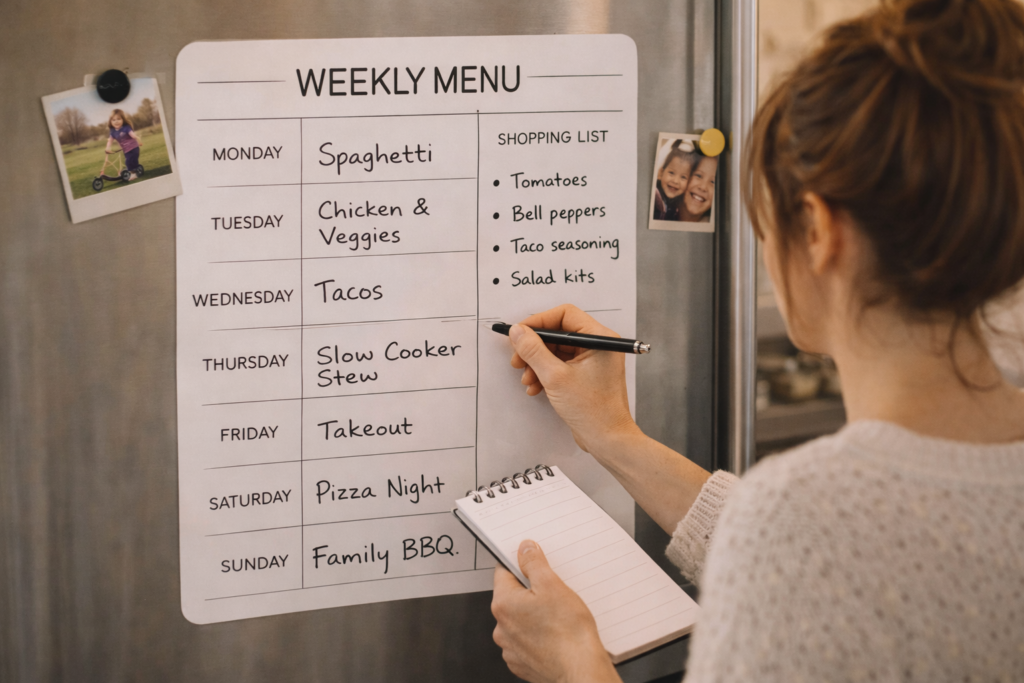
To keep things simple, I use a weekly meal planning calendar on my fridge.
Once I’ve planned the meals, I write them down so I can see the week at a glance.
This helps:
- Keep dinners organized
- Reduce daily decision-making
- Let everyone know what’s for dinner
- Keep the week running smoothly
It doesn’t need to be fancy. A simple fridge calendar, notepad, or even a piece of paper works just fine.
What matters most is having a simple place to see your plan.
__________
A Simple Weekly Meal Plan Example
Here’s what a simple weekly meal plan might look like:
Monday – Spaghetti and salad
Tuesday – Chicken, potatoes, and vegetables
Wednesday – Leftovers or soup
Thursday – Tacos
Friday – Breakfast for dinner
Saturday – Easy meal
Sunday – Roast and vegetables
Your plan doesn’t need to be complicated. Simple meals are often the easiest to maintain.
__________
6. Make a Grocery List and Restock
After planning meals, I make a quick grocery list.
I add:
- Items I don’t have
- Ingredients I’m running low on
- Pantry items that will be depleted
If using an ingredient for dinner will empty something in my pantry, I add it to my grocery list so it stays stocked.
This helps:
- Prevent last-minute grocery trips
- Keep the pantry organized
- Maintain a steady flow of meals
- Make shopping more intentional
This step helps create a well-run kitchen and makes weekly meal planning easier over time.
__________
What Makes This Weekly Meal Planning System Different
This simple weekly meal planning system is designed for real life.
It’s:
- Flexible
- Simple
- Based around everyday meals
- Easy to maintain week after week
You don’t need complicated spreadsheets or hours of prep.
Just a few minutes each week can make a meaningful difference in how your home runs.
__________

Why This Simple Weekly Meal Planning System Works
This simple weekly meal planning system helps:
- Reduces daily stress
- Save money on groceries
- Reduce food waste
- Avoids last- minute takeout
- Creates a calm rhythm for the week
It’s a small habit that makes a big difference in how a home feels and functions.
__________
A Simple Habit That Supports Everyday Homemaking
Weekly meal planning doesn’t need to be perfect.
It’s simply a quiet habit that supports everyday life at home.
Over time, this simple weekly meal planning system helps create:
- A calmer kitchen
- More predictable evenings
- Less stress at dinnertime
- A home that feels steady and cared for
Often, it’s these small, consistent habits that makes the biggest difference in everyday homemaking.
__________
Start Simple
If you’d like to try this simple weekly meal planning system, start with just one step.
This Sunday, take five minutes to:
- Look at your schedule
- Check your fridge and pantry
- Plan dinners
- Write them down
- Make a short grocery list
That’s all it takes to begin.
Simple routines like this are often the foundation of everyday homemaking – and over time, they help create a calmer, more manageable home.
_________
If you’re building simple homemaking routines, you may also enjoy:
A Simple Stay-at-Home Routine for Homemakers
Together, these simple systems help create a calm, well-run home.
__________
Leave a Reply