

Cooking a meal, washing clothes, cleaning up after yourself, and keeping track of money are ordinary parts of daily life. But knowing how to do those things takes learning and practice.
My mother taught me a lot about cleaning and caring for things. We had chores from the time we were little: making our beds, helping after dinner, and doing our Saturday jobs. We knew certain tasks needed to be finished before we could go play.
Her instructions were usually simple and direct. She would show us what to do, give us the cleaning supplies, and send us off to do it. We were expected to participate in the work of the home.
I learned cooking from my mother, my grandmother, and other people along the way. I also took home economics in school. Looking back, I had several opportunities to learn things I still use today.
People have different opportunities growing up. Some reach adulthood without much experience with cooking, laundry, cleaning, or budgeting. That can make daily life harder, especially when they begin sharing a home with someone else.
Whatever we already know, we can keep learning. And when we teach each other, more than one person becomes able to handle the everyday work of home.
Start with the work your household actually needs
Sharing responsibilities begins with looking at what it takes to live in your home.
Someone needs to plan food, prepare meals, wash dishes, clean bathrooms, take out rubbish, and keep clothes ready to wear. Someone also needs to notice when supplies run low and make sure bills and other necessary expenses are covered.
These are useful skills for adults and for children to learn gradually as they grow. The tasks a person takes on will depend on their age, abilities, time, and circumstances.
Choose one responsibility that would be useful to share. It might be preparing a simple supper, doing a load of laundry, or keeping a bedroom reasonably tidy. Start with something specific enough to teach and practice.
Show the task, then give the person a turn
When you have done something for years, it is easy to forget how many small decisions it involves.
“Clean the bathroom” may sound straightforward to you. Someone learning may need to know which supplies to use, what surfaces to clean, and what to do with the supplies afterward. “Do your laundry” can involve sorting, reading clothing labels, choosing a setting, and putting clean clothes away.
A simple way to teach is to:
- Explain the result. Describe what needs to be done and why it matters.
- Demonstrate. Show the steps, including anything important for safety or caring for the items involved.
- Practice together. Let the person do the task while you are available for questions.
- Hand over responsibility. Give them another opportunity to do it with less direction.
- Follow up. Talk through anything they missed or found difficult, and practice again if needed.
Use this respectfully with adults, too. My husband and I teach each other things. Each of us knows things the other can learn, and neither of us has to be the expert on everything.
Make the task possible for the person doing it
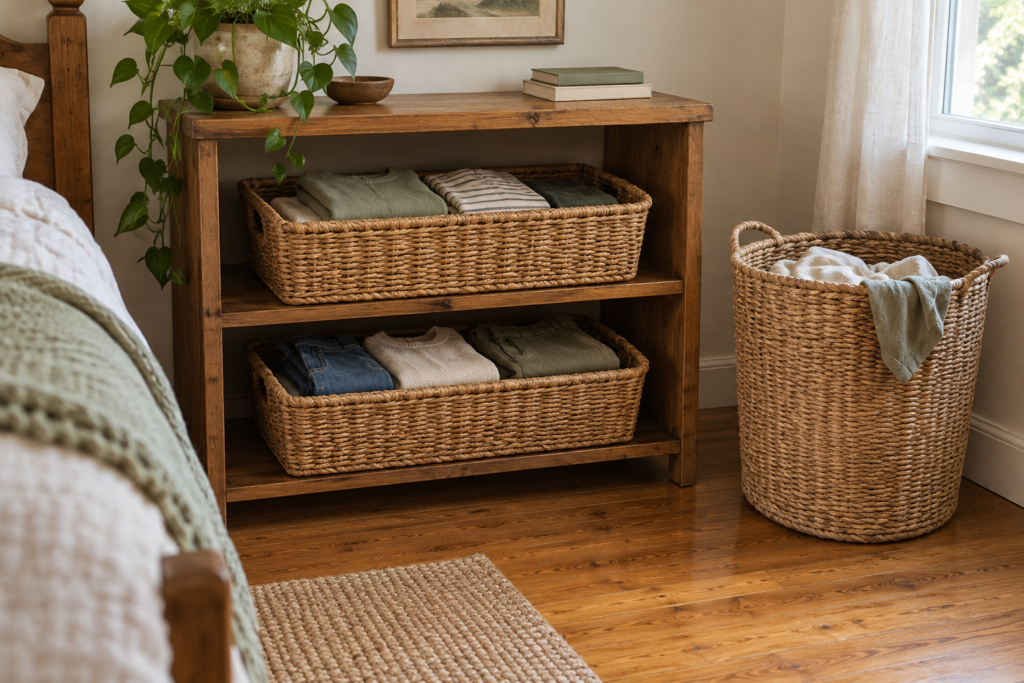
In our family, we have adapted things so our son can care for his room and belongings according to his abilities. Making items easier to reach and put away helps him manage more for himself.
He puts clothes in his hamper, throws rubbish away, and does what he can to put his clothes and other things away. I don’t expect perfection. I recognize the effort and the responsibility he is taking.
That is worth considering in any household. Before deciding someone cannot manage a task, look at what is making it difficult. Are supplies out of reach? Is the storage confusing? Does the job need to be broken into smaller steps? Do they need more practice or an adapted way to do it?
Some people will continue to need assistance, and some tasks will need to stay with someone who can do them safely. There can still be meaningful opportunities to participate.
Make room for the time teaching takes
Sometimes it feels easier and quicker to do everything myself. I understand that feeling, especially when helping my son. Explaining, waiting, and practicing can take longer than simply finishing the job.
But if I always do it, he loses the opportunity to learn what he can do.
You don’t have to turn every busy evening into a lesson. Choose a manageable time and one task. A quieter afternoon might be a better time to practice laundry than the morning everyone needs clean clothes immediately.
Expect some repetition. Something that feels automatic to you may still require another person’s full attention. Give them enough opportunities to become familiar with it.
Agree on what matters, and allow a different method
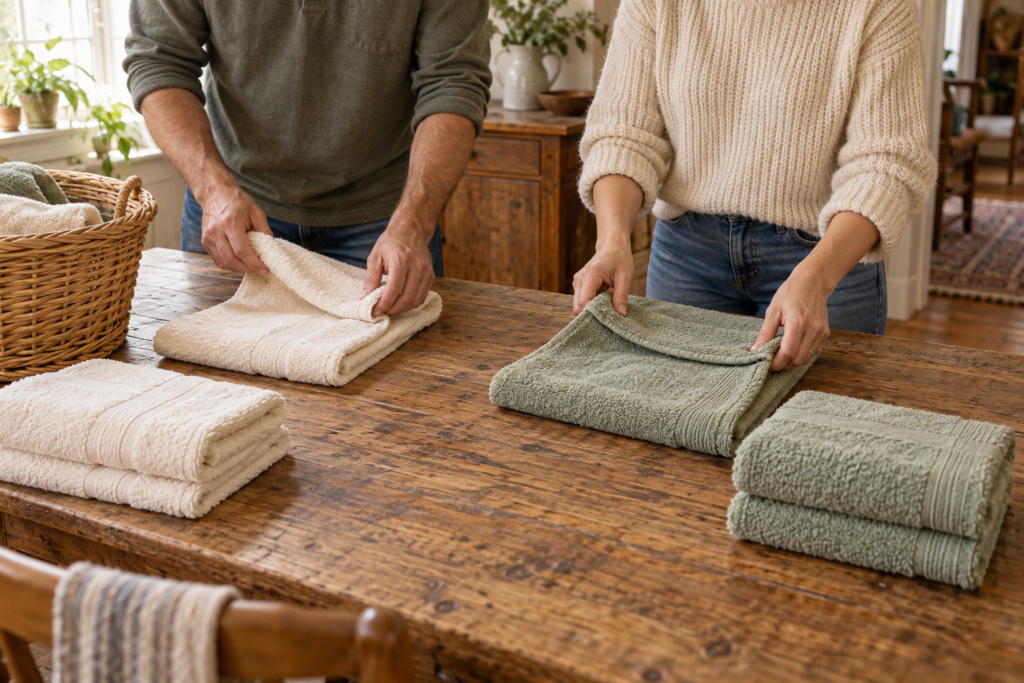
My husband does some things differently than I do. When I was younger, that sometimes annoyed me. Now, if the job is done, I am usually happy to have it done.
The dishes may be put away differently. Things will be used and moved again anyway. It is often a small thing to get upset about.
It helps to distinguish between something that affects safety, accessibility, or whether the task is finished, and something that is simply a preference. If an item needs to stay within someone’s reach, explain that. If two different approaches both work, allow room for the other person’s approach.
Constantly redoing someone’s work can make it difficult for them to feel responsible for it. Agree on a reasonable result, address what actually needs correcting, and let the rest be different.
Share the remembering as well as the doing
Knowing how to do a task is one part of taking responsibility. Learning to notice when it needs doing is another.
Talk about the cues you use. A nearly full hamper means laundry needs attention. Using the last of something means adding it to the shopping list. Finishing a meal means there are dishes to handle.
Regular routines also help. Growing up, we knew we had after-dinner chores and Saturday jobs. We had repeated chances to practice and knew when the work was expected.
When assigning a responsibility, agree on what it includes and when it should happen. Someone taking care of the dishes, for example, needs to know whether that includes wiping the counter and putting the dishes away afterward. Clear expectations prevent unnecessary guessing.
Pick one skill to practice this week
You don’t need a complete household overhaul. Have a conversation and choose one place to begin:
- What task would be useful for another person to learn?
- What do they already know, and what help do they need?
- Is there anything about the setup that makes the task difficult?
- When can you practice together?
- What will they take responsibility for afterward?
Cooking one simple meal, managing a load of laundry, or planning a few household purchases within a budget is a useful beginning. Build on what people learn rather than expecting them to master everything at once.
Try it with one simple supper: Choose a meal together, check which ingredients you have, and prepare it side by side. Explain any unfamiliar steps. Next time, let the person handle more while you’re available for questions. Agree beforehand whether their responsibility includes the dishes and cleanup.
If you’re learning these skills yourself, start with one manageable task and ask someone you trust to show you—or work through it together.
A little encouragement for your home

If you would like more practical ideas for everyday meals, household skills, and caring for your family, I’d love to have you join my email list.
I’m grateful for the people who took time to teach me. Their lessons are part of how I care for my home today, and there are still things I learn from others.
I hope this encourages you to pass along something you know, ask for help with something you want to learn, and make room for a different way of doing things. It takes patience to teach and practice, but those everyday opportunities help people become more capable and share in the care of their home.
Take care of yourself and each other,
Becky
From Hearth to Home
Leave a Reply