
A simple family backup plan for meals, daily routines, and sharing the work.

Around 2017, my son and I came down with a terrible illness. We were both sick, and it felt like it took about a month before we were really back on our feet.
My husband still had to go to work. During the day, I was trying to care for a sick child while I was sick myself. There were times when we were both throwing up, and I still had to find enough energy to help him.
When you care for someone with a disability, their need for help doesn’t disappear because you’re sick. You may need to crawl into bed, but someone still needs you.
I remember how exhausting even one load of laundry felt. It might as well have been twenty hours of work.
My husband took over our son’s care when he got home so I could rest. He picked up medicine and food, cleaned, and did what he could to keep things going. Fortunately, he didn’t get as sick as we did. We have always leaned on each other, and I was especially grateful for that then.
We already worked as a team, and it was still an incredibly hard stretch. My husband couldn’t be home every minute, and there wasn’t anyone else available to take over during the day. Even in a loving, supportive family, illness can show you how much depends on the people who usually provide the care.
That is why a family backup plan matters. It gives everyone a clearer idea of what needs attention, what can wait, and what they can take off the sick person’s shoulders. The goal is to make room for rest while the essentials are covered.
The person who usually handles things needs rest, too
In many homes, one person knows most of the daily details. They remember what needs to be done, where things are kept, what’s running low, and who needs what.
That person might be Mom, Dad, a spouse, or another family member. And when they get sick, the work is still there.
It helps to talk about taking over before anyone is sick. If one person needs to explain every step, answer every question, and remember what comes next from bed, they are still carrying part of the work.
For example, taking care of supper includes deciding on something manageable, finding or picking up the food, and handling the cleanup. Knowing someone has that covered makes it easier to settle down and rest.
Taking over a responsibility includes remembering it and following through. Being able to hand something over and trust that it will be handled gives the person who is sick a chance to actually rest.
Decide what truly has to happen
When we were that sick, I let a lot of things slide. Sometimes almost everything had to wait.
Medications and essential care still needed attention. Beyond that, we did what we could. We weren’t making big dinners. My husband picked up takeout, and my son and I weren’t eating much anyway. I remember ice chips and soup. The energy I had went toward caring for him and basic things like getting myself showered.
Every household’s essentials will look a little different. Before illness hits, talk through a few questions:
- Who needs daily care or assistance?
- What routines must continue, including prescribed medications?
- Who can handle food, children, pets, or necessary transportation?
- Which tasks can wait until someone feels better?
Laundry may need to be done because there are no clean clothes or someone has been sick on the bedding. Folding every towel can wait. A simple meal is enough. The house can be less tidy for a while.
Give yourself permission to use your limited energy where it is needed most.
Keep familiar sick-day supplies in the house
One thing I would encourage families to do is keep the supplies they know they use on hand, especially heading into cold and flu season.
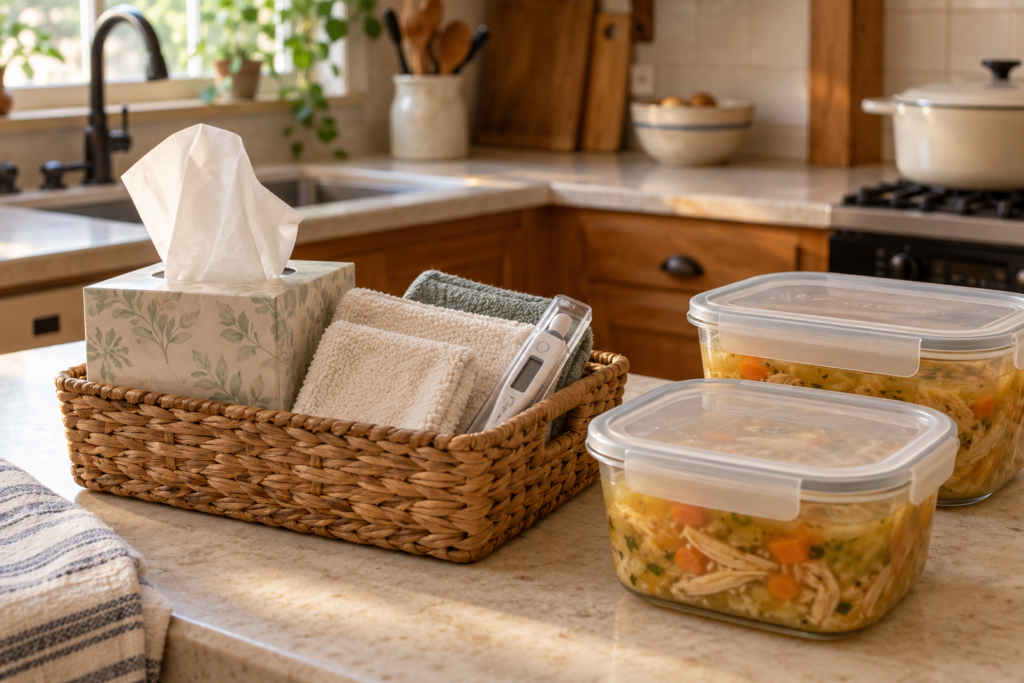
Think about tissues, soap, basic cleaning supplies, easy foods, and the medicines your family normally uses. Check what you already have, including expiration dates, rather than finding out something is empty when everyone feels awful. Keep medicines stored safely and follow their labels and any individual care instructions.
Having a few familiar things ready can save someone an extra trip to the store. It also makes it easier for the person helping to find what is needed.
Write down the details someone else would need
You don’t need to create a huge household manual. Start with a page of the information another person would need for the next day or two.
Include where essential supplies and current care instructions are kept, important contacts, necessary appointments, and the routines that cannot be missed. If someone in your home needs specialized care, identify a person who already knows how to provide that care safely. A written note can support a handoff; some responsibilities also require training and practice.
Walk through the essentials together while everyone is well. Let the other person do the task and find the supplies. That is how you discover the small details you might otherwise forget to explain.
Know who you can ask for a little help
My husband is the person I depend on most, but I also have a friend or two I would feel comfortable asking for a specific favor if things got really difficult.
They might be able to pick up medicine or bring a meal. That would still make a difference, even if they couldn’t take over our son’s care.
Think about who you could call and what you would feel comfortable asking them to do. A specific request makes the need easier to understand: “Could you pick up our prescription?” or “Would you be able to drop off soup tomorrow?”
Some families have very little outside help. My husband still had to work during our illness, and that left difficult hours to get through. A plan cannot make another person available when there is no one to call. But identifying even one small source of help, keeping supplies within reach, and letting unnecessary work wait may ease some of the load.

Teach your family to notice
Everyone may get sick at different times or feel sick to different degrees. Whoever is able to help can look around and consider what someone else needs.
That might mean bringing water, taking care of the dishes, preparing something simple to eat, or keeping the house quiet so someone can sleep. Children can contribute according to their age and ability, with adults responsible for care decisions and tasks that require adult supervision.
This awareness grows through ordinary family life. Talk about what needs doing. Practice useful tasks together. Give people responsibilities they can manage before you urgently need their help.
Make a small plan together
Set aside a few minutes while everyone is well and write down these five things:
- Our essentials: the care and daily tasks that must continue.
- Who can take over: a person for each essential task, with any instructions or practice they need.
- What we can simplify or pause: easy meals, necessary laundry only, and chores that can wait.
- What we keep ready: familiar supplies and where everyone can find them.
- Who we can call: trusted people and the specific help we could ask for.
Keep the page somewhere the people helping can find it. If most of the answers depend on one person, choose one responsibility to share and practice this week. You can build from there.
For example, a family might agree that the adult who is well enough handles meals and necessary errands, using takeout or simple food already in the house. Another capable household member takes care of the dishes or necessary laundry. The adult taking over essential care knows where the current instructions are and follows the established routine. If outside help is needed, one person contacts a trusted friend with a specific request. Everyone knows which chores can wait, and they arrange a quiet stretch when the person who is sick can rest without being asked to manage things from bed.
Your plan will depend on who is available and what each person can safely do. If everyone is sick, narrow the day down to essential care, the simplest available meals, and whatever outside help you can arrange.
When I think back to that illness, I remember the exhaustion of trying to get through a load of laundry. I also remember the relief when my husband got home and took over caring for our son. I could finally lie down knowing someone I trusted was handling what needed to happen.
That is what I want a family backup plan to make possible: essential care continues, the less important work waits, and the person who is sick gets a chance to be cared for, too.
A little encouragement for your home

If you would like more practical ideas for everyday meals, household skills, and caring for your family, I’d love to have you join my email list. I share encouragement and useful ideas from From Hearth to Home to help you make daily life a little more manageable.
I hope this helps you feel a little more prepared for the next time you or someone in your family gets sick. If you are the person who usually provides most of the care in your home, I especially hope it helps you start a conversation about what you need, too. You deserve time to rest and someone to lean on, just as the people you care for do.
Take care of yourself and each other,
Becky
From Hearth to Home
Leave a Reply