
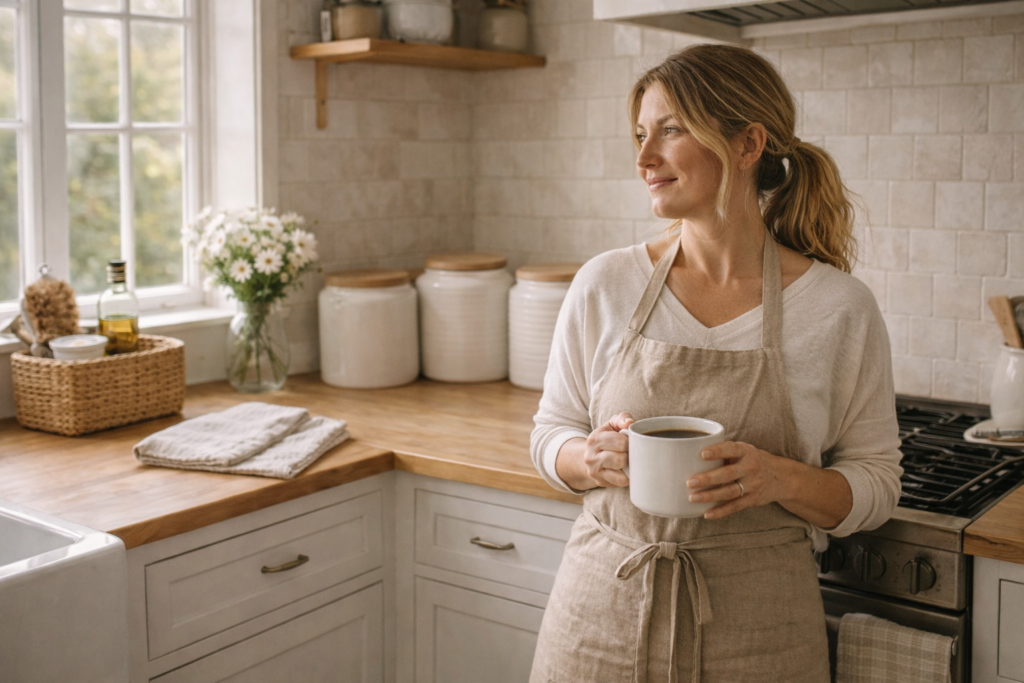
Many people assume that being home during the day means the house should naturally stay clean and organized.
But the truth is, being home doesn’t automatically create order. Without some gentle structure, the day can drift – and suddenly it’s evening, the house feels cluttered, and there’s still more to do.
There was a time when I followed more structured homemaking routines with assigned cleaning days and set tasks. But over time – and especially with health challenges – I found that rigid schedules didn’t work for me anymore.
Instead, I’ve learned to focus on something simpler: keeping my home in good order through small, steady habits rather than perfection.
And honestly, this approach may be more helpful for many homemakers – whether you have health challenges or not.
Because a well-run home isn’t built through perfection.
It’s built through consistent, thoughtful care.
__________
The Core Principle: Put Things away
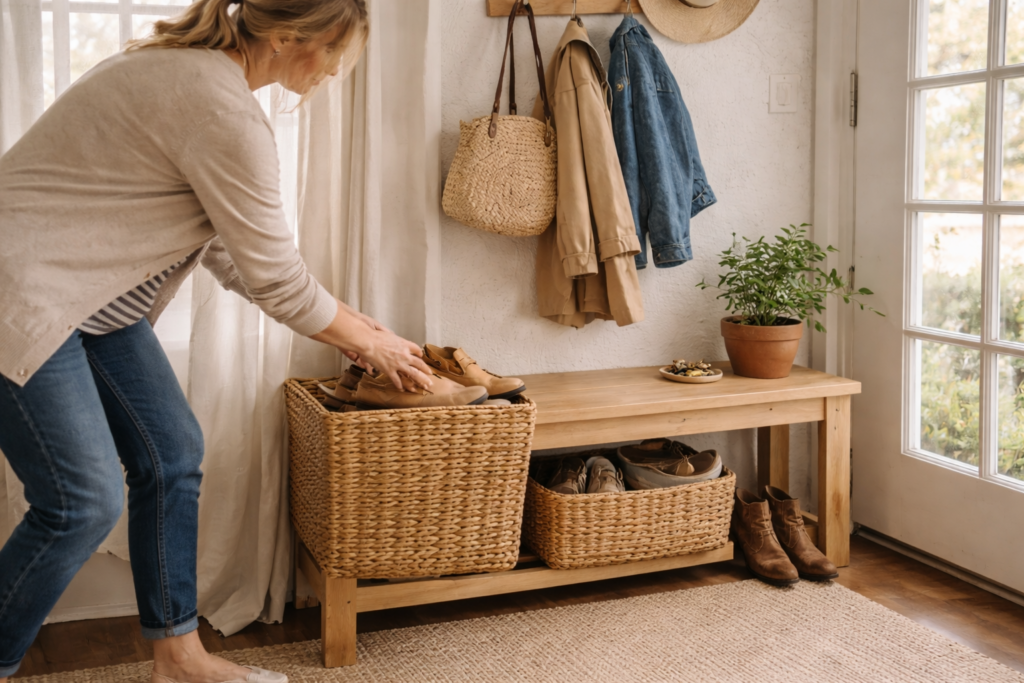
If there’s one simple principle that makes the biggest difference in keeping a home in good order, it’s this:
Put things away as you go.
This may sound simple, but it’s incredibly powerful.
When clutter builds up, even a clean home can feel messy and overwhelming. But when things are returned to their place throughout the day, the home naturally looks calmer and more orderly.
Simple habits like:
- Hanging up jackets
- Putting shoes back in place
- Sorting mail right away
- Clearing kitchen counters after meals
- Returning items to their homes after using them
These small actions prevent clutter from building and make the home easier to maintain.
You may not always have time to deep clean. But most homemakers can take a few seconds to put things away. And over time, this becomes one of the easiest ways to keep a home looking clean and cared for.
Often, a home that is picked up and orderly looks cleaner – even if it hasn’t been freshly cleaned.
__________
A Simple Stay-at-Home Routine

This routine is flexible and gentle. It’s not meant to be rigid or overwhelming – just a helpful rhythm to keep your home running smoothly.
Morning: A Gentle Start
In the morning, I try to create a little order to begin the day.
This might include:
- Making the bed
- Tidying the kitchen after breakfast
- Starting a load of laundry
- Opening curtains and letting in natural light
- Doing a quick pick up of the main living areas
These small tasks help set a calm tone for the day and keep the home feeling cared for.
__________
Midday: One Deeper Cleaning Task
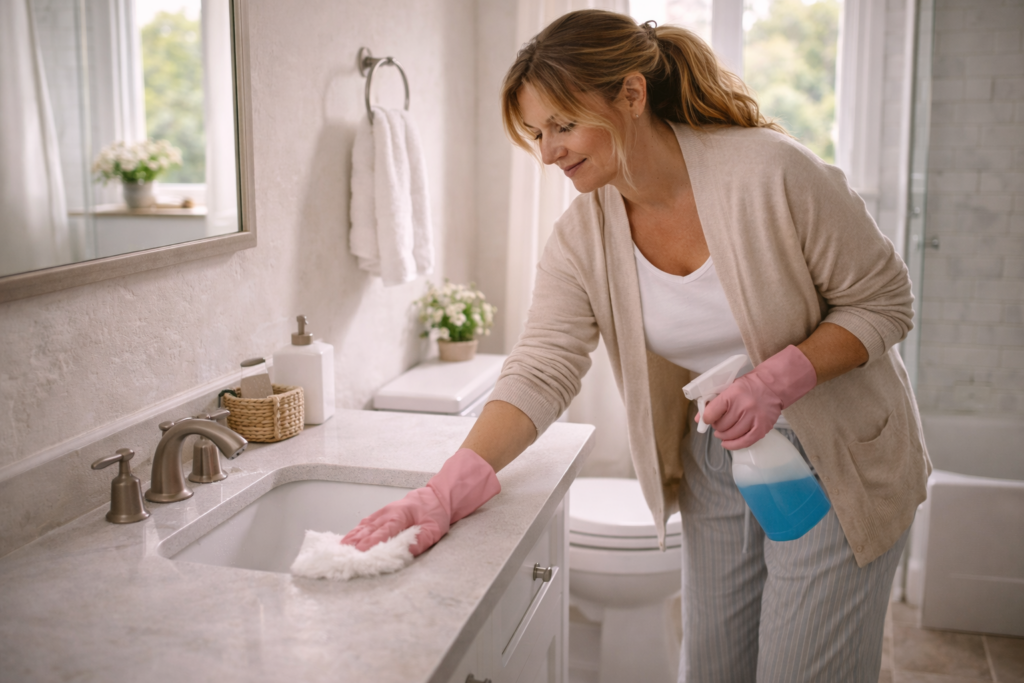
Instead of assigning cleaning days, I simply focus on one deeper cleaning task each day.
This keeps the home moving forward without becoming overwhelming.
Examples of one cleaning task might include:
- Cleaning the bathroom sink and toilet
- Wiping down kitchen counters and appliances
- Dusting surfaces in one room
- Sweeping or mopping floors
- Vacuuming one area of the home
- Changing bed sheets
- Wiping down baseboards in one room
- Organizing a small drawer or shelf
These tasks don’t need to take long. Even 10-20 minutes can make a noticeable difference.
I also try to:
- Stay up with the dishes
- Keep laundry moving
- Put things away throughout the day
Even on my lower energy days, these small efforts help the home stay manageable.
__________
Afternoon: Preparing for Evening
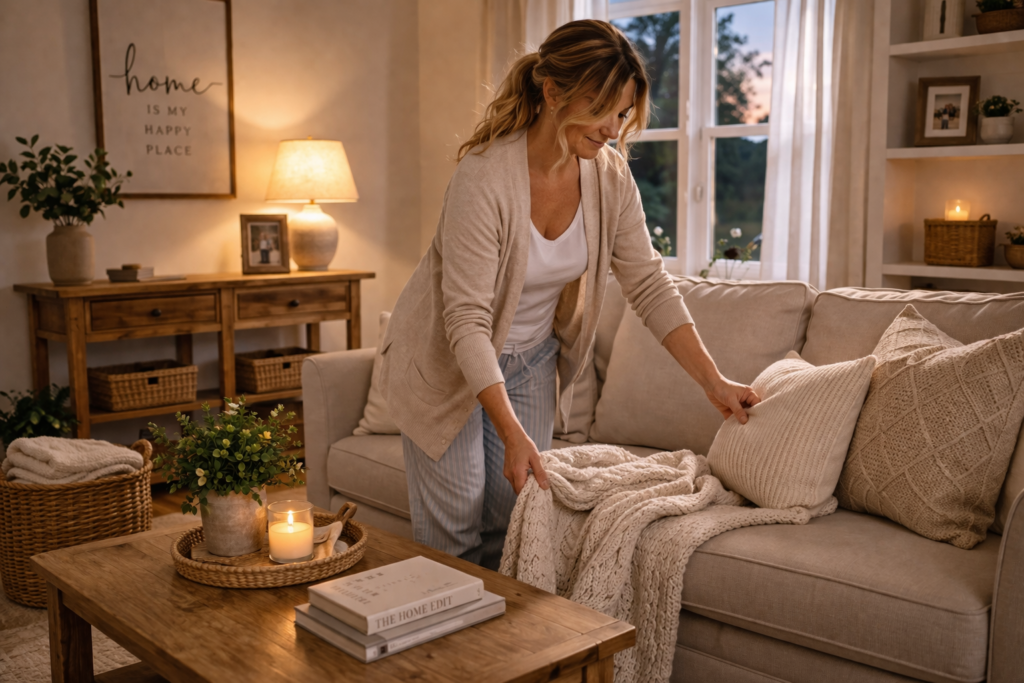
In the afternoon, I try to do a few things that make evening easier.
This might include:
- Folding laundry
- Doing a quick pickup
- Clearing kitchen counters
- Thinking about dinner
These small efforts help create calmer evenings and make the home feel more peaceful.
__________
When Everyone Pitches In

One of the best pieces of homemaking advice I can give is this:
When everyone pitches in, things get done quickly – and the whole family benefits.
It’s easy for one person to carry the responsibility for the home, but when everyone helps with small tasks, the home runs more smoothly.
Simple things like:
- Putting shoes away
- Hanging up jackets
- Clearing their own dishes
- Helping with laundry
- Doing a quick pick up
These small contributions make a big difference.
When everyone participates, family members begin to take pride in their home. It also teaches responsibility and important like skills for later in life.
A well-run home isn’t built by one person alone.
It’s created when everyone contributes in small meaningful ways.
And often, when everyone pitches in, the work gets done quickly – leaving more time to enjoy being together.
__________
A Simple Routine at a Glance
Morning:
- Make beds
- Tidy kitchen
- Start laundry
- Quick pickup
Midday:
- One deeper cleaning task
- Stay up with dishes
- Put things away
Afternoon:
- Fold laundry
- Light reset
- Prepare dinner
Daily Focus:
- Put things away
- Keep clutter at bay
- Do one small task
__________
A Stay-at-Home-Routine Doesn’t Mean Busy All Day

One of the benefits of being home is the ability to care for your home at a slower, more thoughtful pace.
A well-run home isn’t created through constant busyness.
It’s built through steady, consistent attention over time.
There is still room for:
- Rest
- Quiet moments
- Time with family
- Slower, peaceful days
This slower pace often makes homemaking more enjoyable and sustainable.
__________
A Well-Run Home Is Built in Small Moments
Over time, I’ve realized that homemaking isn’t about perfect routines or big cleaning days.
It’s about:
- Putting things away
- Keeping clutter under control
- Doing one small task each day
These small habits create a home that feels calmer, more orderly, and easier to manage.
And perhaps most importantly, a well-run home creates stability. When a home feels cared for, family members naturally feel more comfortable and at ease.
It’s not about perfection.
It’s about gentle, consistent care.
And often, that’s more than enough.
from my hearth to yours,
Becky

Join the Home Journal
If you enjoy simple homemaking ideas and gentle routines,
join my Home Journal where I share practical homemaking encouragement and ideas for creating a calm, well-run home.
Leave a Reply