
Groceries are expensive. Meal planning feels overwhelming. And somehow, even after spending hundreds of dollars, many families still feel like there’s “nothing to eat.”
If you’ve ever looked into your pantry and thought, How did I spend this much money and still have no dinner plan? – you’re not alone.

The good news is that saving money on groceries isn’t always about clipping coupons or chasing every sale. Often, it starts with building a pantry system that actually works.
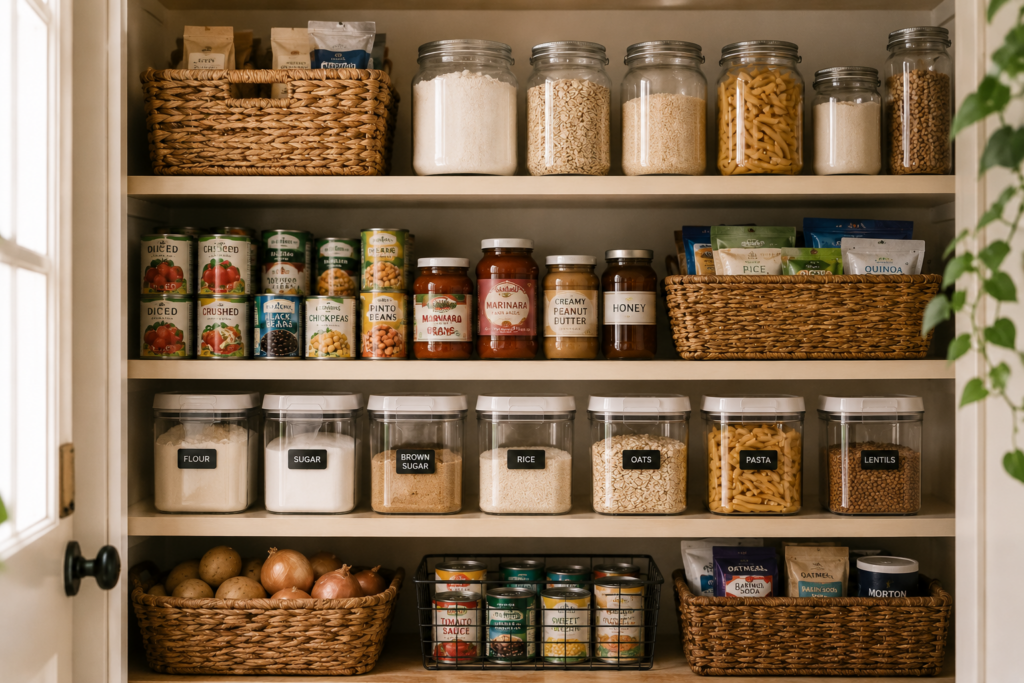
And when I say pantry system. I don’t mean a perfectly organized Pinterest pantry with matching containers and expensive labels.
I mean a pantry that helps you:
- Spend less money
- Reduce food waste
- Feed your family consistently
- Make meal planning easier
- Feel less stressed during busy weeks
Because a working pantry isn’t really about food storage.
It’s about creating a home that run s more smoothly.
_________________
Why Most Pantry Advice Doesn’t Work
Many people fail at building a pantry because they start in the wrong place.
They buy:
- Random sale items
- Foods their family doesn’t eat
- Giant bulk purchases that expire
- Pantry “must haves” someone else recommended
The result?
More clutter.
More wasted money.
More overwhelm.
Still nothing to eat for dinner.
A pantry system works when it supports your actual life.
The Only Grocery List You Need for a Well-Stocked Home
________________
Signs You Need a Better Pantry System
You may benefit from a pantry system if:
- You grocery shop multiple times per week
- You regularly throw away food
- You buy duplicates because you forget what you have already
- Dinner feels stressful at 5PM
- You constantly say, “There’s nothing to eat”
- Grocery spending feels unpredictable
A pantry system creates more than savings.
It creates consistency.
__________________
What Is a Pantry System?
A pantry system is simply a method of keeping ingredients and household food organized so meals become easier, cheaper, and less stressful.
A good pantry system should:
- Support regular meals
- Reduce emergency grocery trips
- Create flexibility when life gets busy
- Help lower grocery costs over time
- Reduce waste
Think of your pantry as part food storage and part home management system.
_______________________
Step 1: Start With Foods Your Family Already Eats
This is the most important rule.
Do not build your pantry around someone else’s family.
Instead ask:
- What meals do we already make?
- What ingredients do we repeatedly buy?
- What foods disappear quickly?
- What foods always get wasted?
Your pantry should reflect your real life?
If your family regularly eats:
- Tacos
- Pasta
- Soups
- Breakfast sandwiches
- Chili
- Potato dishes
Start there.
Not with 20 cans of chickpeas nobody likes.
__________________
Step 2: Build Your Pantry System Around Ingredient Categories
Instead of asking:
What complete meals should I store?
Ask:
What building blocks can help me create many meals?
Protein Sources That Build Flexible Meals
My freezer proteins stay fairly simple:
- Ground beef
- Pork
- Chicken
My shelf-stable proteins include:
- Tuna
- Salmon
- Canned chicken
This combination creates flexibility.
Ground beef becomes:
- Chili
- Tacos
- Meatloaf
- Burgers
- Spaghetti
- Breakfast hash
Chicken becomes:
- Soups
- Pasta dishes
- Casseroles
- Sandwiches
- Sheet pan meals
Tuna and canned chicken become:
- Sandwiches
- Quick lunches
- Casseroles
- Emergency quick dinners
Carbohydrates
- Rice
- Pasta
- Potatoes
- Flour
- Bread Products
Flavor Builders: Pantry Staples That Make Cooking Better
- Broth
- Garlic
- Onions
- Canned tomatoes
- Sauces
- Seasonings
Convenience Foods That Save Busy Weeks
- Frozen vegetables
- Cheese
- Tortillas
- Ready-to-use ingredients
Baking Staples
- Flour
- Sugar
- Oils
- Yeast
- Baking powder
Keeping ingredients instead of only complete meals creates flexibility.
__________________
How My Pantry System Works In Real Life
My goal is simple:
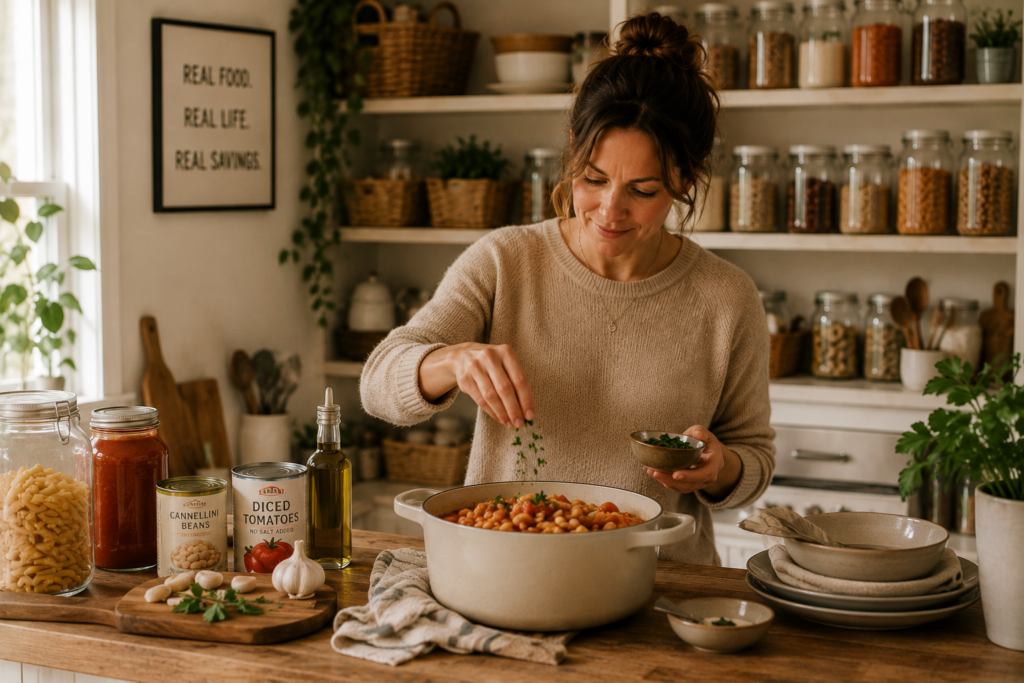
Keep enough ingredients available that dinner rarely ever requires a special trip to the grocery store.
Because I keep:
- Beef, pork, and chicken in the freezer
- Tuna, salmon, and canned chicken available
- Rice, potatoes, pasta, and pantry basics stocked
- Frozen vegetables and cheese available
I can usually create dinner without starting from zero.
A pantry system does not eliminate grocery trips.
It simply makes everyday life easier.
__________________
Step 3: Create Meal Building Blocks
Think in meal components.
Ground beef becomes:
- Chili
- Tacos
- Spaghetti
- Burgers
- Meatloaf
Potatoes become:
- Roasted potatoes
- Breakfast skillets
- Soup
- Side dishes
Rice becomes:
- Burrito bowls
- Soup aditions
- Fried rice
- Casseroles
The goal is not:
100 meals stored.
The goal IS:
Ingredients that create dozens of meals
Old-Fashioned Country Gravy (Simple Homemade Recipe)
Step 4: Learn How To Grocery Shop Differently
Many families overspend because they shop reactively.
Shop Your Pantry First
Before grocery shopping:
Look at what you already have.
This reduces money spent on duplicate items.
Buy Slowly
You do not need to build a huge well-stocked pantry overnight.
Slow growth works much better, you start to see what your family actually uses and how much you actually need of any specific item.
Stock Sales
Buy extra only when:
- You use the item regularly
- The price is genuinely lower
- You have the storage space
Learn Normal Prices
Price awareness helps you recognize good deals.
________________
Example: Building A Pantry System Slowly
You do not need millions of dollars to do this.
Example:
Week 1
- Extra pasta
- Extra ground beef
Week 2
- Rice
- Broth
Week 3
- Frozen vegetables
- Canned tomatoes
Week 4
- Potatoes
- Tuna
Small additions repeated consistently build up your pantry.
_________________
Join the Home Journal
Want more simple homemaking ideas, practical systems, recipes,and encouragement for real life?
Join The Home Journal and get simple, practical homemaking delivered to your inbox.
__________________
Step 5: Create A Simple Pantry Inventory System

Pantries do not need perfection.
They need awareness.
Simple methods:
- Notebook
- Dry erase board
- Phone notes
- Printed inventory sheet
Helpful habits:
- Keep similar items together
- Put new items behind older ones
- Review supplies monthly
- Replace items after using them
Knowing what you have saves money.
_________________
Step 6: Reduce Food Waste And Save More Money
A pantry only saves money if food gets eaten.
Helpful rules:
- Rotate older foods forward
- Store newer purchases behind the older food
- Use ingredients before replacing them
- Plan meals around ingredients that need using up
Sometimes grocery savings comes from wasting less.
_________________
Step 7: Build Pantry Levels Slowly
Level One: One Week Pantry
Goal:
- Survive illness
- Reduce emergency take out
- Handle busy weeks
Level Two: Two to Four Weeks
Goal:
- Fewer grocery trips
- Greater flexibility in menu
- Better use of sales
Level Three: Deep Pantry
Goal:
- Seasonal stocking
- Larger savings opportunities
- More flexibility
Slow growth works best.
____________________
Example Beginner Pantry List
Protein
- Ground beef
- Chicken
- Pork
- Tuna
- Eggs
Carbohydrates
- Rice
- Pasta
- Potatoes
Flavor Builders
- Broth
- Tomatoes
- Garlic
- Onion
Convenience
- Frozen vegetables
- Cheese
- Tortillas
________________________
Common Pantry Mistakes To Avoid
- Buying too much because it is on sale
- Purchasing food your family does not like
- Ignoring expiration dates
- Overcomplicating meal plans
- Focusing on aesthetics over function
Your pantry exists to serve your family.
Not impress the internet.
Some weeks the pantry works beautifully.
Other weeks frozen pizza happens.
The goal is progress – not perfection.
__________________
Frequently Asked Questions About Building A Pantry
How long does it take to build a pantry?
Usually months.
Slow building is cheaper and easier.
Should I buy bulk?
Only if:
- You use it regularly
- It saves money
- You have the space to store it
What if I have a small kitchen?
Small kitchens can still build pantry systems.
Use:
- Shelves
- Cabinets
- Closets
- Small storage spaces
My pantry is a small broom closet my husband put shelves in and the rest we have in the basement on shelves. It’s not fancy but it works.
What foods should beginners start with?
Start with foods your family already eats.
_____________________
How To Start Building A Pantry This Week
Step 1: Write down 10 meals your family already eats
Step 2: Identify repeated ingredients
Step 3: Buy one or two extra pantry items next grocery trip
Step 4: Create a simple inventory system
Step 5: Repeat consistently
Small steps create lasting systems.
___________________
Final Thoughts
Building a pantry is not really about storing food.
It is about flexibility.
It is easier dinners.
It is about reducing stress during hard seasons.
A working pantry will not solve every problem.
But it can make dinner feel less overwhelming.
Sometimes small systems create more peace than we expect.
You do not need a perfect pantry.
You simply need one that works.

Leave a Reply