
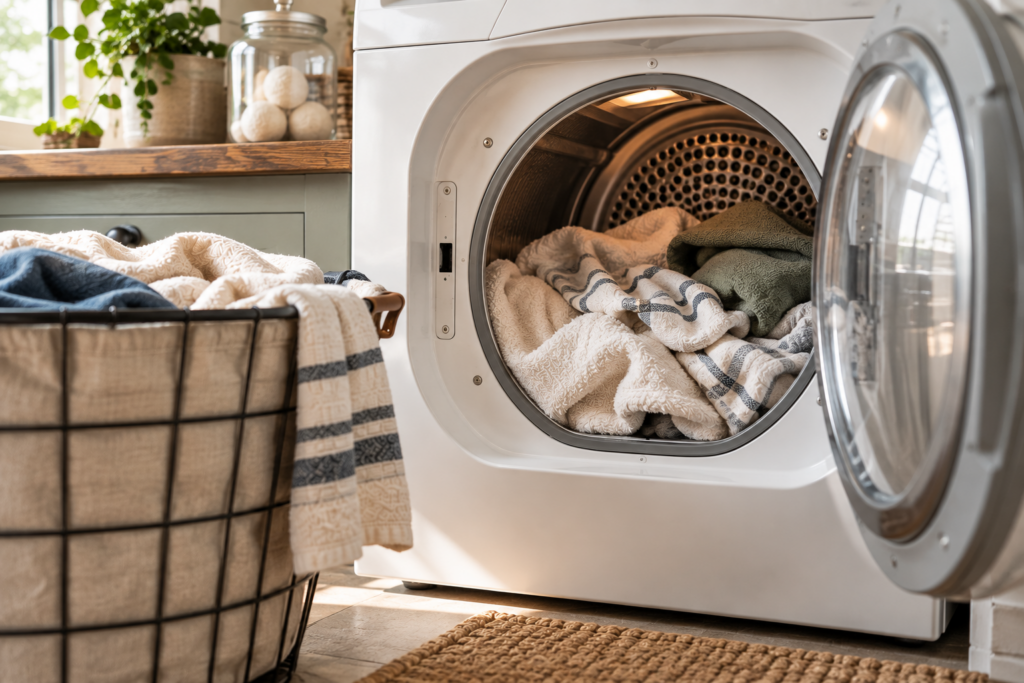
Using a clothes dryer seems simple enough—put the wet clothes in, turn it on, and come back when they’re dry.
Then you look at the controls.
Normal. Delicate. Permanent Press. Timed Dry. Sensor Dry. High heat. Low heat. Air Dry.
And suddenly you’re wondering whether any of this matters—or whether you’re about to shrink your favorite shirt.
The good news is that using a dryer really is simple once you understand a few basics. You don’t need to memorize every setting on your machine. You mainly need to know what can go in the dryer, how much to put in, which setting to choose, and when to take everything out.
Here’s what you need to know.
The Simple Dryer Routine
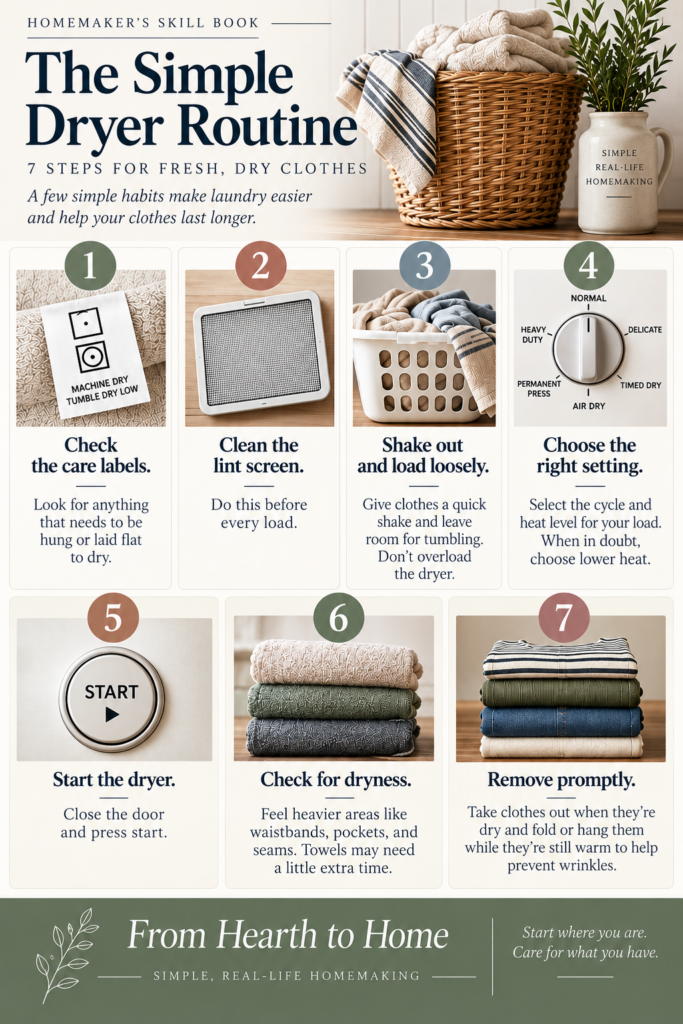
If you’ve never used a dryer before—or just want the simplest possible explanation—start here.
- Check the care labels. Pull out anything that needs to be hung or laid flat to dry.
- Clean the lint screen. Do this before every load.
- Shake out the wet clothes and load them loosely. Clothes need room to tumble.
- Choose the appropriate cycle and heat level. When you’re unsure, choose lower heat.
- Start the dryer.
- Check that everything is completely dry. Pay particular attention to heavier areas such as waistbands, pockets, seams, and towels.
- Remove clothes promptly. Fold or hang them while they’re still warm to help prevent wrinkles.
That’s really the basic process. Now let’s look at the few things that will help you choose the right settings and avoid damaging your clothes.
Before You Put Wet Clothes in the Dryer
When the washing machine finishes, don’t automatically move everything straight into the dryer.
Check the care labels on anything you’re unsure about and pull out items that need to air dry.
Give clothing a quick shake as you transfer it. This separates twisted sleeves, pant legs, towels, and sheets and helps everything tumble more freely.
If your washer leaves clothing unusually wet, run another spin cycle before transferring the load. Your dryer shouldn’t have to remove water the washing machine could have spun out.
Clean the Lint Screen Every Load
This is one dryer habit worth learning from the beginning:
Clean the lint screen before every load.
A clogged lint screen restricts airflow, which can make clothes take longer to dry. Lint buildup can also contribute to dryer fires.
Pull out the screen, remove the lint, and put it back properly before running the dryer.
Your lint screen isn’t the same thing as the dryer vent. The vent carries warm, moist air from the dryer to the outside of your home and also needs periodic cleaning.
If your dryer suddenly starts taking much longer than usual to dry clothes, restricted airflow or a clogged vent is one possible cause and shouldn’t be ignored.
How Full Should a Dryer Be?
Your clothes need room to tumble.
Don’t pack the dryer tightly just because everything fit into the washing machine. Wet clothing should sit loosely in the drum with enough room to lift and fall as it turns.
When clothes are packed too tightly, air can’t circulate around them properly. That can mean longer drying times, more wrinkles, and clothing that’s dry in some places but damp in others.
Large blankets and comforters need even more room. If a large item can’t tumble freely, it may need a larger-capacity machine.
Understanding the Basic Dryer Settings
Dryers vary, so the names on your machine may be slightly different. Your owner’s manual is always the best source for your particular model.
But most dryers have some version of these basic settings.
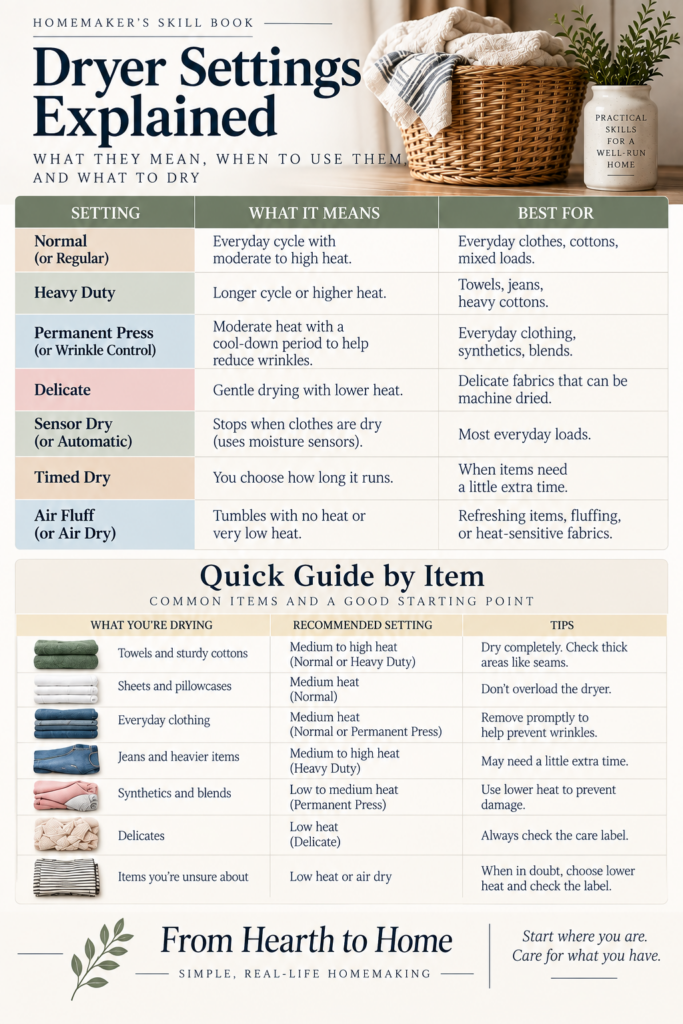
Normal or Regular
An everyday drying cycle generally used for sturdy washable clothing, cottons, and similar everyday laundry.
Heavy Duty
Designed for heavier, sturdier items such as towels and jeans. Depending on the machine, this cycle may use more heat or run longer.
Permanent Press or Wrinkle Control
Usually uses moderate heat along with a cool-down period to help reduce wrinkles. It’s often a good choice for everyday clothing and synthetic or blended fabrics.
Delicate
Uses gentler drying conditions, usually including lower heat. Use it for lightweight or delicate fabrics that the care label says can be machine dried.
Sensor Dry or Automatic Dry
Sensors inside the dryer detect moisture and stop the cycle when the load reaches the selected dryness level.
This is a useful everyday option because the dryer doesn’t simply continue running for a predetermined amount of time after the clothes are already dry.
Timed Dry
You decide exactly how long the dryer runs.
Timed Dry can be useful when something needs a little additional drying time. Just avoid automatically adding a long cycle to clothing that’s already nearly dry.
Air Fluff or Air Dry
This tumbles items with little or no added heat. It can be useful for refreshing certain items or when you want tumbling without heat.
It’s not the same as an ordinary heated drying cycle.
Quick Dryer Setting Guide
You don’t need to make dryer settings complicated.
| What You’re Drying | Good Starting Point |
| Towels and sturdy cottons | Medium to high heat |
| Sheets and pillowcases | Medium heat |
| Everyday clothing | Medium heat |
| Jeans and heavier items | Medium to high heat |
| Polyester and synthetic blends | Low to medium heat |
| Machine-dryable delicates | Low heat |
| Something you’re worried about shrinking | Low heat or air dry |
When in doubt, choose a lower heat setting and check the care label.
The care label always takes priority over a general chart. If the label says tumble dry low, use low heat even if you’re drying the item with something you would normally dry at a higher temperature.
What Shouldn’t Go in the Dryer?
Not everything that can be washed should be machine dried.
Depending on the fabric and care instructions, you may need to air dry:
- Certain bras and delicate undergarments
- Wool and some sweaters
- Clothing with delicate elastic or stretch fibers
- Some athletic clothing
- Embellished or fragile garments
- Anything labeled hang dry, line dry, or lay flat to dry
- Anything whose care label says not to tumble dry
Be particularly careful with rubber, foam, plastic-backed items, and similar materials. Always check the manufacturer’s care instructions before exposing them to dryer heat.
And never put clothing or fabric contaminated with gasoline, paint thinner, cooking oil, or other flammable substances into a dryer simply because it has been washed.
When in doubt, read the label.
Do You Need Dryer Sheets or Dryer Balls?
No. Your clothes will dry without either one.
Dryer sheets can help reduce static and add fragrance or softness. Reusable dryer balls help separate laundry as it tumbles and may help with drying efficiency.
Both are optional.
Dryer sheets and fabric softeners can leave coatings on some fabrics, which is why many people avoid using them on absorbent towels, microfiber cloths, and certain performance fabrics.
If you’re just learning to do laundry, don’t make this complicated. You don’t need a special dryer product to dry clothes properly.
Why Are My Clothes Still Damp?
If the dryer stops but some of your laundry is still damp, there’s usually a fairly simple explanation.
The dryer was too full. Clothes couldn’t tumble freely and air couldn’t circulate properly.
You mixed very heavy and very lightweight items. A thin T-shirt can dry much faster than a pair of jeans or a heavy bath towel.
The load became tangled. Sheets and other large items can sometimes wrap around smaller pieces and trap damp laundry inside.
The lint screen or dryer vent needs attention. Restricted airflow can make drying much less efficient.
The washer didn’t spin out enough water. If clothes went into the dryer unusually wet, they’ll take much longer to dry.
Before putting a load away, feel thicker areas such as waistbands, pockets, seams, cuffs, and the centers of heavy towels.
Don’t fold damp laundry and put it into a drawer or closet. Trapped moisture can lead to musty smells and mildew.
How to Prevent Shrinking, Wrinkles, and Unnecessary Wear
You don’t need a complicated system to protect your clothes.
Read the care label, choose an appropriate heat setting, and don’t continue drying clothing long after it’s already dry.
If you’re particularly worried about an item shrinking, use low heat or air dry it.
For fewer wrinkles, don’t overload the drum and remove clothing when the cycle ends. Give each item a quick shake and fold or hang it while it’s still warm.
One simple rule covers a lot of dryer problems:
More heat and more drying time aren’t automatically better.
Your goal is simply to get the laundry dry without subjecting it to more heat and tumbling than it needs.
A Few Dryer Safety Habits Worth Knowing
Dryer safety doesn’t need to feel complicated.
Clean the lint screen every load. Keep excessive lint and clutter away from the dryer. Make sure your dryer vents properly to the outdoors, and have the vent system cleaned as needed.
And pay attention when something changes.
If your dryer suddenly takes much longer than normal, becomes unusually hot, smells like something is burning, or otherwise isn’t behaving normally, stop using it until you know what’s wrong.
The Beginner’s Rule to Remember
If you remember only one thing from this guide, remember:
Check the care label, and when you’re unsure about heat, go lower.
You can always give something a little more drying time.
You can’t easily undo a shrunken sweater.
After you’ve done a few loads, choosing dryer settings will become something you barely think about. You’ll learn which setting works for your family’s towels, which clothes you prefer to hang dry, and how long your typical loads take.
Learning to care for a home doesn’t require knowing everything at once. It comes from learning one ordinary skill at a time until those skills become second nature.
Complete the Laundry Basics
If you’re learning how to do laundry from the beginning, these four guides will take you through the basic process from start to finish:
How to Sort Laundry: A Simple Beginner’s Guide
Learn what can be washed together and how to separate a load.
How to Use a Washing Machine: A Simple Beginner’s Guide
Learn how to load the washer, choose a cycle, select water temperature, and run a basic load.
How Much Laundry Detergent Should You Use? A Complete Guide to Laundry Products
Learn how much detergent you actually need and what the most common laundry products do.
How to Use a Clothes Dryer: A Simple Beginner’s Guide
You’re here! With these four skills, you have the basics you need to handle everyday household laundry.
I hope this guide makes laundry feel just a little easier and gives you more confidence in caring for your home. Sometimes it’s the simplest skills that make everyday life run a little more smoothly.
from my hearth to yours,
Becky
Want to Learn the Homemaking Skills No One Ever Taught You?
The Homemaker’s Skill Book is my growing collection of practical, beginner-friendly guides for learning how to care for a home—from laundry and cleaning to cooking, pantry basics, and everyday household routines.
No perfection. No complicated systems. Just useful skills you can learn one at a time.
Join my email list to get new Homemaker’s Skill Book lessons and practical help for making everyday life at home a little easier.
Leave a Reply