
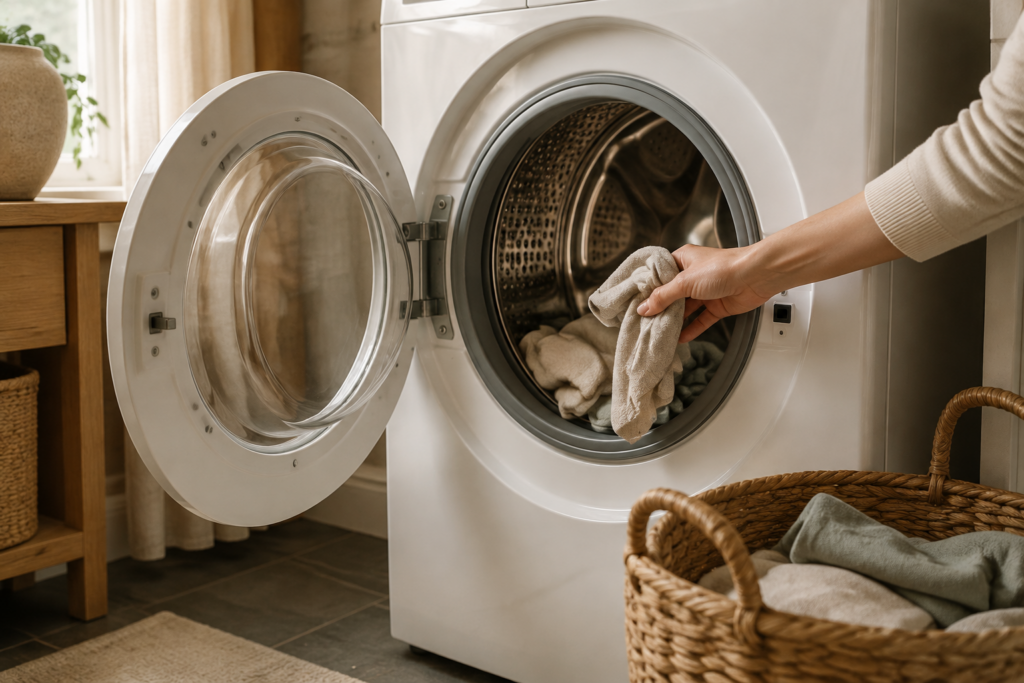
Using a washing machine may seem like one of those things everyone automatically knows how to do—but apparently, that isn’t always the case.
I’m writing this partly because my sister’s young daughters have managed to ruin two washing machines, apparently from overfilling them and not stopping the machine when a load became badly unbalanced. It turns out that “put the clothes in and press start” leaves out a few rather important details.
Fortunately, using a washing machine properly isn’t difficult once you understand the basics. You need to know how to prepare the clothing, how much laundry to put in the drum, where to add detergent, and which settings to choose.
This guide will walk you through the entire process so that your clothes come out clean without unnecessary wear on your clothing—or your washing machine.
From the Homemaker’s Skill Book: This article is part of my Homemaker’s Skill Book, a growing collection of practical homemaking skills for anyone who wasn’t taught how to care for a home. Some of these lessons may feel basic to experienced homemakers, but everyone has to learn them somewhere. Knowing how to use everyday household equipment properly can also prevent some very expensive mistakes.
Get to Know Your Washing Machine
Before washing your first load, take a moment to look at your washing machine.
The two most common types are:
- Top-loading washing machines, which are loaded by lifting a lid on top
- Front-loading washing machines, which have a door on the front
Some top-loading machines have a center agitator, while others have a low-profile impeller at the bottom of the drum. Front-loading machines clean clothing by lifting and tumbling it through a small amount of water.
Although washing machines operate in similar ways, the controls and detergent dispensers can vary. Locate the following parts on your machine:
- The washing drum
- The detergent dispenser
- The fabric-softener dispenser, if there is one
- The control panel
- The start or pause button
- The door or lid lock
- The filter, if your machine has one that requires regular cleaning
If you are uncertain about a particular button, setting, or dispenser, consult the instruction manual for your model. You may also be able to find the manual online by searching for the brand and model number.
Never force the washer’s lid, door, detergent drawer, or controls. If something will not open, check whether the washer is locked or still running before pulling harder.
Prepare the Clothes for Washing
Before putting clothing into the washer, take a few minutes to prepare it properly.
Sort the laundry
Separate clothing according to color, fabric type, soil level, and washing instructions. Sorting helps prevent dye transfer, lint problems, and damage to delicate fabrics.
If you need help with this step, read my guide on [How to Sort Laundry Properly].
Check the care labels
The care label tells you whether an item can be machine-washed and may also specify the appropriate water temperature or wash cycle.
Do not assume that every piece of clothing can go into the washing machine. Some garments require hand-washing or professional dry cleaning.
Empty every pocket
Check all pockets for:
- Tissues
- Pens
- Lip balm or lipstick
- Coins
- Keys
- Screws or nails
- Receipts
- Earbuds
- Candy or gum
A tissue can cover an entire load in white fuzz, while coins and other hard objects can damage the washer. Pens, lipstick, and gum can ruin more than one piece of clothing at a time.
Even when you believe everyone empties their own pockets, check them anyway. Consider it one of those little acts of self-preservation that comes with doing laundry.
Prepare individual garments
Before loading the washer:
- Close zippers so the teeth do not snag other fabrics.
- Fasten hooks, especially on bras.
- Tie loose drawstrings.
- Turn dark jeans and graphic T-shirts inside out.
- Place delicate items in a mesh laundry bag.
- Pretreat visible stains.
- Shake out heavily soiled items outdoors when appropriate.
- Remove belts and other accessories that should not be washed.
These small steps protect both the clothing and the washing machine.
Add the Correct Laundry Detergent
Use a laundry detergent designed for your type of machine. If you have a high-efficiency washer, look for detergent marked with the HE symbol.
High-efficiency machines use less water and require low-sudsing detergent. Using standard detergent in an HE machine can create excessive suds and interfere with washing and rinsing.
Measure the detergent instead of pouring it freely into the machine. More detergent does not make clothing cleaner. In fact, using too much can leave residue on clothing, trap odors, create excessive suds, and make it harder for the washer to rinse properly.
Where you place the detergent depends upon your washing machine:
- Some machines have a designated detergent dispenser.
- Some top-loading machines instruct you to add liquid or powdered detergent directly to the drum.
- Laundry detergent pods are generally placed in the empty drum before adding the clothing rather than in the dispenser.
Always follow the directions on your detergent package and washing machine. Concentrated detergents may require much less product than you expect.
Load the Washing Machine Without Overfilling It
Clothing needs room to move through the water and detergent. In a front-loading washer, the clothing also needs room to lift and tumble.
Place dry clothing loosely inside the drum. Do not press it down, pack it tightly, or use your body weight to squeeze in a few more items.
As a general guideline, a normal load should not fill the drum more than about three-quarters full when the clothing is dry and loosely placed inside. Your machine’s instructions should take precedence because washer capacities vary.
Overfilling a washing machine can:
- Prevent clothing from getting thoroughly clean
- Keep detergent from rinsing away
- Cause the load to become unbalanced
- Place unnecessary strain on the motor and suspension
- Increase wear on the machine
- Leave clothing unusually wet at the end of the cycle
If you have to force the door or lid closed, the load is too large.
Be careful with bulky and heavy items
Comforters, sleeping bags, bathroom rugs, weighted blankets, and other bulky items require special care.
An item may fit inside the drum while dry but become much heavier after absorbing water. Check both the item’s care label and your washer’s instructions before washing anything unusually large or heavy.
A household washing machine may not have enough capacity for a large comforter, even if you can physically stuff it inside. In that case, use a larger-capacity machine at a laundromat or follow the item’s professional-cleaning instructions.
Avoid washing one heavy, absorbent item by itself unless your washer specifically allows it. Once saturated, the item can settle on one side of the drum and create a severely unbalanced load.
Choose the Appropriate Wash Cycle
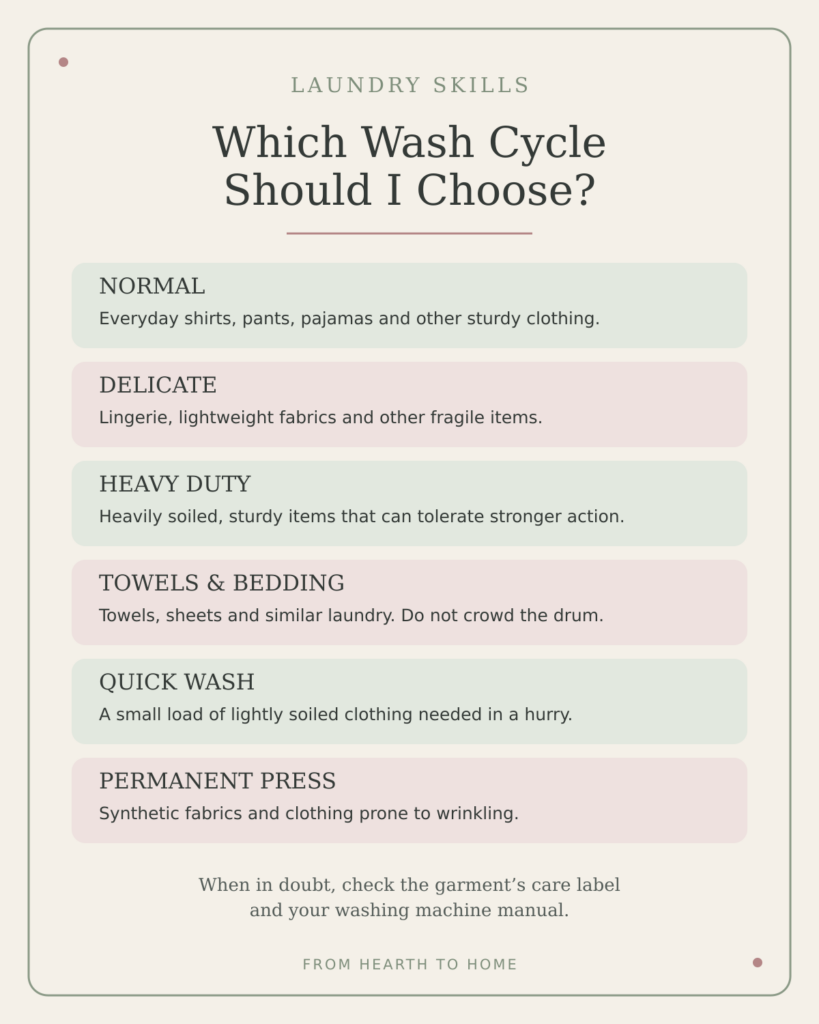
Modern washers can have an impressive number of settings, but you do not need to use all of them. Most ordinary laundry can be washed using a handful of basic cycles.
- Normal: Everyday shirts, pants, pajamas, socks, and other sturdy clothing
- Delicate: Lingerie, lightweight fabrics, and fragile garments
- Heavy Duty: Heavily soiled, sturdy items that can tolerate stronger washing action
- Towels or Bedding: Towels, sheets, and similar household laundry
- Quick Wash: A small load of lightly soiled clothing needed in a hurry
- Permanent Press: Synthetic fabrics and clothing prone to wrinkling
When you are uncertain, the normal cycle is appropriate for many loads of ordinary washable clothing. However, always check the care label before washing anything delicate, expensive, unfamiliar, or easily damaged.
Select the Water Temperature
The correct water temperature depends on the fabric, color, and amount of soil.
Cold water
Cold water is a good choice for:
- Dark clothing
- Bright colors
- Delicate fabrics
- Lightly soiled everyday clothing
- Garments that might fade or shrink
Cold water is the safest starting point for many ordinary loads because it helps protect colors and reduces the likelihood of shrinking.
Warm water
Warm water may be appropriate for:
- Moderately soiled clothing
- Some synthetic fabrics
- Certain towels and sheets
- Clothing that can safely tolerate warmer water
Hot water
Hot water may be used for:
- Certain sturdy whites
- Heavily soiled washable items
- Some towels and bedding
- Items whose care labels specifically allow hot water
Hot water can fade colors, shrink some fabrics, and set certain stains. Do not automatically choose hot water simply because something is dirty. Check the care label first.
Start the Washing Machine
Once the clothing is prepared, the detergent is added, and the washer is loaded properly, you are ready to begin.
The basic process is:
- Sort and prepare the clothing.
- Add the detergent in the correct place.
- Place the clothing loosely in the drum.
- Close the door or lid.
- Select the wash cycle.
- Choose the water temperature.
- Press the start button.
- Make sure the machine begins operating normally.
Some modern washing machines pause for a short time while they sense the weight or size of the load. You may hear the machine turn the drum or briefly add water before the main cycle begins. This is generally part of its normal operation.
Do not repeatedly press buttons or force the door open simply because the washer does not begin filling immediately.
What to Do If the Washer Starts Banging
A washing machine should not bang violently, shake across the floor, or sound as if it is trying to escape the laundry room.
A badly unbalanced load may cause:
- Loud banging or repeated thumping
- Excessive shaking
- The washer to move out of position
- The cycle to stop
- Clothing to remain unusually wet
- An error message on the control panel
If this happens:
- Pause or stop the washing machine.
- Wait for the lid or door to unlock.
- Redistribute the clothing evenly inside the drum.
- Untangle any items that have twisted together.
- Remove a few items if the drum is overfilled.
- Restart the cycle.
Do not ignore violent banging and hope the washer will work the problem out on its own. Stop the machine and correct the load.
If the washer continues to shake after the clothing has been redistributed, stop using it until you can determine the cause. The machine may not be level, or it may have a mechanical problem that requires attention.
Remove the Clothing Promptly
Remove the clothing as soon as reasonably possible after the wash cycle finishes.
Leaving wet clothing inside the washer for hours can lead to musty odors. If the clothes have been forgotten long enough to smell unpleasant, wash them again rather than placing the odor directly into the dryer.
As you remove the clothing:
- Check the drum for socks and other small items.
- Shake out each garment to reduce wrinkles.
- Look for stains before placing clothing in the dryer.
- Allow stained items to air-dry until the stain has been removed.
- Follow the garment’s drying instructions.
Heat from the dryer can make some stains much more difficult to remove, so inspect questionable items before drying them.
When you have emptied the washer, leave the door or lid open when appropriate to allow the interior to dry. If you have a front-loading machine, periodically wipe the door and rubber gasket and check for small items trapped in the folds.
Common Washing Machine Mistakes to Avoid
Avoiding a few common mistakes will help protect your clothing and your washing machine.
Overfilling the drum
A tightly packed load cannot move freely enough to wash and rinse properly. Divide an oversized load into two smaller loads.
Using too much detergent
Excess detergent can leave residue, trap odors, and make rinsing more difficult. Measure the detergent according to the product and machine directions.
Using the wrong detergent
Use HE detergent in a high-efficiency machine. Do not use dish soap or another household cleaner in place of laundry detergent.
Ignoring care labels
The few seconds it takes to read a label can prevent shrinking, fading, stretching, or otherwise ruining a garment.
Leaving objects in pockets
Coins, screws, pens, tissues, and other forgotten objects can damage clothing and the washing machine.
Ignoring a banging or shaking machine
Pause the washer and rebalance the load. Continuing to run a badly unbalanced machine can place unnecessary strain on it.
Forcing the door or lid
Many washing machines lock during portions of the cycle. Pause or stop the machine and wait for it to unlock rather than pulling on the door.
Washing items that are too large or heavy
A large blanket may fit into the washer while dry but become too heavy once saturated. Use an appropriately sized machine.
Leaving wet laundry in the washer
Remove clean clothing promptly to prevent musty odors and mildew.
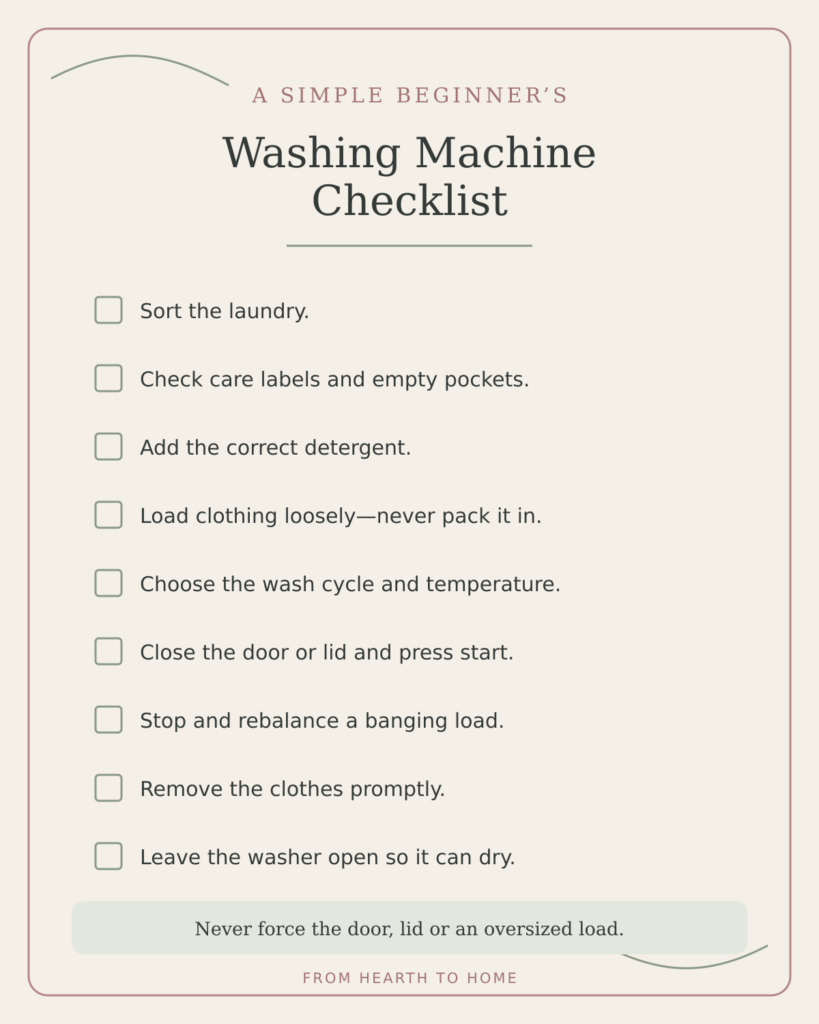
A Simple Beginner’s Washing Machine Checklist
Before you start a load, remember these basic steps:
- Sort the laundry.
- Check care labels and empty pockets.
- Add the correct detergent.
- Load clothing loosely—never pack it in.
- Choose the wash cycle and water temperature.
- Close the door or lid and press start.
- Stop and rebalance a banging load.
- Remove the clothes promptly.
- Leave the washer open so it can dry.
Learning to Do Laundry One Load at a Time
Using a washing machine is a simple homemaking skill, but it is still a skill that must be learned.
Once you know how to prepare the clothing, measure the detergent, load the drum properly, and choose a basic cycle, washing clothes becomes a straightforward part of caring for your home.
You do not need to understand every button or specialty setting before you begin. Start with ordinary clothing, use the normal cycle when appropriate, follow the care labels, and pay attention to how the machine is operating.
Most importantly, resist the temptation to stuff in one last towel. Sometimes that towel is not worth it.
From my Hearth to yours,
Becky
_______________________________________________
Practical Homemaking for Real Life
Join me for the weekly Home Journal, where I share practical homemaking ideas, tried-and-true recipes, simple household skills, and encouragement for creating a home that serves the people who live there.
Leave a Reply