
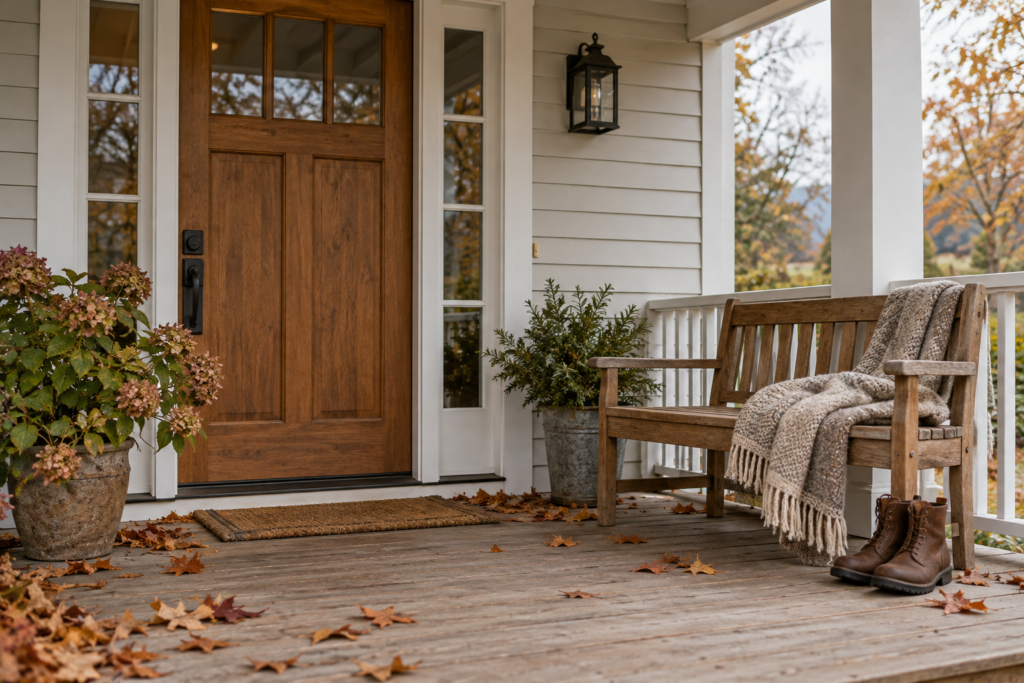
A warm fall afternoon can make winter feel a long way off. The hose is still hooked up, the shovel is somewhere in the garage, and checking the furnace hasn’t quite made it to the top of the list. Then the overnight forecast changes, and those small jobs suddenly feel more urgent.
The most useful fall home checklist starts with the jobs that help prevent damage: putting away outdoor hoses, protecting vulnerable plumbing, and making sure the heat is ready. After that, you can turn to drafts, drainage, and the supplies that make cold mornings easier.
Use this list to walk through your own home and decide what needs attention. Some jobs take only a few minutes; others may need a service appointment or another pair of hands. If you’ve already had your first freeze, use the next mild day to catch up before more cold weather arrives.
1. Disconnect and drain outdoor hoses
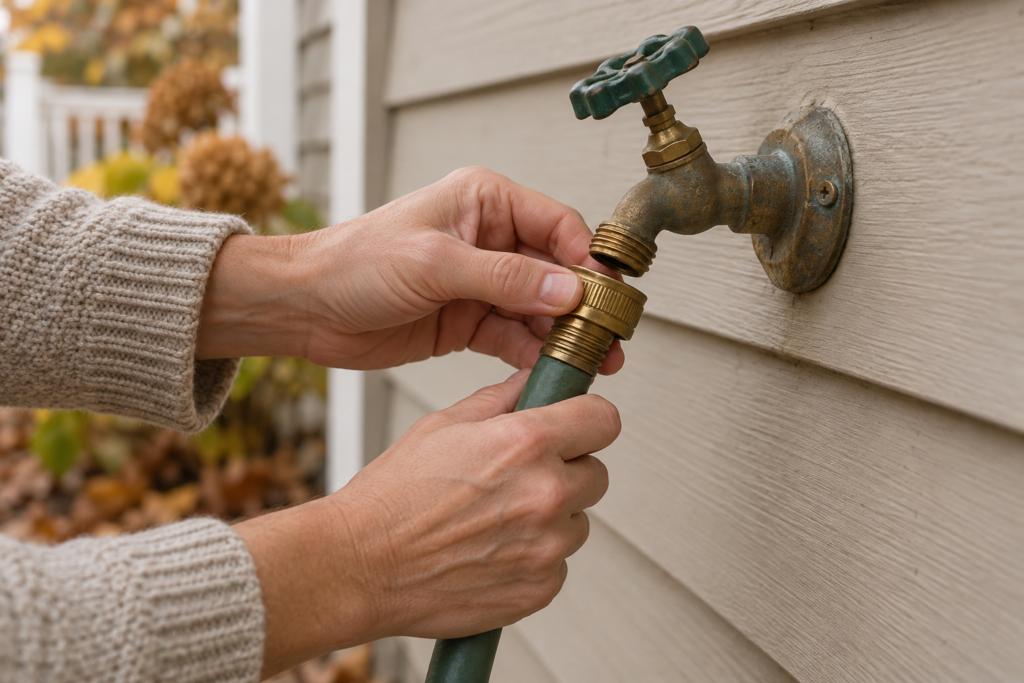
Start with the hose you keep meaning to put away. Disconnect it from the faucet, let the water drain out, and store it somewhere protected. Put away hose attachments and sprinklers, too.
Winterize outdoor faucets according to their design. For conventional faucets with a dedicated indoor shutoff, that generally means shutting off the supply and opening the outdoor faucet to drain. Frost-free faucets and other setups may have different instructions; check the manufacturer’s guidance or ask a plumber if you’re unsure.
Have sprinkler systems and other outdoor water lines winterized according to the installer’s instructions. Put outdoor water jobs ahead of general yard tidying when freezing weather is in the forecast.
2. Check plumbing in cold areas
Think about pipes in an unheated garage, crawl space, or other exposed area. Does one spot have a history of freezing? Has a draft developed near a water line?
Check existing pipe insulation and arrange protection for vulnerable plumbing before prolonged cold arrives. Insulation helps, but pipes in unheated spaces may need additional measures. A plumber can help you decide what your home needs.
While you’re thinking about water, make sure you know where the main shutoff is and can reach it. A shelf piled in front of it won’t seem like a small inconvenience if a pipe leaks.
3. Make sure the heat is ready
Try the heating system before you need it running through a cold night. Check the thermostat, look at the filter if your system uses one, and replace or clean it according to the equipment’s instructions.
Walk through the house and make sure furniture, curtains, and household clutter aren’t blocking heating vents or returns. If you use propane or heating oil, check the supply and delivery arrangements.
Schedule professional heating maintenance if it’s due. ENERGY STAR recommends annual preseason checkups, with heating equipment checked in the fall. If you use a fireplace or wood stove, arrange the appropriate chimney or flue inspection before the season’s first fire.
4. Test smoke and carbon monoxide alarms
Include smoke and carbon monoxide alarms in your fall routine. Test them according to their instructions, check batteries where applicable, and look at replacement dates. Replace alarms that have reached the end of their service life.
Carbon monoxide alarms with battery backup are especially important when fuel-burning equipment is in use. The CDC recommends battery-operated or battery-backup CO detectors near every sleeping area.
5. Take care of the drafts you notice every winter
You probably already know which door lets cold air around your ankles or which window makes a favorite chair uncomfortable.
Check weatherstripping and door sweeps, close and latch windows, and make sure storm windows are in place if you use them. Replace worn weatherstripping or a damaged door sweep where needed. For other gaps, choose a suitable caulk or sealing product and check its application-temperature requirements before starting. Keep intended ventilation openings clear.
Start with the room you use most or the draft you notice every day. A small repair there may be more useful right now than a long list of improvements you can’t get to.
6. Check gutters, downspouts, and drainage
From the ground, look for gutters spilling over with leaves, disconnected downspouts, or water collecting near the foundation. Arrange cleaning or repairs where needed so water can drain away from the house.
If leaves are still falling, you may need another check later in the season. And if the job involves a ladder or roof access you can’t manage safely, put getting help on the list.
7. Put away things that won’t handle freezing well
Take a short walk around the yard, porch, and garage. Look for watering cans holding water, delicate planters, outdoor cushions, and tools left where they’ll be buried by snow.
Check storage labels on paints, cleaners, and garden products. Move anything that requires protection from freezing to a suitable location, keeping all other storage precautions in mind. Bring tender plants into an appropriate protected space before their cold-weather limit is reached.
This doesn’t need to become a full garage cleanout. Just gather the things you’ll wish you had brought in.
8. Get the entrance ready for icy mornings
Find the shovel before the steps are slippery. Check outdoor lights, clear walking paths, and make sure handrails are secure. Put boots, gloves, and a suitable ice-melting or traction product somewhere convenient.
Pay particular attention to the entrance your household actually uses. Keep shovels and supplies clear of the walking route, especially on a narrow porch or ramp. Check that a helper could find what they need, too.
9. Gather a few power-outage basics
Check flashlights, batteries, and rechargeable lanterns. Know where extra blankets are, charge a phone power bank if you have one, and keep some drinking water and easy-to-eat food on hand.
If your household relies on a well pump, stair lift, or electrically powered care equipment, make a specific plan for an outage. Check what has battery backup, how long it lasts, and what help or alternate arrangements you would need.
If you have a portable generator, review its safe operating location now. It must run outdoors, more than 20 feet from windows, doors, and vents—never in a house or garage, even with the doors open. Never use a gas oven or range to heat the house.
For the refrigerator and freezer side of planning, see my Power Outage Guide: What to Do with Your Food.
A little encouragement for your everyday homemaking
If you enjoy simple, practical ways to care for your home, I’d love to have you join me for The Home Journal, my weekly email from From Hearth to Home. I share recipes, useful homemaking ideas, and a little everyday life—like a visit with a friend who enjoys home as much as you do.
Sign up below, and I’ll see you in your inbox.
Your quick fall home checklist
Before the next freeze:
- ☐ Disconnect and drain hoses; winterize outdoor faucets and water lines.
- ☐ Check vulnerable plumbing and make sure the main water shutoff is accessible.
- ☐ Bring in tender plants and items that need protection from freezing.
Before cold weather settles in:
- ☐ Test the heat, check the filter, and arrange any overdue service.
- ☐ Test smoke and carbon monoxide alarms.
- ☐ Repair obvious drafts around doors and windows.
- ☐ Check gutters, downspouts, and drainage.
- ☐ Prepare the entrance, shovel, and winter footwear.
- ☐ Check lights and outage supplies; review any household backup arrangements.
If time is short, start with outdoor water and anything your household depends on for warmth or safety. Divide the jobs where you can: one person can put away hoses while another tests alarms or gathers supplies.
There is something reassuring about knowing the ordinary things are ready—the hose is put away, the heat works, and the shovel is by the door. You can work toward that a little at a time, starting with the job that matters most for your home today.
from my hearth to yours,
Becky
Sources
Leave a Reply