
Homemaker’s Skill: Feeding Your Household Without Overthinking Dinner
Intro
Dinner doesn’t need a system.
It doesn’t need color-coded charts or a brand-new plan every week.
It needs a rhythm.
A weekly rhythm is simply a gentle pattern – one that helps you decide what kind of meal you’re making without locking you into exact recipes or grocery lists. It gives structure without pressure and flexibility without chaos.
This is how I do it myself, and it’s so simple it almost feels silly to explain – which is probably why so many people think it’s harder than it is.
What a Weekly Meal Rhythm Actually Is
A meal rhythm is not a meal plan.
You are not deciding:
- Exact recipes
- Exact Ingredients
- Exact outcomes
You are deciding:
- What kind of food you’ll cook on certain days
- What you already have that fits those categories
- What (if anything) you needs to add
Think in categories, not meals.

Step 1: Start With a Weekly Calendar (Nothing Fancy)
You only need:
- A paper calendar
- A notebook page
- Or notes app on your phone
Write the days of the week down the side.
That’s it.
No templates. No printables. No pressure.
Step 2: Think in Simple Food Categories
Instead of planning meals, think in broad buckets:
- Chicken
- Beef
- Pork
- Pasta
- Soup
- Sides
- Bread
- “Use What We Have”
These are the same categories I keep my recipes and sorted into, and they work because they mirror how real kitchens function.

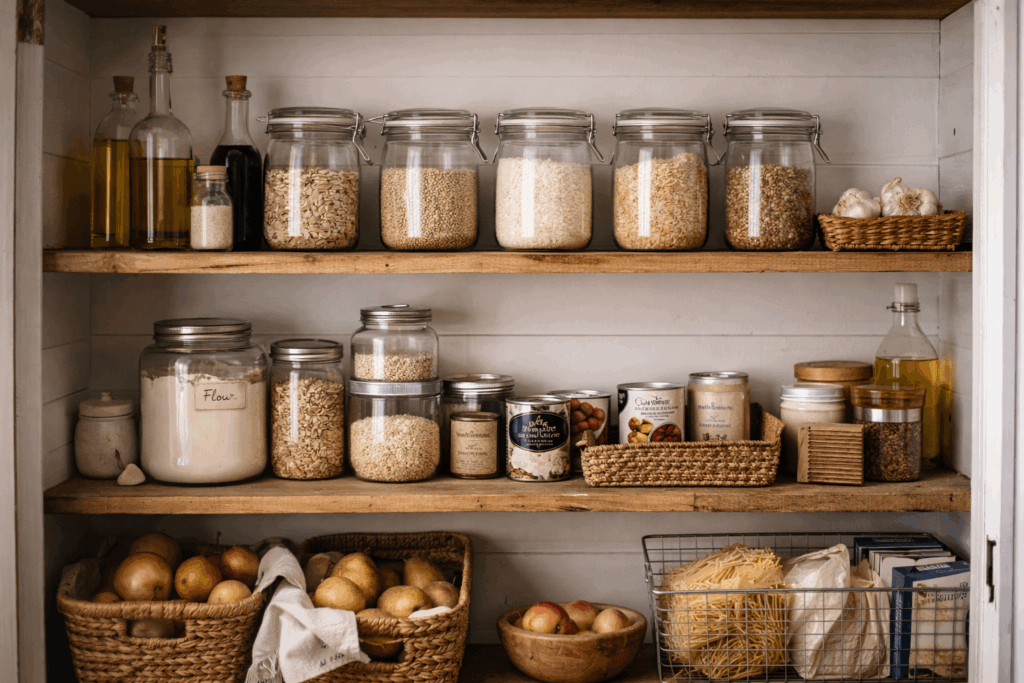
Step 3: Look at Your Pantry and Freezer First
Before you think about recipes, look at:
- What meat you already have
- What staples you’re stocked on
- What needs to be used up
This step alone eliminates most stress.
You are not starting from scratch.
You are starting from what’s already there.
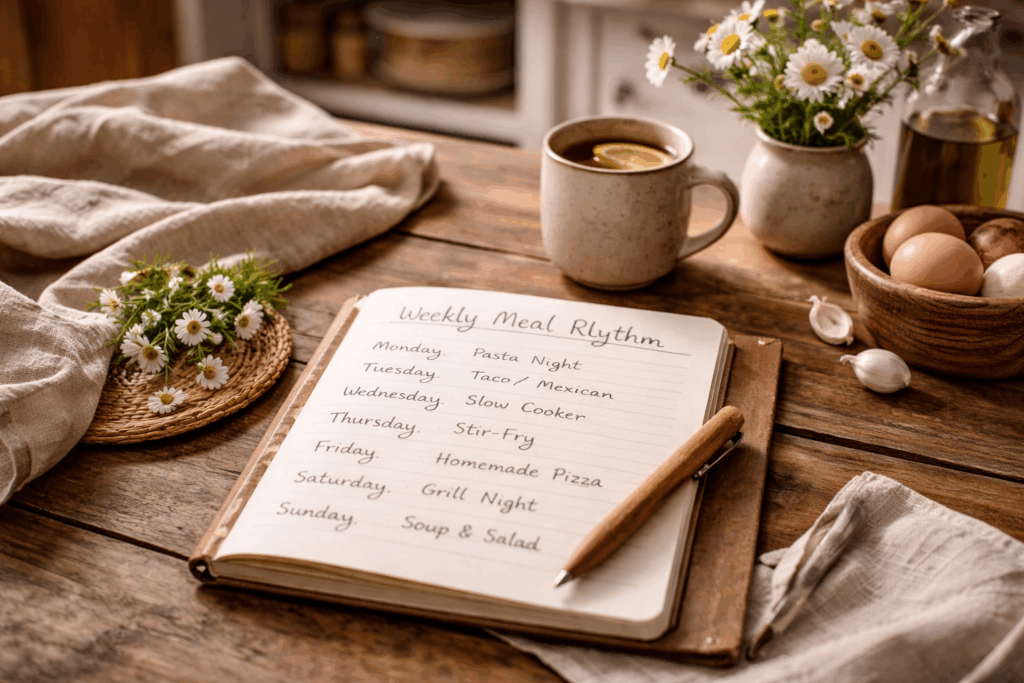
Step 4: Pick One Category Per Day
Now fill in your calendar loosely:
- Monday: Chicken
- Tuesday: Pasta
- Wednesday: Beef
- Thursday: Soup
- Friday: Leftovers or “Everyone Fends for Themselves”
- Weekend: Flexible
You’re not deciding the meal yet – just the direction.
This is where the pressure disappears.
Step 5: Choose Recipes Only If You Want To
Once Your categories are set:
- Browse Pinterest if you feel like it
- Scroll through your saved recipes
- Or make something you already know
If nothing sounds good? Skip it.
You already now the category. Dinner will still happen.
Step 6: Add Only What You’re Missing To Your Grocery App
As you notice small gaps:
- Milk
- Produce
- A missing ingredient
Add it to your running grocery list in your store app (Walmart, Aldi, Meijer, etc.).
No rewriting lists.
No starting over.
No extra brain power.
Why This Works (And Why People Make It Hard)
This works because:
- You’re reducing decisions, not increasing them
- You’re using what you already have
- You’re not demanding perfection
Most people struggle with meal planning because they try to:
- Start fresh every week
- Plan meals before checking their kitchen
- Follow rigid plans that don’t match real life
A rhythm bends.
A rigid plan breaks.
What This Skill Supports (Beyond Dinner)
A simple meal rhythm:
- Saves money
- Reduces grocery waste
- Lowers daily stress
- Makes cooking feel manageable again
And most importantly – it keeps dinner from becoming an emotional burden.
Keep It This Simple
If you remember nothing else, remember this:
- Pick a category
- Use what you have
- Buy only what’s missing
That’s the whole skill.
A calm rhythm will take you farther than a perfect meal plan ever will.

Leave a Reply