
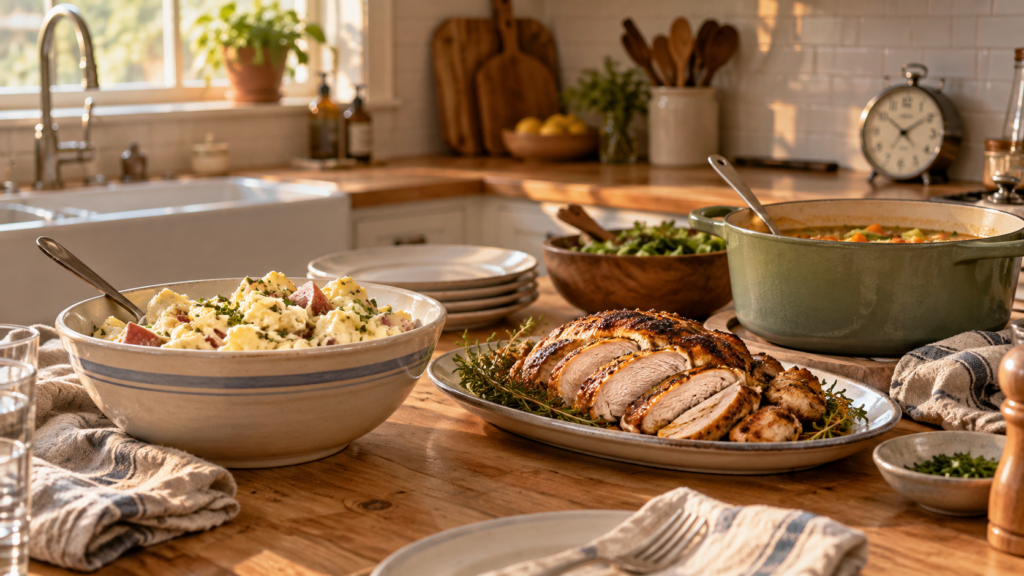
Have you ever stood in your kitchen looking at a bowl of potato salad, a platter of meat, or a pot of soup and wondered, How long has that been sitting there?
It is an especially common question during cookouts, potlucks, and large family gatherings. The table may be filled with appetizers, dips, side dishes, and desserts long before anyone sits down for the main meal. People wander back for seconds, conversation continues, and it becomes easy to lose track of time.
At our family gatherings, we usually kept hot dishes warm in slow cookers and cold foods refrigerated until they were needed. Once everyone stopped nibbling on the dips and appetizers, we wrapped them and put them back in the refrigerator. If anyone wanted more later, they knew where to find them.
That helped keep the food from becoming dried out, watery, or unappealing, but it was also a sensible food-safety habit.
You do not need to be afraid of serving food at home. You simply need a few clear rules that tell you when food can be saved and when it should be thrown away.
How Long Can Perishable Food Sit Out?
The short answer is:
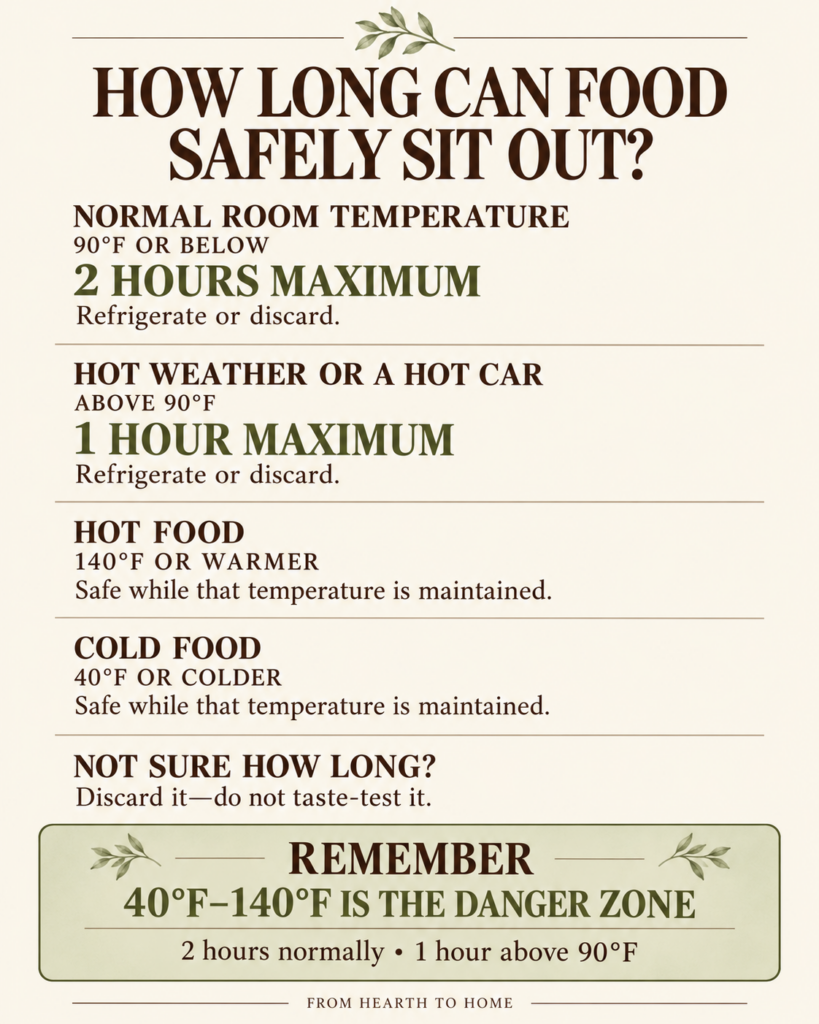
Perishable food should not sit at room temperature for longer than two hours. If the temperature is above 90°F, that time is reduced to one hour.
After that time, the safest choice is to discard the food rather than place it back in the refrigerator.
This rule applies to the total amount of time the food spends without safe temperature control. Putting it back in the refrigerator does not reset the clock.
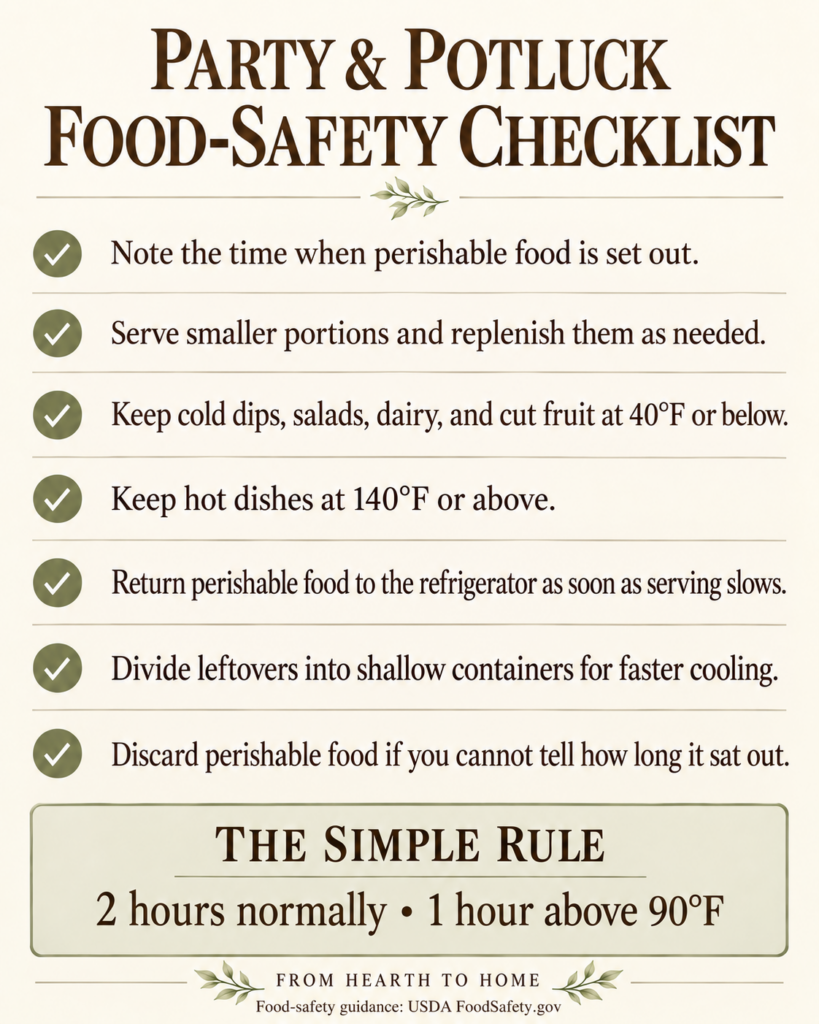
The simple rule to remember: Two hours normally. One hour above 90°F.
When Does the Two-Hour Clock Start?
For practical use at home, note the time when perishable food is placed out without refrigeration or another form of temperature control.
Food kept at 40°F or below, or 140°F or above, is still being safely held. Once it is no longer being kept hot or cold, follow the two-hour limit—or the one-hour limit when the temperature is above 90°F.
If you are not measuring the food’s temperature, use the time you set it out as your safest starting point.
Which Foods Need the Two-Hour Rule?
The two-hour rule applies to perishable foods, including:
- Meat and poultry
- Fish and seafood
- Eggs and foods made with eggs
- Milk, cream, and many dairy products
- Cooked vegetables
- Cooked rice and pasta
- Soups, stews, and casseroles
- Gravies and sauces
- Deli meats
- Cut melons and other cut fruit
- Leftovers
- Creamy dips and salads
Shelf-stable foods such as crackers, bread, unopened canned food, whole uncut fruit, and many dry baked goods do not require the same treatment.
If you are uncertain whether a food is perishable, check its package directions or treat it as perishable to be safe.
For more help with package dates and refrigerator, freezer, and pantry storage, read A Homemaker’s Guide to Food Dates and Safe Storage.
Food-safety guidance: USDA FoodSafety.gov
Why Is Two Hours the Limit?
Bacteria grow most quickly between 40°F and 140°F. This range is commonly called the food-safety danger zone.
Food does not have to feel warm or smell spoiled for bacteria to be growing. A casserole, creamy dip, or bowl of cooked rice may look perfectly normal even after it has been sitting out too long.
The two-hour rule gives you a simple household boundary. You do not have to guess whether a food still looks good enough. You can make the decision based on time and temperature.
Food safety matters for everyone, but take particular care when serving adults 65 and older, children under five, pregnant women, or anyone with a weakened immune system. These family members are more likely to become seriously ill from foodborne illness.
What About Food Sitting on the Dinner Table?
A normal family dinner does not need to become a race against the clock. Serve the meal, enjoy your dinner, and then deal with the leftovers when everyone is finished eating.
Try not to leave the dishes sitting on the table while the evening gets away from you. Once the meal is over, place perishable leftovers in the refrigerator within two hours.
If you know you will be talking at the table for a long time, clear the food first. You can always bring something back out if someone wants another helping.
Keeping Food Safe at Parties, Cookouts, and Potlucks
Large gatherings can be more difficult because food is served over a longer period. You may have appetizers out before dinner, side dishes during the meal, and people returning for another plate later.
A few simple habits make this much easier:
- Keep hot foods at 140°F or above in slow cookers, warming trays, or chafing dishes.
- Keep cold foods at 40°F or below in the refrigerator or nestled over ice.
- Put out smaller portions and refill them as needed instead of placing everything on the table at once.
- Make a note of the time when perishable food is set out.
- Return dips, cheese, meat trays, and creamy salads to the refrigerator when people are no longer actively eating them.
- Do not depend on appearance or smell to decide whether food is still safe.
This is very similar to what our family naturally did. Hot dishes stayed in slow cookers, while cold appetizers were returned to the refrigerator once the nibbling slowed down. Anyone who wanted more later could help themselves from the refrigerator.
It also kept the food in much better condition. Cheese did not dry out, dips did not become watery, and food was less likely to be wasted.
__________________________
Want More Practical Homemaking Help?

Good homemaking information should make ordinary life easier, not give you more to worry about.
Join the From Hearth to Home Journal for simple, practical homemaking guidance, tried-and-true recipes, and encouragement for caring for a real home.
Simple, useful help delivered to your inbox. No perfection required.
_______________________________
Food Left Out in Hot Weather or in a Car
Hot weather shortens the safe time considerably. When the temperature is above 90°F, perishable food should not be left without temperature control for more than one hour.
This includes food at:
- Summer cookouts
- Picnics
- Outdoor parties
- Farmers markets
- Sporting events
- A hot garage or porch
- Inside a parked car
A car can become extremely hot very quickly. Even if the weather does not seem severe, groceries, takeout, or leftovers should not be left sitting in the vehicle while you run additional errands.
Use an insulated cooler with enough ice or frozen packs to keep cold food at 40°F or below when you will be away from refrigeration.
Do Leftovers Need to Cool Before Going Into the Refrigerator?
You do not need to leave leftovers sitting on the counter until they reach room temperature. In fact, allowing them to sit out too long creates a greater safety problem.
For smaller amounts, cover the food and refrigerate it promptly. For a large pot of soup, chili, or stew, divide the food into smaller, shallow containers so it can cool more quickly in the refrigerator.
The same idea applies to a large casserole. Portion the leftovers into shallower containers rather than leaving a deep, tightly packed dish to cool slowly.
I generally take care of our leftovers soon after dinner. This also makes the next day easier because the food is already divided, covered, and ready to reheat or freeze.
How Long Can Takeout Food Sit Out?
Takeout and restaurant leftovers follow the same two-hour rule.
The clock does not begin when you arrive home. Time spent traveling, sitting in the car, or resting on the kitchen counter also counts.
If you are not going to eat the food right away, refrigerate it promptly. Place large portions in shallow containers so they cool quickly.
When takeout has been left in a hot car, use the one-hour rule.
What About Groceries on the Way Home?
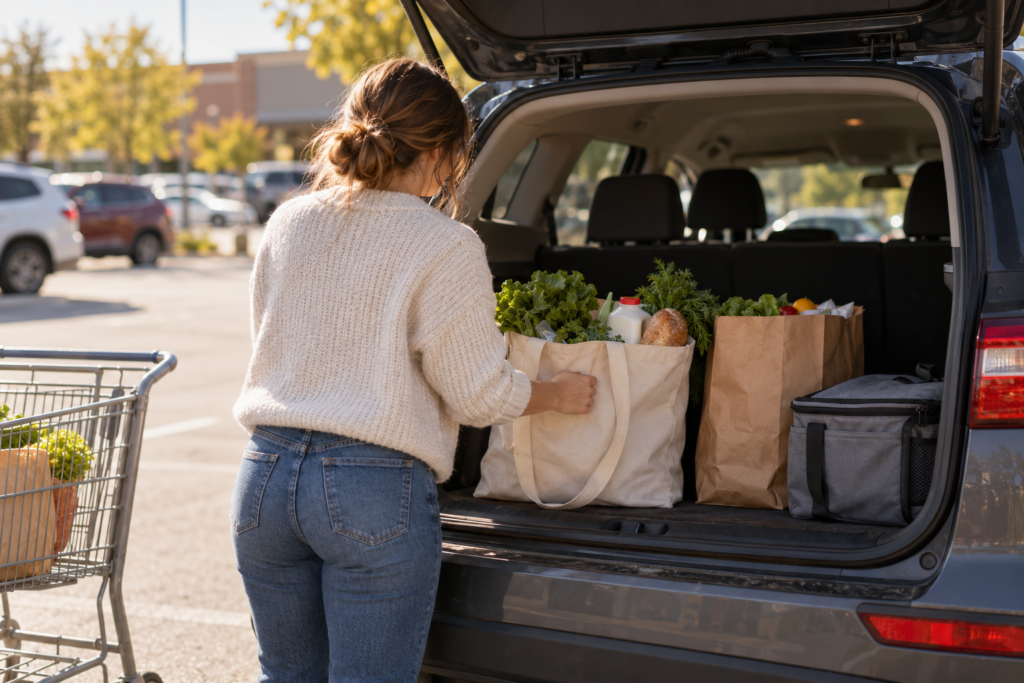
Try to make the grocery store your final stop before going home. Refrigerate meat, dairy products, eggs, frozen foods, and other perishables as soon as possible.
On hot days or when you have a long drive, bring an insulated cooler or cold bags with frozen packs. This is especially helpful for meat, seafood, milk, ice cream, and frozen food.
You do not need an elaborate system. A cooler in the back of the vehicle and a little planning can keep the cold food cold until you get home.
How Long Can a Packed Lunch Sit Out?
Perishable lunches should be kept cold until it is time to eat. Use an insulated lunch bag with at least two cold sources, such as frozen gel packs or a frozen water bottle, or place the lunch in a refrigerator when one is available.
Without refrigeration or cold packs, a perishable lunch follows the same two-hour rule—and the one-hour rule in temperatures above 90°F.
What If Food Was Left Out Overnight?
Perishable food left out overnight should be thrown away.
Do not taste it to see whether it is still good, and do not assume reheating will reliably make food safe after it has been left out too long.
Throwing food away is frustrating, especially when groceries are expensive. But one meal is not worth risking illness for your household.
Can You Tell Whether Food Is Safe by Smelling It?
No. Smell, taste, and appearance can reveal some types of spoilage, but they cannot reliably tell you whether harmful bacteria are present.
Food can smell and look normal and still be unsafe. If a perishable food has been out longer than the safe time—or you truly do not know how long it has been out—the safest choice is to discard it.
Does Covering Food Make It Safe Longer?
Covering food protects it from dust, insects, pets, and handling, but it does not keep a perishable food at a safe temperature.
A covered bowl of potato salad and an uncovered bowl follow the same time limit unless the food is being kept properly chilled.
Does Putting Food Back in the Refrigerator Make It Safe Again?
Refrigeration slows bacterial growth, but it does not undo the time food has already spent in the danger zone.
If food has been out for one hour, refrigerating it does not give it a new two-hour window later. Keep track of the total time it spends without safe temperature control.
Food Safety Without Fear or Unnecessary Waste
Food safety at home does not have to be complicated. Most of the time, you only need to remember a few things:
- Keep cold food cold.
- Keep hot food hot.
- Refrigerate perishable food within two hours.
- Use one hour when the temperature is above 90°F.
- When the safe time has passed or you cannot determine how long food has been out, throw it away.
With a little attention to time and temperature, you can protect your household without becoming fearful of every dish on the table. Put out smaller amounts, refrigerate food once people are finished eating, and use the two-hour rule when you are unsure what to do next.
I hope this guide gives you a clear answer the next time you find yourself standing in the kitchen wondering whether the food can be saved. You do not need to guess. You have a simple rule you can use in your own home.
From my hearth to yours,
Becky
Sources and Further Reading
Leave a Reply