
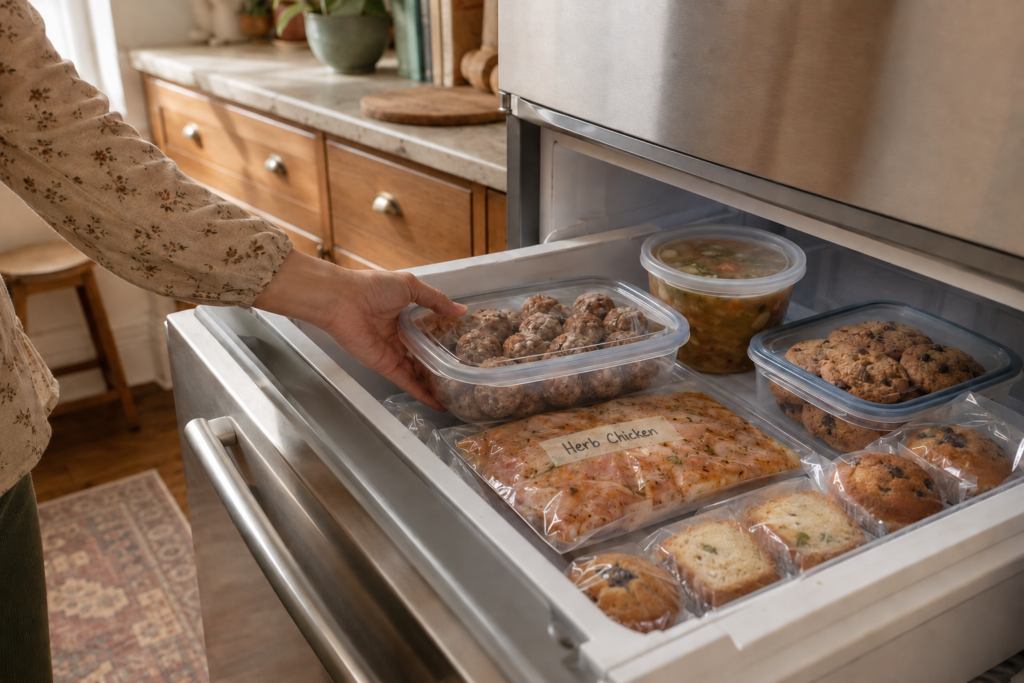
A well-stocked freezer is not a warehouse for forgotten leftovers. It is a carefully maintained reserve of good food—meals and ingredients prepared when we have the time so they are available when we do not.
This does not mean spending an exhausting weekend assembling 30 casseroles or filling every available inch of the freezer with food your family may not even enjoy. It does not require a second freezer, an elaborate inventory system, or perfectly matching containers.
A useful homemaker’s freezer can begin with one package of homemade meatballs, a few marinated chicken breasts, a container of soup, or a batch of cookies.
The purpose is not simply to accumulate food. It is to make good food more convenient.
There will always be evenings when a frozen pizza or box of macaroni and cheese does the job, and there is nothing wrong with that. Sometimes dinner simply needs to appear, everyone needs to eat, and the day needs to end.
But with a little preparation, those do not have to be our only choices when life becomes busy. A container of homemade soup, a package of seasoned chicken, or a bag of meatballs can be just as convenient—and often much more satisfying.
A carefully stocked freezer is a form of household foresight. It helps us use our time and grocery money wisely, makes busy weeks easier, and occasionally gives us something good to share with another family.
A useful freezer preserves some of today’s work and care for a day when time, energy, or money may be in shorter supply.
Tonight is difficult, but dinner has already been cared for.
The Homemaker’s Guide to Running a Busy Household
Not Everything Belongs in the Freezer
I do not believe every recipe is improved by being frozen.
Some foods freeze beautifully and remain genuinely enjoyable. Others become watery, grainy, mushy, dry, or dull. There is little sense in filling a freezer with food no one is pleased to eat.
The purpose is not to freeze everything possible. It is to choose a smaller number of dependable foods that generally retain their flavor and texture and are genuinely helpful to have waiting.
I would rather have six excellent things in my freezer than 30 meals my family eats reluctantly.
Before freezing something, consider:
- Will it retain a pleasant texture?
- Is it likely to become watery, dry, or separated?
- Can it be packaged in an amount the household will actually use?
- Will it be easy to thaw, cook, or reheat?
- Would I still be happy to serve it to my family?
Convenience matters, but it should not be the only standard. The best freezer foods save time without asking us to give up too much quality in return.
You Do Not Have to Freeze Complete Meals
When people hear “freezer cooking,” they often picture stacks of casseroles in disposable aluminum pans.
Complete freezer meals can be helpful for some families, but they are only one possibility. I do not personally love the texture of many frozen casseroles. Some become watery, overly soft, or ooey and gooey in a way that is not particularly appetizing.
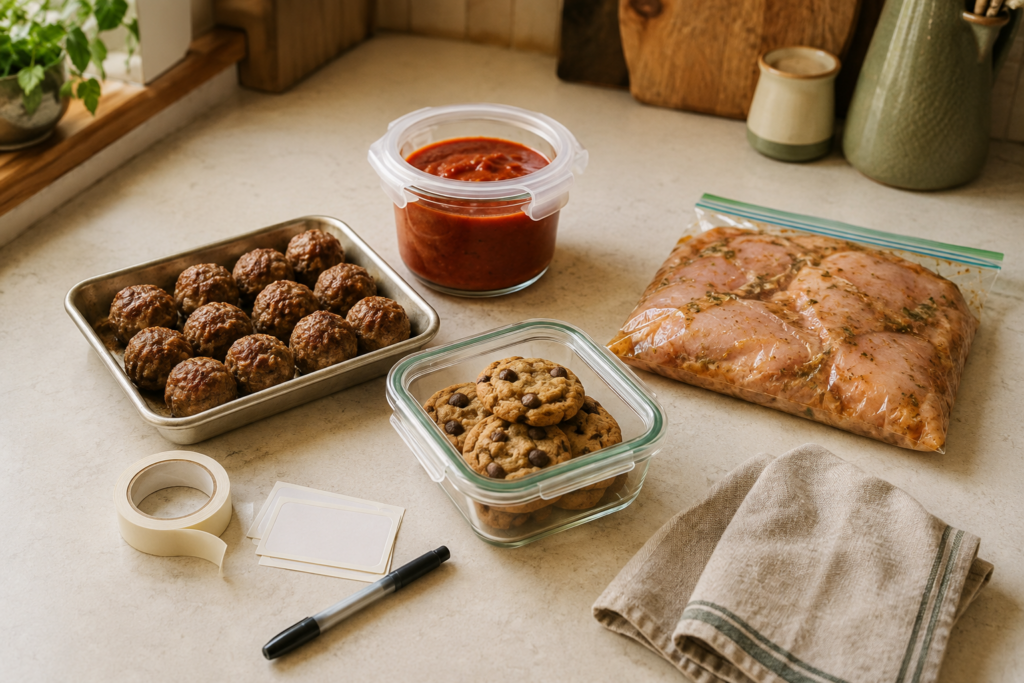
In many households, it may be more useful to freeze one good component of dinner rather than the entire meal.
A package of cooked meatballs can become spaghetti and meatballs, meatball sandwiches, soup, or meatballs with gravy and mashed potatoes.
Marinated chicken can be thawed in the refrigerator and then grilled, baked, or cooked in a skillet. Homemade meat sauce can be served over freshly cooked pasta. Shredded chicken can become tacos, quesadillas, soup, chicken and noodles, or a simple casserole if your family enjoys them.
This gives us convenience while allowing the finished meal to retain more of the flavor and texture of freshly prepared food.
What to Cook When You Don’t Feel Like Cooking: Simple Meals for Real Life
Begin With One Thing Your Family Already Enjoys
A useful freezer does not have to be built in a day. It can develop gradually as we prepare foods our families already eat.
The next time you make something that freezes well, consider preparing a little extra and putting it away.
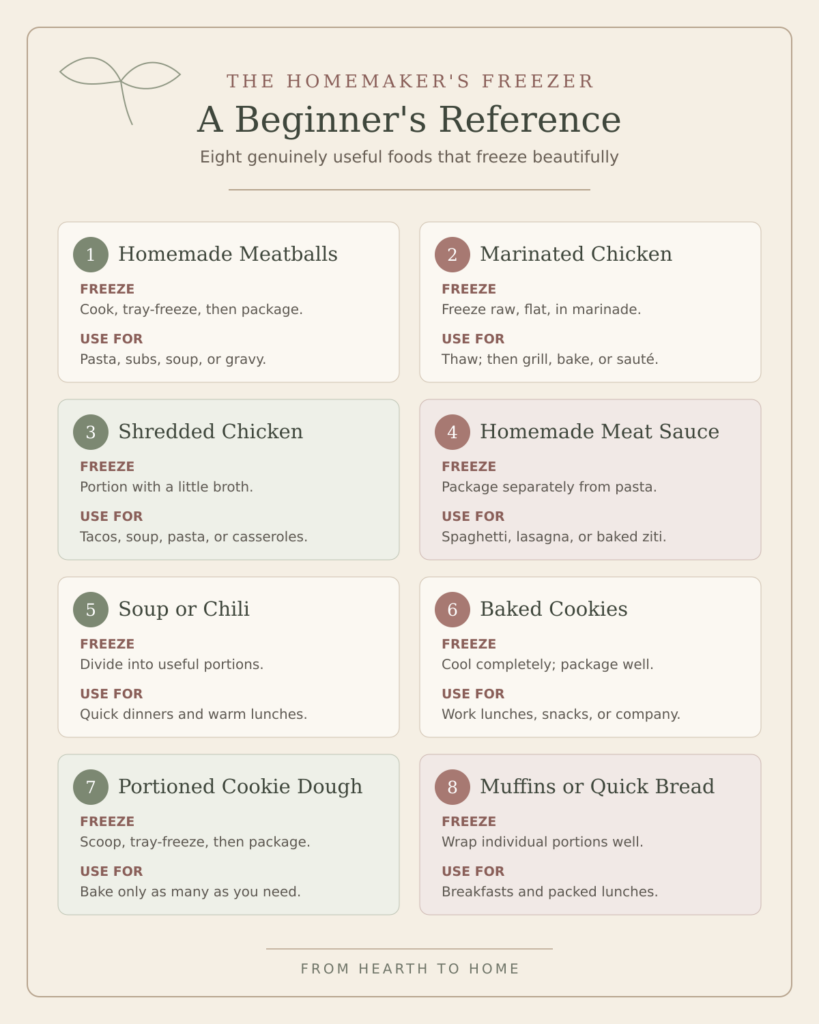
Dependable places to begin include:
- Homemade meatballs
- Marinated chicken
- Cooked shredded chicken
- Homemade meat sauce
- Soup, stew, or chili
- Baked cookies
- Portioned cookie dough
- Muffins or slices of quick bread
Homemade Meatballs
Meatballs are a good beginner freezer food because they generally retain their quality, can be portioned easily, and solve one of the messier parts of making dinner.
The next time you make them, consider preparing a double batch. Cook them as usual, allow them to cool, and freeze them in a single layer on a baking sheet. Once they are firm, transfer them to a freezer-safe container or bag.
Freezing them separately allows you to remove six meatballs or 20 without thawing the entire batch.
They can be reheated in tomato sauce, added to soup, used for meatball sandwiches, or served with gravy. They are more versatile than a fully assembled meal and take up relatively little freezer space.
Marinated Chicken
Freezer preparation does not always have to involve precooked food.
Fresh chicken can be placed in a freezer bag with a favorite marinade, labeled, and frozen flat. Move it to the refrigerator the day before you plan to cook it. As the chicken thaws, it absorbs the flavors of the marinade and is ready for the grill, oven, or skillet.
Simple flavor combinations might include:
- Lemon, garlic, olive oil, and herbs
- Honey mustard
- Balsamic vinegar and Italian herbs
- Garlic, lime, and a mild Southwestern seasoning
- Olive oil, rosemary, garlic, and black pepper
Use a marinade and chicken recipe you already know your family enjoys. The goal is not to experiment on your busiest night. It is to prepare a familiar favorite ahead of time.
Clearly mark the package as raw and always thaw raw chicken safely in the refrigerator rather than leaving it on the counter.
Cooked Shredded Chicken
Cooked chicken can be a useful ingredient to have on hand, but it needs a little moisture so it does not become dry.
Shred the cooked chicken and freeze it in one- or two-cup portions with a spoonful or two of broth or cooking liquid. Smaller packages thaw more quickly and allow you to use only what you need.
Shredded chicken can become:
- Tacos or quesadillas
- Chicken soup
- Chicken and noodles
- Pot pie
- Enchiladas
- Pasta
- A simple chicken casserole
- Chicken salad after it has been safely thawed
Instead of deciding upon and preparing an entire dinner, one of the main steps has already been completed.
Homemade Meat Sauce
A good meat sauce takes time to develop, but tomato-based sauces generally freeze very well.
When making spaghetti sauce, prepare a larger pot and freeze the extra in portions suitable for your household. The sauce can be served with freshly cooked pasta, layered into lasagna, spooned over ravioli or polenta, or used in a baked pasta dish.
I prefer the idea of freezing sauce separately rather than already mixing it with fully cooked pasta. Pasta can become too soft as it freezes, thaws, and reheats. Cooking the pasta fresh often produces a better dinner while the prepared sauce still saves most of the work.
Soup, Stew, or Chili
A container of homemade soup can feel like a small luxury on a busy or difficult day.
There is no need to schedule an entire afternoon of freezer cooking. Simply make a little extra the next time soup, stew, or chili is already on the menu.
Freeze it in practical portions rather than one enormous container. A quart may be appropriate for a family dinner, while smaller containers work well for lunches or meals for one or two people.
Sturdy soups, stews, tomato-based soups, bean soups, and chili generally freeze well. Soups containing pasta or rice may be better frozen without them because they can continue absorbing liquid and become overly soft. Fresh noodles or rice can be added when the soup is reheated.
Cream-based soups and sauces require more care because some dairy products separate or become grainy after freezing. Not every soup will freeze equally well.
The Freezer Is Not Just for Dinner
A thoughtfully stocked freezer can make breakfasts, work lunches, after-school snacks, and unexpected company easier too.
Some of the simplest possibilities include:
- Homemade cookies
- Portioned cookie dough
- Brownies and bar cookies
- Muffins
- Scones and biscuits
- Slices of pumpkin bread or other quick breads
- Pancakes and waffles
- Bread and dinner rolls
- Breakfast sandwiches
- Unfrosted cupcakes or simple snack cakes
A muffin, slice of quick bread, brownie, or couple of cookies can be placed in a lunch in the morning and will generally be thawed by the time it is eaten.
These foods also make it possible to offer something homemade when company stops by without needing to prepare an entire dessert at the last minute.
The Best Moist Pumpkin Chocolate Chip Bread Recipe
My Simple Cookie-Freezer Habit
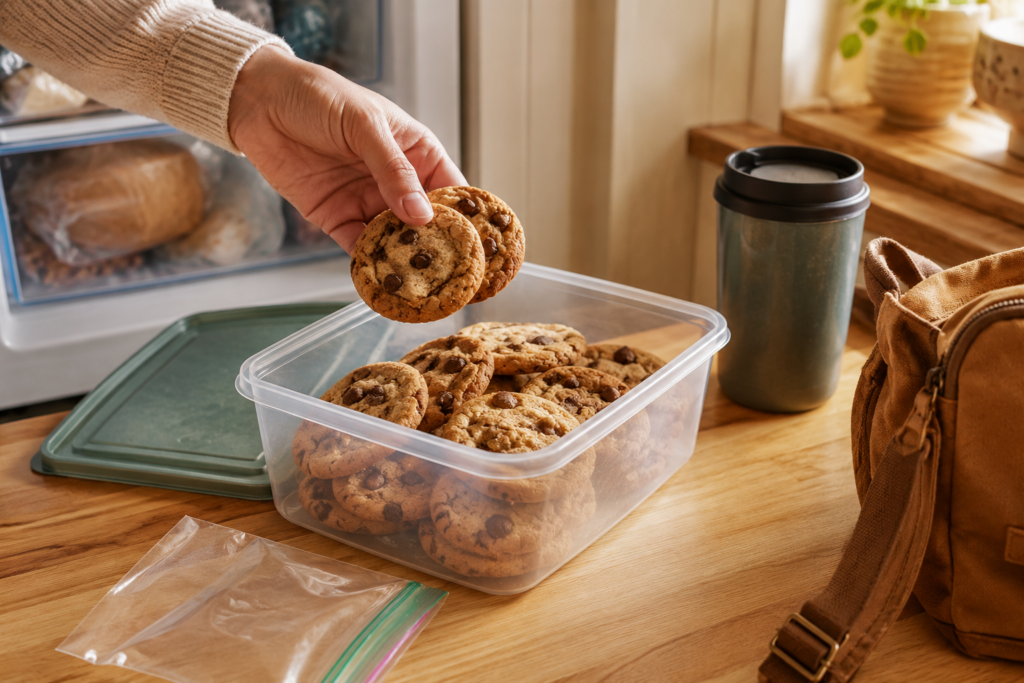
One freezer habit I have used for years is freezing homemade cookies.
My husband loves taking a couple of cookies to work to have with his coffee, so when I bake, I often make a large batch and freeze the finished cookies.
There is no complicated method involved. Once the cookies are completely cool, I place them in a Tupperware container with a good, tightly closing lid and put the container in the freezer.
In the morning, my husband grabs two cookies, puts them in a bag, and heads to work. By the time he is sitting at his desk, they have thawed and are ready to eat.
It is a small thing, but it means there is almost always something homemade available without my needing to bake every few days.
Most sturdy homemade cookies freeze quite well, including:
- Chocolate chip cookies
- Oatmeal cookies
- Peanut butter cookies
- Snickerdoodles
- Molasses or ginger cookies
- Sugar cookies
- Shortbread
- Many brownies and bar cookies
You do not need to freeze baked cookies individually unless you prefer to. A sturdy container with a well-fitting lid works perfectly well for the cookies I make. Delicate cookies can be separated with parchment if necessary.
Very delicate meringues, heavily glazed cookies, and cookies with watery fresh-fruit fillings may not retain their best texture. Decorative glazes or frostings are sometimes better added after thawing.
Freezing Cookie Dough
Portioned cookie dough serves a different purpose.
Scoop the dough into individual portions and freeze them on a baking sheet. Once the portions are firm, transfer them to a labeled freezer container.
This allows you to bake only a few cookies at a time. It is helpful when you want something freshly baked for an ordinary evening, a school event, or unexpected company.
Some cookie dough can be baked directly from frozen with a few additional minutes of baking time. Other recipes may need a short thaw. Write the baking temperature and directions on the container so no one has to search for the original recipe later.
Looking for More Practical Homemaking Ideas?
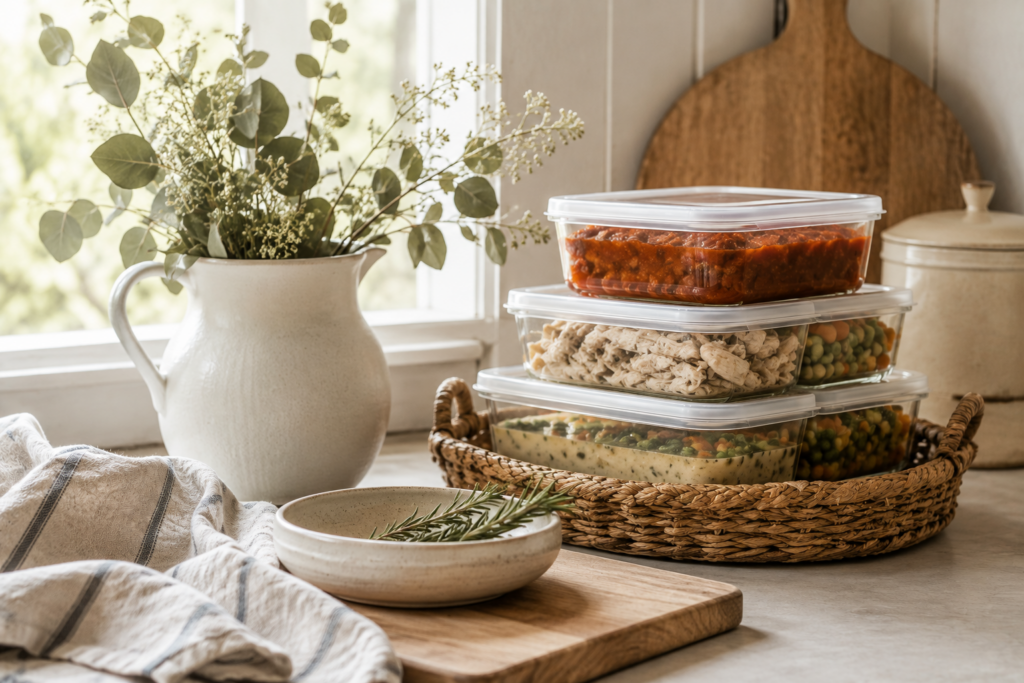
Join me for the weekly Home Journal, where I share simple homemaking encouragement, practical household ideas, seasonal recipes, and small ways to make everyday life at home work a little better.
What Generally Freezes Well—and What Does Not
Although every recipe is different, these foods are usually dependable choices:
- Meatballs
- Tomato-based sauces
- Chili and sturdy stews
- Broth and stock
- Shredded meat stored with a little cooking liquid
- Marinated raw chicken
- Cooked beans
- Pizza dough
- Bread and dinner rolls
- Muffins and quick breads
- Cookies, brownies, and many bars
- Portioned cookie dough
- Unbaked fruit crisps and crumbles
Other foods require more care. Pasta may need to be slightly undercooked, crisp toppings are often better added later, and cooked chicken needs enough moisture to prevent it from becoming dry. Creamy sauces and soups may separate.
Follow recipes specifically tested for freezing when preparing:
- Lasagna and baked pasta
- Cream-based soups and sauces
- Mashed potatoes
- Breakfast sandwiches
- Casseroles with crisp toppings
- Cooked chicken breasts
- Frosted cakes and delicate baked goods
Foods that depend heavily on a fresh or crisp texture are usually better made fresh. These include:
- Dressed green salads
- Mayonnaise-based salads
- Crisp fried foods
- Delicate cooked vegetables
- Very soft cooked pasta
- Raw vegetables with a high water content
- Foods that depend upon a crunchy crust
- Custards and delicate cream desserts
Freezing does not improve a food merely because it extends its life. If the family is unlikely to enjoy it later, it is better to make a smaller amount in the first place.
Freeze Food While It Is Still Fresh
A freezer can preserve good food, but it cannot restore food that has already begun to decline.
Do not wait until food is nearing the end of its refrigerator life and then place it in the freezer as a last attempt to save it. If you know your family will not use something within the next few days, freeze it while it still looks, smells, and tastes as it should.
When preparing extra soup, meatballs, sauce, muffins, or cookies, set aside the freezer portion promptly rather than waiting to see whether everyone finishes it. This allows the food to enter the freezer at its best and makes it less likely to become another forgotten container in the refrigerator.
Fresh does not necessarily mean the food must have been prepared that minute. It means it is still within its safe storage time and has not begun to dry out, wilt, develop an unpleasant smell, or otherwise deteriorate.
Freezing pauses decline. It does not reverse it.
Package Food According to How You Will Use It
A freezer is most helpful when food is stored in practical portions.
Consider how your household eats:
- Individual portions for work lunches
- Two servings for a smaller household
- Family-size portions for dinner
- One- or two-cup packages of cooked meat
- Small amounts of broth or sauce
- Individually frozen meatballs, muffins, or portions of cookie dough
A gallon-size block of frozen soup is not particularly convenient if you only need lunch for two. It has simply moved the inconvenience to another day.
Freezer bags can be laid flat until frozen and then stored upright to save space. Rigid containers work well for foods that could be crushed or for soups and sauces that may leak.
Remove as much excess air as practical and use containers intended for freezer storage. You do not need to purchase an elaborate collection of new containers. Use appropriate, well-sealing containers that work with the way your family eats.
Cool, Label, and Store Food Safely
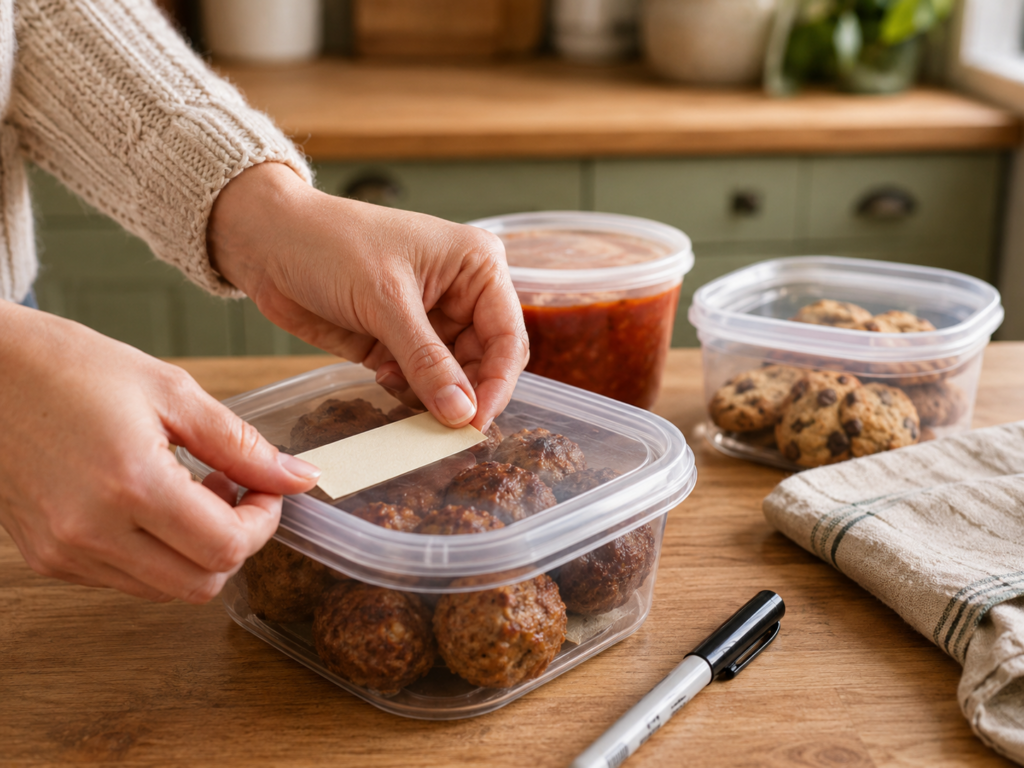
Refrigerate or freeze cooked food promptly rather than allowing it to remain on the counter for hours.
Divide large quantities of soup, chili, or other hot foods into smaller, shallow containers so they cool more quickly. Keep your freezer at 0°F, thaw raw meat in the refrigerator, and reheat leftovers to 165°F.
Every package should include:
- The name of the food
- The date it was prepared
- Whether it is raw or cooked
- The amount or number of servings
- Basic thawing or reheating directions
A useful label might read:
Homemade Meatballs — August 23
24 fully cooked meatballs
Reheat in tomato sauce until hot throughout.
Or:
Lemon-Herb Chicken — August 23
RAW — thaw overnight in refrigerator
Cook thoroughly before serving.
You may think you will recognize every package, but after several weeks, frozen tomato sauce, chili, and taco meat begin to look remarkably related.
Good labels prevent waste and allow another family member to use the food without needing lengthy instructions.
Keep the Freezer From Becoming a Graveyard
A freezer should be a working part of the household, not a place where good intentions go to disappear.
Keep a simple inventory on the freezer door or in a kitchen notebook. It does not need to record every ice cube and heel of bread. List the prepared foods and important ingredients you want to remember.
Use older foods first and occasionally plan a freezer meal night. A small “use first” basket can hold partial packages, single servings, or anything that should be eaten soon.
Food kept continuously frozen at 0°F can remain safe for a very long time, but its flavor and texture gradually decline. Freezing preserves food; it does not make it immortal.
A Simple Weekly Meal Planning System for Everyday Homemaking
Finish the Meal With Something Fresh
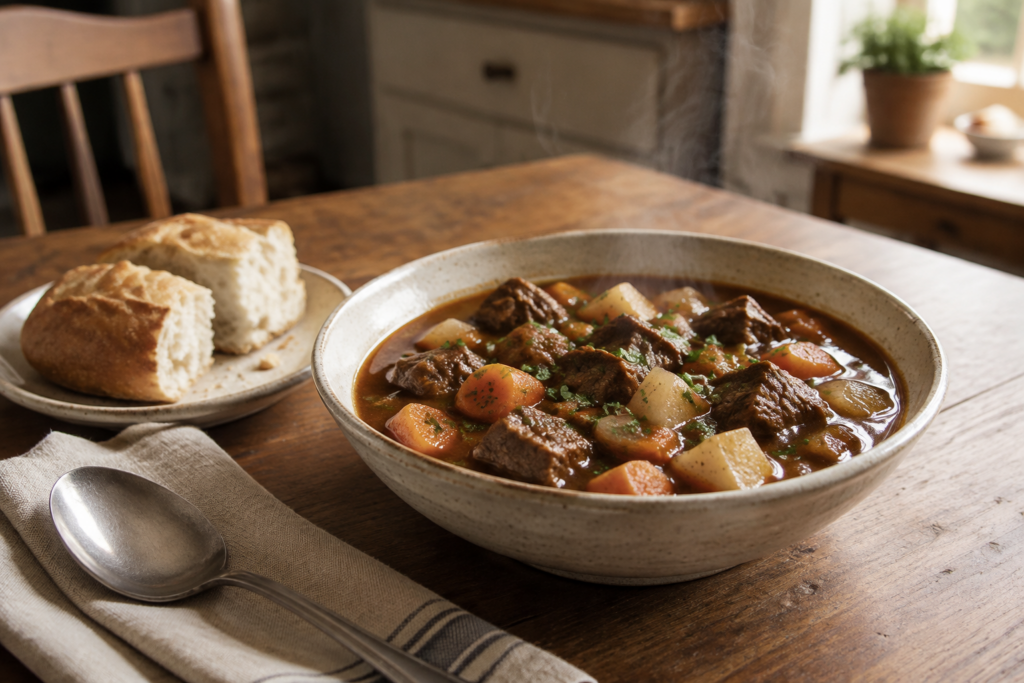
Freezer food does not have to look tired or taste one-dimensional.
A small fresh addition can make a prepared meal feel complete:
- Fresh parsley or chives over soup
- A squeeze of lemon over chicken
- Parmesan grated over pasta
- A simple green salad with meatballs or lasagna
- Sour cream, scallions, or lime with chili
- Fresh fruit alongside muffins
- Warm bread and crisp vegetables with stew
Most of the work has already been completed, but the meal still feels as though someone cared about serving it.
Beauty in homemaking does not require expensive ingredients or elaborate presentation. Sometimes it is simply a warm bowl of soup, a clean napkin, a little parsley on top, and the relief of knowing dinner was already waiting.
Keep One Meal to Give Away
A homemaker’s freezer can occasionally help someone outside her own household.
A quart of soup, a container of meatballs and sauce, a package of muffins, or a loaf of bread can be taken to:
- Someone who is ill
- A family with a new baby
- An older neighbor
- Someone returning from the hospital
- A grieving household
- A friend experiencing a particularly difficult week
Package the food neatly in a container the recipient does not need to return. Include the name of the food, the date, reheating directions, and any important allergen information.
Hospitality does not always mean inviting people into a perfectly arranged home. Sometimes it means placing a good meal into someone’s hands and allowing them to rest.
Try One Thing This Week
Choose one food your family already enjoys:
- Double your usual meatball recipe and freeze half.
- Place a few chicken breasts in your favorite marinade and freeze them.
- Freeze one quart of soup before serving the rest.
- Set aside six muffins for future breakfasts.
- Make extra pasta sauce and freeze one dinner-size portion.
- Place several completely cooled cookies in a tightly closing container.
Do only one.
Package it carefully, label it, use it within the next few weeks, and notice whether it makes your day easier.
Make Your Own Convenience
Homemaking is not about preparing everything from scratch every day or refusing every modern convenience. It is about using our available time, money, energy, and skill wisely.
Sometimes that means serving frozen pizza. Sometimes it means pulling out meatballs prepared three weeks ago, warming homemade sauce, and cooking a pot of pasta.
The difference is that a useful freezer gives us choices.
It allows us to make some of our own convenience—to put away a little effort today so we can still serve something warm, comforting, and genuinely good when tomorrow does not go according to plan.
Begin with one thing.
The first evening it makes dinner—or a work lunch, an afternoon snack, or unexpected company—a little easier, you will understand why it was worth doing.
Simple Kitchen Habits That Make Dinner Easier Every Night
I hope this makes dinner easier for you and your family!
From my hearth to yours,
Becky
Leave a Reply